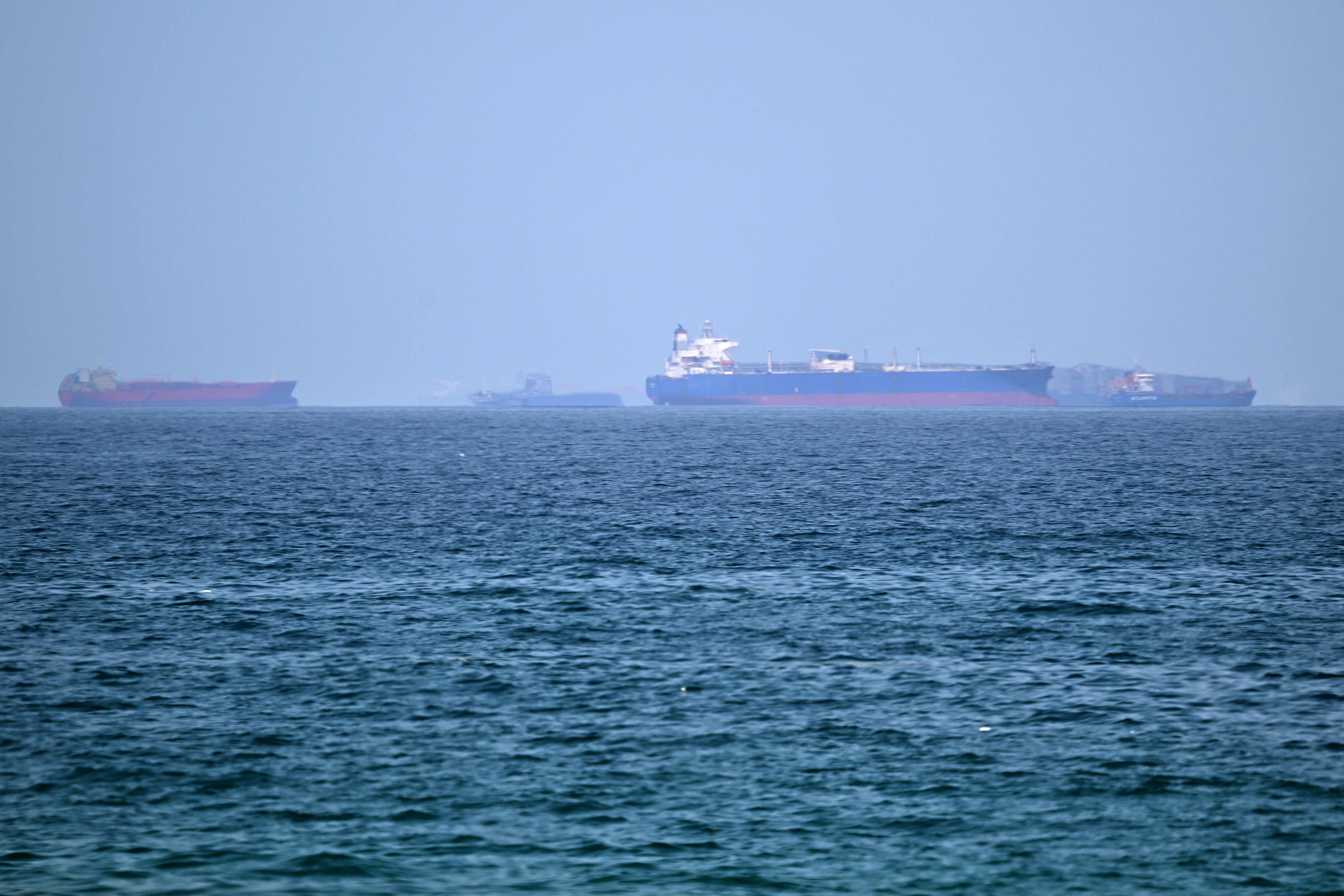
DUBAI: A tanker traveling off the coast of Oman in the Strait of Hormuz caught on fire early Tuesday morning after being struck by a projectile, the British military said.
The attack was the latest targeting a vessel moving through the narrow mouth of the Persian Gulf, through which a fifth of all oil and natural gas traded once passed in peacetime. Suspicion over the attack immediately fell on Iran, which is suspected of attacking other ships using a route close to the Omani shore despite warnings from Tehran to ships that only their route was safe in the waterway.
The U.S. is eager to press ahead with negotiations with Iran aimed at fully reopening the strait , rolling back Tehran’s disputed nuclear program and reaching a permanent end to the war launched Feb. 28. But previous attacks in the strait have sparked retaliatory strikes by the U.S., which then saw Iran attack Gulf Arab states — raising the risk of an escalation.
Talks between Iran and the U.S., meanwhile, appear to be on hold until after the burial of Iran’s late Supreme Leader Ayatollah Ali Khamenei, who was killed at the beginning of the war. Signs have been increasing that mourners at his funeral were calling for the death of U.S. President Donald Trump.
Authorities flew Khamenei’s body to the Shiite seminary city of Qom overnight, where he’ll be honored Tuesday.
The United Kingdom Maritime Trade Operations center said the tanker had been hit near Limah, Oman, in the strait. The UKMTO said the projectile hit the port side of the vessel while trying to traveling south out of the strait toward the Gulf of Oman.
It said there was no environmental impact from the strike and that authorities were investigating.
Iran’s joint military command warned last Thursday that all oil tankers moving through the strait must use its approved routes.
“Any failure to comply, deviation from the designated route, or disregard for the navigation protocols of the Islamic Republic of Iran in the Strait of Hormuz will be met with an immediate and forceful response from the armed forces, endangering the security of the violating vessels,” the Iranian statement then said.
It also said that interference by U.S. forces in the strait “will be met with a rapid and decisive reaction.”
Iran and the United States agreed as part of an interim deal to allow ships to pass without paying charges for 60 days. But Tehran insisted it must control the routes of the vessels and later charge fees for passage, upending decades of practice in the waterway.
The U.S. and many Gulf Arab states say they won’t agree to Iran charging for passage through the strait. An effort by Oman and a United Nations agency to launch a new route near Oman’s shore earlier sparked attacks across the Mideast, highlighting the tensions.
Disclaimer : This story is auto aggregated by a computer programme and has not been created or edited by DOWNTHENEWS. Publisher: deccanchronicle.com