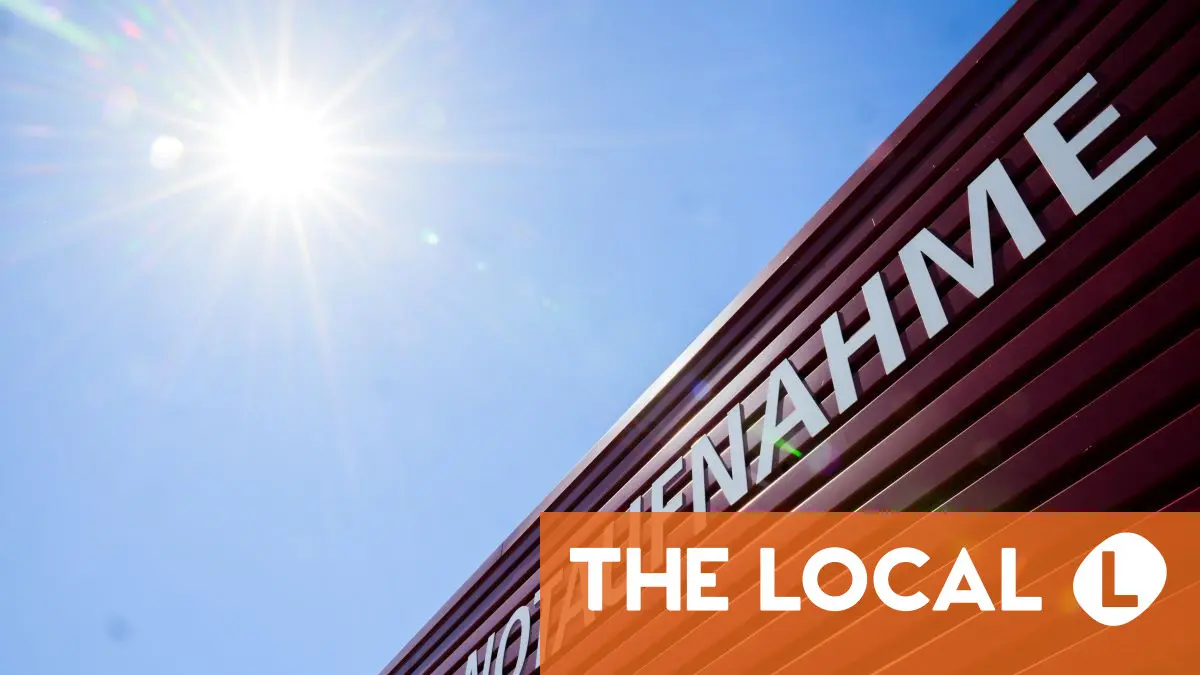
Approximately 9,800 people died due to high temperatures in Germany up to mid-July, according to the Robert Koch Institute, putting this year’s total already above any single year in the past decade.
Almost 10,000 people have already died throughout Germany due to heat, according to estimates by public health agency, the Robert Koch Institute (RKI).
As of the week of July 19th the total number of heat-related deaths recorded in Germany this year had hit 9,800, according to the RKI which reports the figures in weekly reports.
That figure is already over any single year’s total since at least 2016. The most heat-related deaths in the past 10 years were recorded in 2018 – at that time there were around 9,000 in the entire year.
Climate change, caused namely by fossil fuel combustion and human activity, is making periods of extreme heat more common and more severe, and therefore pushing up mortality rates in Europe and around the world.
According to the RKI, the majority of heat-related deaths in 2026 – more than 5,000 – were due to the record-breaking heatwave seen in the second half of June, when temperatures of 40C or more were reached in many places throughout Germany.
According to the RKI, there were an estimated 7,900 heat-related deaths in 2026 in the period from the beginning of April to July 12th. The following week, from July 13th to 19th, 1,900 were added.
In recent weeks a series of rising figures of heat-related deaths have been reported, as total numbers have been compiled and confirmed by various health agencies in Germany and Europe. Across Europe, at least 12,000 “excess deaths” have been linked to heat events in June alone.
High temperatures are deadly
Typically, significantly higher mortality rates are seen in weeks with an average temperature above 20C than in cooler summer weeks.
Extreme heat is particularly dangerous for older people and those with impaired immune systems.
Of the deaths related to the heat, 5,420 were in the oldest age group aged 85 and over.
In the group aged from 75 to 84 years, 2,460 deaths were recorded, while in the group aged 65 to 74 there were 1,260 deaths recorded.
Among people younger than 65, 630 heat-related deaths were recorded.
READ ALSO: Germany’s official advice for how to stay safe in a heatwave
In some cases, heat stroke leads to death, but in most cases the cause is a combination of heat exposure and existing pre-existing conditions, according to the RKI.
Heat protection needed
Following the extreme heat at the end of June, a fresh debate about heat protection was sparked in Germany.
Opposition parties in the Bundestag, such as the Greens, called for more investment in air conditioning for hospitals, care facilities and daycare centres.
READ ALSO: Germany’s aversion to air conditioning is melting in the heat
According to care advocates and doctors, many facilities have so far been inadequately prepared for heatwaves.
Notably, federal government leaders have been rather quiet on the topic. The environment minister Carsten Schneider, said simply that Germany had plans in place to reduce emissions, and referred to the responsibility of the states and municipalities to enact heat protection plans.
The German Social Association (SoVD), on the other hand, sees the government as having a greater obligation to protect against heat.
“Extreme heat is no longer an exceptional event, but one of the greatest social and health challenges of our time,” said CEO Michaela Engelmeier. “Older people, people in need of care, people with disabilities, the chronically ill, children and employees in health and social care are particularly dependent on effective protection.”
“The federal government must no longer shift the responsibility for this to the states, municipalities or individual providers,” Engelmeier added.
With reporting by DPA.
Disclaimer : This story is auto aggregated by a computer programme and has not been created or edited by DOWNTHENEWS. Publisher: thelocal.de