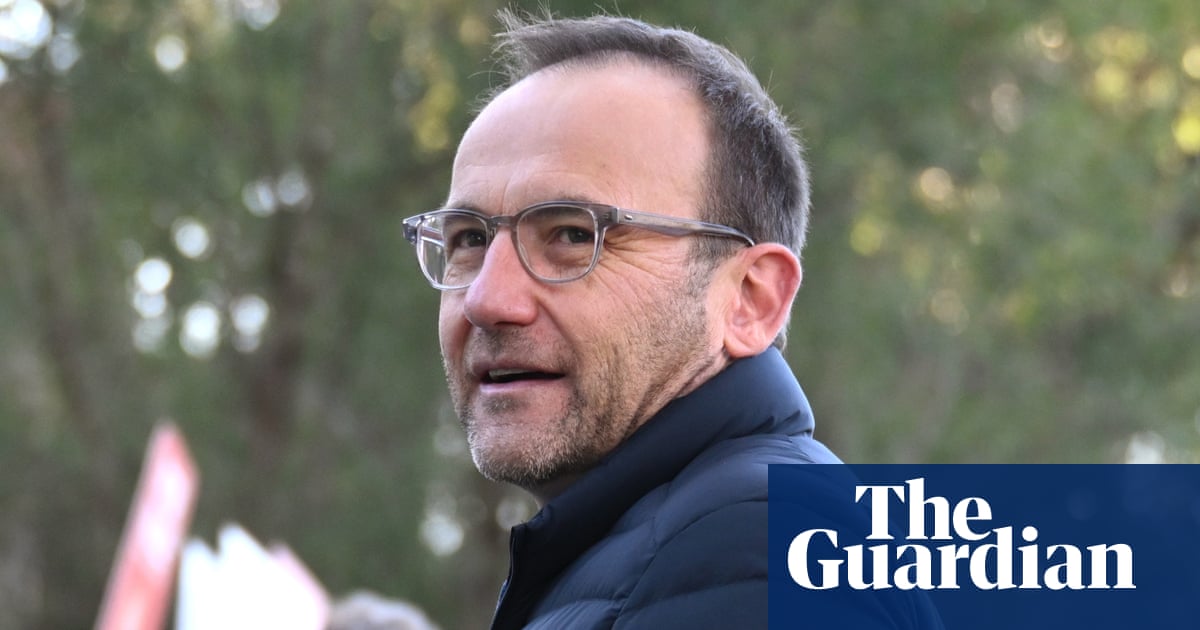
The former Greens leader Adam Bandt says the party’s new leadership team, which could be chosen as early as today, will face mounting pressure from grassroots members to block the Labor government from approving any new coal and gas projects “by whatever means”.
He told Guardian Australia there would be no excuses for the new leader, likely to be elected at a two-day retreat in Sydney which begins today, to allow the Albanese government to approve any new fossil fuel development.
Larissa Waters announced she would step down from the Greens’ leadership on Monday night, revealing she has been managing a chronic kidney disease, but that her health had “declined significantly over the course of recent months”. She said while her prognosis for recovery was positive, the pressure of the party’s leadership, including additional travel demands, was detracting from a focus on her health.
On Tuesday, senator Sarah Hanson-Young announced she would run for the leadership, while NSW senator David Shoebridge would not rule himself in or out. The deputy leader, Mehreen Faruqi, has also announced her intention to run on a joint ticket with Treasury spokesperson Nick McKim as her deputy.
Bandt, now chief executive of the Australian Conservation Foundation, said there would be several key climate flashpoints for the next leader with Labor before the next election, including whether the government would approve Woodside’s Browse gas project near the Scott Reef in northern WA, whether it would allow gas fracking in the Beetaloo basin in the NT and whether datacentres would be permitted to use fracked gas.
“In terms of what approach gets taken in parliament, the view from the movement is: look, there’s no excuse now, there’s no parliamentary blocker to stopping new coal and gas mines and to stopping deforestation,” Bandt told Guardian Australia.
“Just get it done by whatever means, whatever it takes to make that happen, at whatever style people adopt while they’re in parliament.”
Party grandee Bob Brown said Waters had been a “splendid” leader, but warned the next leader would have to show they could extract significant reforms from Labor.
“The next leader has an opportunity to take on not just One Nation but the failures of Labor … It has to be a leader who can take it up with Anthony Albanese and Pauline Hanson,” Brown said.
“You need a very, very strong and able negotiator, not just to make incremental changes, but very big changes.”
While One Nation has seen its popularity surge in 2026, the Greens voter base has not significantly grown.
The party received 12.22% of the primary vote in 2025 compared with 12.25% in 2022.
In 2026, the Australian’s Newspoll showed the primary vote at 13% in August and September. Nine Newspapers’ Resolve poll showed the party at a high of 15% in March before dropping to 13% in July and August, and recorded a dip to 11% in September, while Redbridge Group and Accent Research polls in the Financial Review showed the Greens at 14% in June, dropping to 12% in August.
Former Greens MP Max Chandler-Mather used an open letter to call for the Greens rank and file to elect the new leader, not just MPs.
Bandt and Brown defended the party’s reach and said the Greens have been cutting through with the public, akin to the surge of support for progressives like the New York mayor, Zohran Mamdani.
Brown said the Greens “are the antidote to people who despair about politics”.
“Under Larissa they have gone up in the polls and I expect that trend to continue, if not escalate. There’ll be surprises between now and 2028, and one of those will be the Greens because they often get taken for granted,” Brown said.
Bandt added the progressive moment broadly has grown, pointing to a groundswell of public support for a gas export tax, despite the government abandoning any reforms.
“Where they decide to go next will be a matter for the Greens party room … the progressive movement is quietly on the march and growing. We saw a big response to the gas tax campaign as it has mobilised over 70,000 people to call for a rethink of the decision to drill for gas off the Scott Reef,” Bandt said.
NSW state Greens upper house member, Sue Higginson, said it was harder for her party to cut through the media and against other parties with significant financial backing.
“It’s genuinely hard to cut through media narratives, and you’ve got to remember … when you have sort of dark money and dark interests influencing politics and political narratives, that is very hard to push back against.”
Higginson said grassroots members expect the party leadership to take both conciliatory and activist approaches to policy.
Disclaimer : This story is auto aggregated by a computer programme and has not been created or edited by DOWNTHENEWS. Publisher: theguardian.com