Big week for Wall Street’s largest banks and for finance nerds like myself.
Morgan Chittum here. I’m Fortune’s new senior finance reporter, and Allie’s asked me to write Term Sheet a few days a week (Dream gig!) A bit about me: I love reporting on big banks, asset managers, and other financial firms that have an outsized influence on our lives. So, what better way to kick off my first-ever newsletter than with a debrief on bank earnings?
It’s been a mixed bag of reports. Bank of America posted a third-quarter profit drop this morning while Morgan Stanley beat on the top and bottom lines. The latter was largely expected: Citigroup did the same yesterday. Wells Fargo, however, missed on revenue despite surpassing earnings estimates. The bank reported revenue of $21.87 billion, lower than consensus of $22.31 billion. It’s the third time in the past four quarters that Wells has done so.
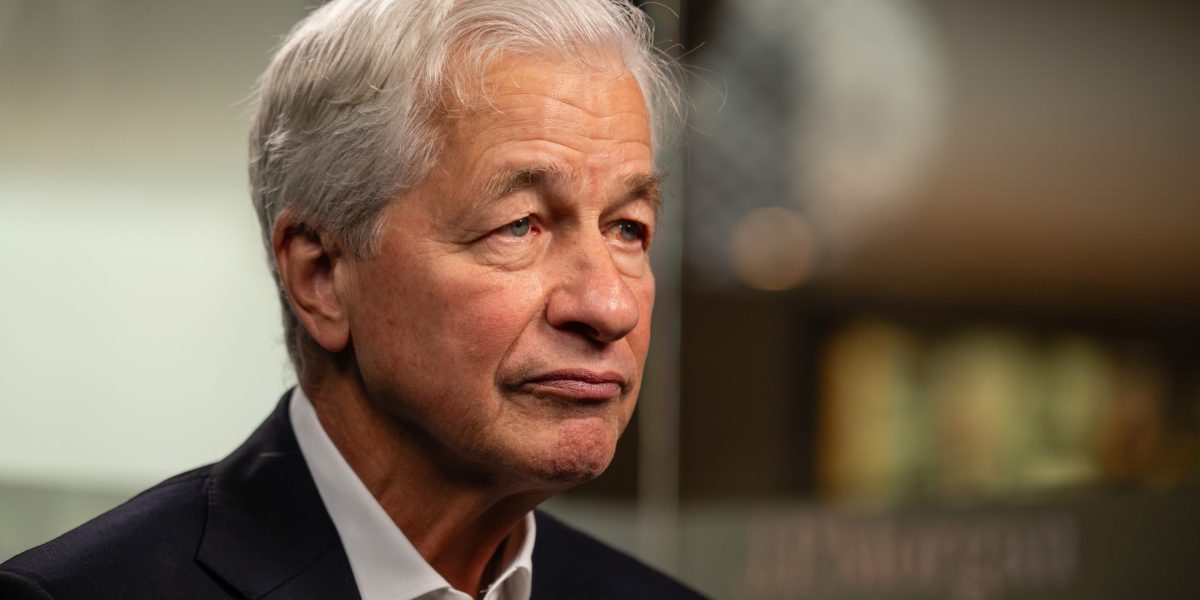
The real surprise came from JPMorgan, the nation’s largest bank by both assets and market cap — about $881 billion. On Tuesday, JPMorgan missed on revenue and earnings for the first time in nearly three years, weighed down by rising expenses and weaker fixed-income trading. Meanwhile, Goldman Sachs, often seen as JPMorgan’s dealmaking peer, crushed estimates for both revenue and earnings per share.
After their releases, I was inundated with messages from colleagues asking the same question: Why did JPMorgan’s earnings disappoint while Goldman’s blew past expectations? Aren’t they peers? It’s a little more complicated than that. Like JPMorgan, Goldman saw some relative weakness in fixed income, currencies, and commodities, but the firm was able to offset that because of its enormous equities business, where revenue surged an eye-watering 72%.
But this is a deals newsletter, after all—so what does all of this mean for the dealmaking backdrop?
We’ve recently seen a slew of IPO delays. Oura postponed its plans in late September. Bamboo Insurance and Holtec Nuclear did the same shortly before that.
Still, bank executives say that won’t last for long. JPMorgan CFO Jeremy Barnum said on a media call that IPOs are being “delayed rather than cancelled,” describing the firm’s pipeline for deals as “very, very strong.”
“There are a lot of deals that need to get done that want to get done,” he told reporters. “Maybe in moments of a little bit of market turmoil, you see, especially in the capital markets space, the gap between buyers and sellers can widen temporarily before we find a new level. So we’ll see how it goes. But overall, the conditions remain very supportive.”
Goldman CEO David Solomon on the earnings call acknowledged that activity got “a little bit softer” in September. “The IPO market was wide open,” he told analysts. “It’s just if you expected a valuation and you got something 10% to 15% less, you might choose not to go forward–you might choose to wait.”
Matt Kennedy, a senior strategist at Renaissance Capital, told me something similar.
“After an active summer, suddenly we’re now in a rising-rate environment and investors are questioning AI valuations,” he said. “So, I think the IPO pipeline will take some time to digest that new reality compared to the enthusiasm they were seeing earlier in the year.”
Kennedy added: “It’s not like companies are canceling their IPOs. I think they’re prepping them, filing confidentially, selecting banks, and giving themselves optionality for when market conditions are ripe.”
To this end, Kennedy added: Despite these mixed earnings and a string of IPO delays, 2026 is still on pace to beat last year’s deal count, according to Renaissance Capital. And the year has already set a record for IPO proceeds–even without SpaceX’s blockbuster June offering.
Looking ahead, one of the “single-biggest catalysts” for a pickup in IPO activity would be an end to the Iran war, according to Kennedy. “That would bring down oil prices and maybe kickstart some of that deal flow again,” he said. “It might help with inflation and the rate environment too. A lot of these things are connected.” (A successful Anthropic IPO next month, per Kennedy, would also be a positive.)
See you tomorrow,
Morgan Chittum
X: @morgan_chittum
Email: morgan.chittum@fortune.com
Submit a deal for the Term Sheet newsletter here.
Joey Abrams curated the deals section of today’s newsletter.
VENTURE CAPITAL
– Suki, a Redwood City, Calif.-based developer of AI software that helps clinicians document patient visits, raised $90 million in Series E funding from Healthier Capital, Crosslink Capital, Hercules Capital, and existing investors.
– Albert, an Oakland, Calif.-based developer of AI software for chemistry research and development, raised $55 million in Series B funding. TCV led the round and was joined by Delta V, Socium Ventures, and existing investors.
– Scarlet, a London, U.K.-based company that certifies AI and software-based medical devices, raised $50 million in Series B funding. Headline led the round and was joined by Notion Capital and existing investors.
– Duvo, a Prague, Czech Republic and New York City-based developer of AI software for automating business operations, raised $32 million in Series A funding. Balderton Capital led the round and was joined by Index Ventures, Northzone, and Credo Ventures.
– Brellium, a New York City-based developer of AI software that checks patient records for compliance and billing issues, raised $23 million in funding. Left Lane Capital and First Round Capital led the round and were joined by Digital Health Venture Partners.
– Causa Prima, a Madrid, Spain and Munich, Germany-based developer of AI software that resolves billing disputes between companies, raised $20 million in seed funding. Base10 Partners led the round and was joined by QED Investors, FJ Labs, and existing investors.
– Readily, a San Francisco-based developer of AI software that helps health care organizations manage regulatory compliance, raised $11 million in Series A funding. Define Ventures led the round.
– Clueso, a Dover, Del.-based developer of AI software for creating and editing business videos, raised $10 million in Series A funding. Dharana Capital led the round and was joined by Founders Future, Neotribe Ventures, and others.
– Harbor, a San Francisco-based provider of risk assessment and insurance for AI agents, raised $10 million in seed funding from Base10 Partners, Abstract, 8VC, and others.
– Forgepoint, a New York City-based developer of AI software that helps manufacturers prepare quotes and process orders, raised $9.8 million in seed funding. Primary Venture Partners and a16z speedrun led the round and were joined by angel investors.
– Evos, a New York City-based developer of AI software that automates operational tasks for businesses in traditional industries, raised $9 million in pre-seed funding. Uncork Capital and Field Ventures led the round and were joined by Crosslink Capital, Utopia Capital Management, Sandwith Ventures, and angel investors.
– HydRegen, an Oxford, U.K.-based biotechnology company developing cleaner, lower-cost chemical manufacturing processes, raised $8 million in Series A funding. Genoa Ventures led the round.
– Dubsof, a Dublin, Ireland-based developer of AI-powered custom business software, raised $6.5 million in funding from BlueYard, Backed, Cocoa, Project Europe, and others.
– Giraffe Bio, a Buenos Aires, Argentina and Santiago, Chile-based developer of biomolecules that help miners extract critical minerals with less environmental impact, raised $6.4 million in seed funding. Orion Industrial Ventures led the round and was joined by BHP Ventures, Twynam, Air Capital, and Baruch Future Ventures.
– Lightsprint, a San Francisco-based developer of software that lets non-engineers make changes to their company’s existing software, raised $6.1 million in seed funding. 645 Ventures led the round and was joined by January Capital, Rebel Fund, Fjor, Sterling Road, and angel investors.
– Dapta, a Scottsdale, Ariz.-based developer of AI sales software for small and medium-sized businesses, raised $6 million in seed funding. Chingona Ventures led the round and was joined by Crew Capital, Broom Ventures, Cometa VC, and existing investors.
– Intellivisa, a Toronto, Ontario-based developer of AI software that handles visa and entry requirements for international travel, raised $3 million in pre-seed funding. Mu Ventures and Incisive Ventures led the round and were joined by United Airlines Ventures and others.
PRIVATE EQUITY
– Fengate Private Equity acquired a majority stake in Clinical Research of West Florida, a Tampa, Fla.-based network of clinical research sites. Financial terms were not disclosed.
– Godspeed Capital acquired GreenVest, a Bowie, Md.-based provider of environmental restoration, stormwater management, and consulting services. Financial terms were not disclosed.
– Llama Capital Partners acquired Fabspeed Motorsport, a Fort Washington, Pa.-based manufacturer and seller of high-performance aftermarket exhaust systems, air intake systems, and other automotive products. Financial terms were not disclosed.
EXITS
– Norwest Equity Partners acquired E-Z UP, a Norco, Calif.-based provider of pop-up canopies and shelters, from Beach Point Capital. Financial terms were not disclosed.
PEOPLE
– AE Industrial Partners, a Boca Raton, Fla.-based private equity firm, promoted Chris Aguemon and Bill Strobel to Principal.
– Princeton Equity Group, a Princeton, N.J., and Dallas, Texas-based private equity firm, promoted Jack Nagle and Joseph Trahan to Partner.
Disclaimer : This story is auto aggregated by a computer programme and has not been created or edited by DOWNTHENEWS. Publisher: fortune.com