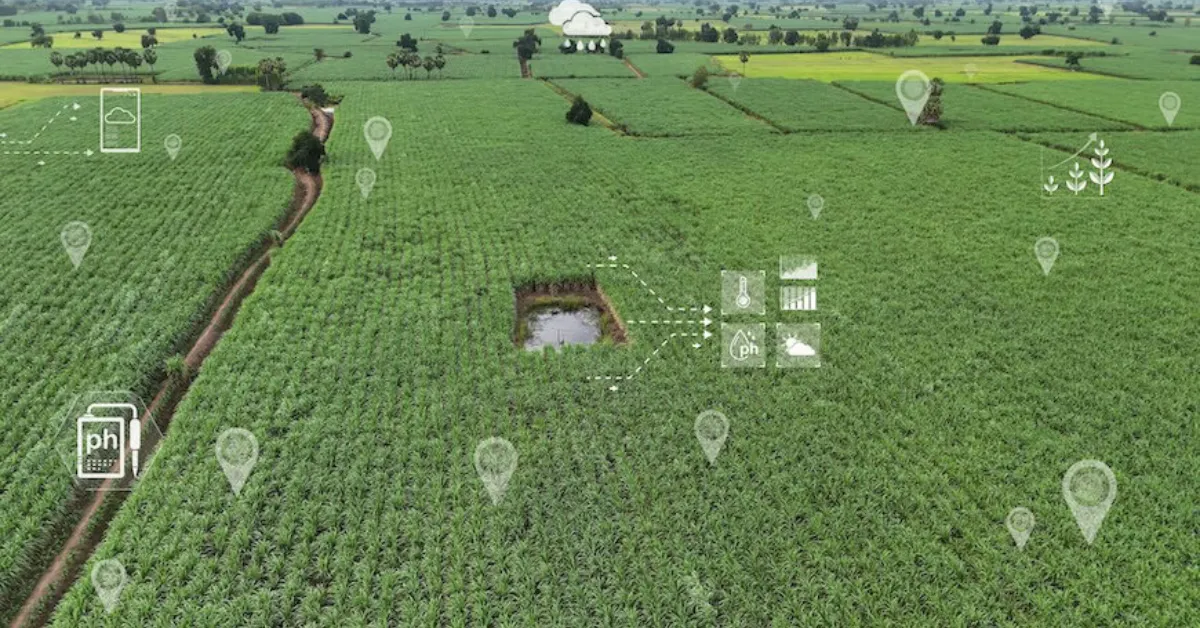
Imagine a satellite hundreds of kilometres above Earth quietly watching a wheat field in Haryana — and spotting water stress before the farmer even sees it. Sounds like science fiction? It’s happening right now.
In May 2026, the world noticed. Haryana received the Geospatial Excellence Award at the Geospatial World Forum in Amsterdam for a satellite-powered system that does exactly what school textbooks promised: using space technology to help farmers on the ground.
The international jury praised Haryana’s Space Applications Centre (HARSAC) for building a practical, scalable system that tackles food security, environmental sustainability, and climate resilience together — rather than treating them as separate challenges.
How Haryana makes it work
HARSAC, set up in 1986 and working under the Citizen Resources Information Department and working with ISRO and the National Remote Sensing Centre, has created a “unified geo-enabled ecosystem built around the concept of ‘Space to Citizen Service’.”
Today, the system supports over 15 lakh farmers across one crore fields and is used daily by more than 4,000 officials, including revenue officers, patwaris (village-level accountants), surveyors, and agricultural planners.
At its heart, the platform brings together satellite imagery, remote sensing data, GIS dashboards, mobile apps, UAV surveys, and AI analytics in one operational layer. Through this, HARSAC provides:
-
Crop monitoring and yield assessment
-
Crop insurance analytics
-
Image-based crop health monitoring
-
Mandi mapping and market rate information
Farmers can check market rates and selling outlets through a common portal, while government departments use the same system for agricultural planning and climate-resilience initiatives.
The system relies on vegetation indices derived from satellite data to track crop health over the season. Tools like NDVI, which measures plant vigour, and land surface water indices, allow officials to spot water stress or nutrient deficiency at the field level, weeks before visible symptoms appear.
When an area shows signs of stress, officials can issue targeted advisories, saving time, money, and water, rather than using broad, one-size-fits-all interventions.
Fighting hidden threats on the farm
Water is running out for Haryana’s farmers. Groundwater is being pumped out faster than it can refill — about 137% of what nature gives back each year. Agriculture takes up almost 87% of that water, and paddy dominates the kharif season. In many districts, water levels are falling between 0.33 and 1 metre per year, making the current way of farming hard to sustain.
HARSAC’s system helps farmers and officials spot trouble early. By mapping water stress across thousands of fields, it flags areas of overuse or inefficiency. This isn’t just tech—it’s a governance tool that helps the state plan how long its farms can remain productive.
Across India, similar pressures are driving interest in precision farming, and satellite-based crop monitoring is one of the few tools capable of giving real-time insights at the scale that governments need.
The system also keeps an eye on crop residue, which is the leftover stalks, stems, and leaves after harvesting wheat or rice. Many farmers burn this material to clear fields quickly, creating smoke and pollution. HARSAC uses satellites to spot these fires and send GPS alerts to officials, who can step in immediately.
Over the years, this has helped cut down farm fires in the districts that used to burn the most.
Making tech work for every farmer
What sets apart the HARSAC approach is not any single technology but the integration of multiple data streams into a system that is both operationally active and genuinely accessible to a large number of users.
/filters:format(webp)/english-betterindia/media/media_files/2026/06/05/avantika-featured-image-template-4-2026-06-05-14-46-58.png)
Across India, precision agriculture tools have often remained confined to pilots or to farmers with capital enough to invest independently, while smallholders have been largely left out of the data revolution in farming.
By building the system as a government service rather than a commercial product, and by routing it through existing administrative structures including revenue officials, Patwaris and district agricultural officers, HARSAC has created a channel through which satellite intelligence can reach a farmer in Kaithal or Fatehabad without requiring them to own a smartphone or pay a subscription.
The savings to the state from improved yield estimation and procurement planning alone are estimated at Rs 300 to 400 crore annually, according to HARSAC’s own assessments.
Haryana’s Geospatial Excellence Award is ultimately recognition of something straightforward but significant: that space technology, applied with intention and institutional commitment, can work in the service of the farmer who most needs it.
As groundwater pressures intensify and climate variability makes crop planning harder, the ability to see a field clearly from orbit, and turn that view into an actionable warning, is exactly the kind of practical innovation that Indian agriculture needs more of.
Sources:
‘Haryana receives Geospatial Excellence Award in Netherlands, Chief Minister congratulates HARSAC team‘: by ANI News, Published on 16 May 2026
‘Haryana wins Geospatial Excellence Award for agricultural innovation in Netherlands‘: by The News Mill, Published on 17 May 2026
‘Haryana wins Geospatial Excellence Award for farmer-tech innovation in Netherlands‘: by The Tribune, Published on 17 May 2026
‘Geospatial Technology-based Crop Management Solution — Project Summary‘: by HARSAC for Esri India ArcIndia News, Published 2025
‘Satellite-based crop monitoring strengthens India’s production estimates‘: by Global Agriculture, Published on 18 December 2025
Disclaimer : This story is auto aggregated by a computer programme and has not been created or edited by DOWNTHENEWS. Publisher: thebetterindia.com