

The packing process can be one of the most stressful parts of flying, especially if you’re trying to cram everything into a carry-on to avoid checking a bag.
Regardless of whether you are flying with a U.S. or international carrier, the number and size of bags you can bring on board depend on the specific airline’s policy. We’ve outlined many of those policies in this guide, including size requirements and weight restrictions.
Read on for all you need to know about traveling with carry-on bags.
What size is carry-on luggage?
As you’ve likely observed, most domestic airlines allow passengers one personal item that fits underneath the seat in front of them and one larger carry-on bag suitable for the overhead bin. Note that some basic economy fares only allow one personal item.
Some airlines specify size requirements for both items, while others only restrict the overhead baggage. Just remember that a carrier’s policy for the larger carry-on accounts for the size of the entire bag, including handles and wheels.
Generally, items like coats, books, umbrellas, food purchased at the airport, duty-free items, diaper bags, infant car seats and strollers do not count toward your carry-on or personal item allowance.
The standard size limit across most domestic airlines for your larger carry-on is around 22 by 14 by 9 inches (length by width by height), so that’s a good rule of thumb to keep in mind.
Below is a breakdown of the carry-on policies for U.S. airlines.
Southwest Airlines
Carry-on items stored overhead must be no larger than 24 by 16 by 10 inches. Your personal item — such as a briefcase, laptop computer case, backpack, pillow, blanket or camera — must fit under the seat in front of you. Neck pillows do not count toward the carry-on limit.

Daily Newsletter
Reward your inbox with the TPG Daily newsletter
Join over 700,000 readers for breaking news, in-depth guides and exclusive deals from TPG’s experts
By signing up, you will receive newsletters and promotional content and agree to our Terms of Use and acknowledge the data practices in our Privacy Policy. You may unsubscribe at any time.
Delta Air Lines
The combined length, width and height of carry-on baggage should be less than 45 inches. Individual items must be less than 22 by 14 by 9 inches. Personal items must be small enough to fit under the seat in front of you.
American Airlines
Overhead items for American Airlines passengers should measure no more than 22 by 14 by 9 inches, while personal items can measure 18 by 14 by 8 inches.
United Airlines
Larger carry-on items cannot exceed 22 by 14 by 9 inches; under-seat personal items on United must measure no more than 17 by 10 by 9 inches.
JetBlue
Like most other domestic carriers on this list, JetBlue requires overhead items to be no larger than 22 by 14 by 9 inches. Personal items must measure less than 17 by 13 by 8 inches.
Alaska Airlines
Alaska Airlines requires overhead items to be no more than 22 by 14 by 9 inches. Personal items must fit underneath the seat in front of you.
Alaska Airlines carry-on policy
Hawaiian Airlines
Carry-on items aboard Hawaiian Airlines flights cannot exceed 22 by 14 by 9 inches. Personal items must fit under the seat in front of you.
Hawaiian Airlines carry-on policy
Carry-on sizes for international carriers
Carry-on size limits for international carriers are more varied than for domestic airlines.
Below are the carry-on policies for economy passengers on major international carriers.
Read more: Airline baggage fees: How much it costs to check a bag on major US airlines
Can I bring a carry-on and a personal item?
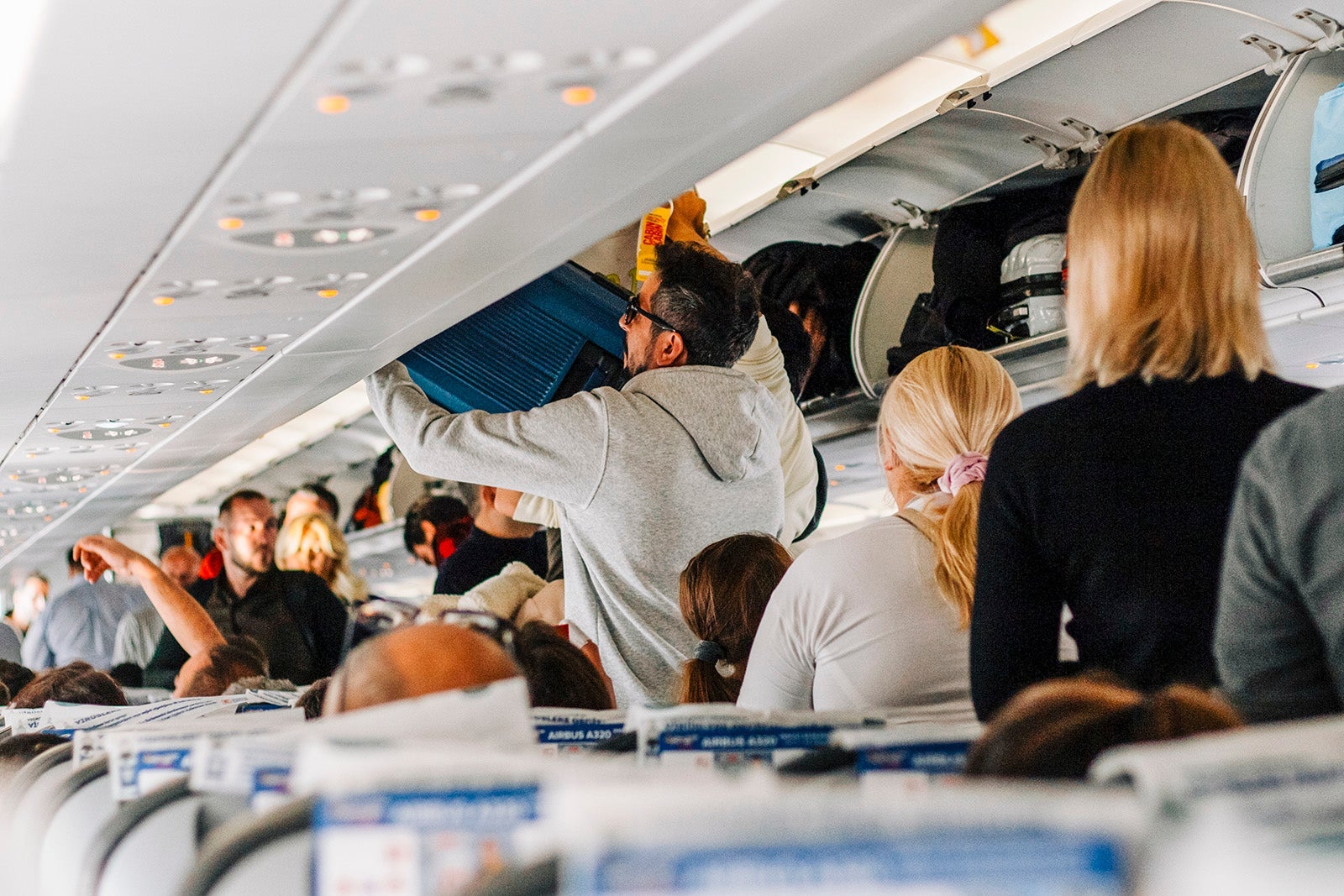
As mentioned, all airlines differentiate between smaller personal items and larger carry-on items. If your carry-on bag fits under the seat in front of you, it’s considered a personal item; this includes small backpacks, purses, briefcases and laptop bags.
Larger bags, including suitcases that fit in the overhead compartment, are labeled as larger carry-on items.
Southwest once stood out among carriers for allowing passengers two free checked bags, a carry-on and a personal item, regardless of fare type. However, in 2025, the carrier decided to end this allowance and start charging for checked baggage.
Most domestic airlines allow passengers to carry one carry-on bag and one personal item free of charge, depending on their fare type.
Related: How to tell if your backpack counts as a personal or carry-on item
The cheapest fare type on United (basic economy) restricts flyers to one personal item that can fit under the seat in front of them. Similarly, if you book with an ultra-low-cost airline like Frontier Airlines or Breeze Airways, the basic fare only includes a personal item.
Among many international carriers, your fare type also determines whether you are eligible to bring one or two carry-on items, so be sure to check baggage allotments when booking.
Carry-on luggage weight limits
Though airlines care about size, most domestic airlines do not have weight restrictions for carry-on bags. Some enforce weight limits for specific routes, though. For example, Delta restricts passengers flying to and from Beijing and Shanghai to a 22-pound carry-on, and it restricts bags to and from Singapore to 15 pounds.
Low-cost airlines Frontier and Sun Country both have 35-pound limits. Hawaiian Airlines limits carry-on bags to 25 pounds.
Outside of these, you won’t find a blanket weight policy for carry-on bags for domestic carriers.
On the other hand, most international carriers specify weight requirements for carry-on bags that vary by fare type. For economy fares, carry-on weight limits vary among major carriers, including:
- Emirates, Singapore Airlines, Cathay Pacific, Qatar Airways, Air New Zealand: 15 pounds
- Turkish Airlines: 17 pounds
- Virgin Atlantic, ANA, Korean Air, Japan Airlines: 22 pounds
- La Compagnie: 39 pounds
- British Airways: 51 pounds
What is allowed in a carry-on bag?
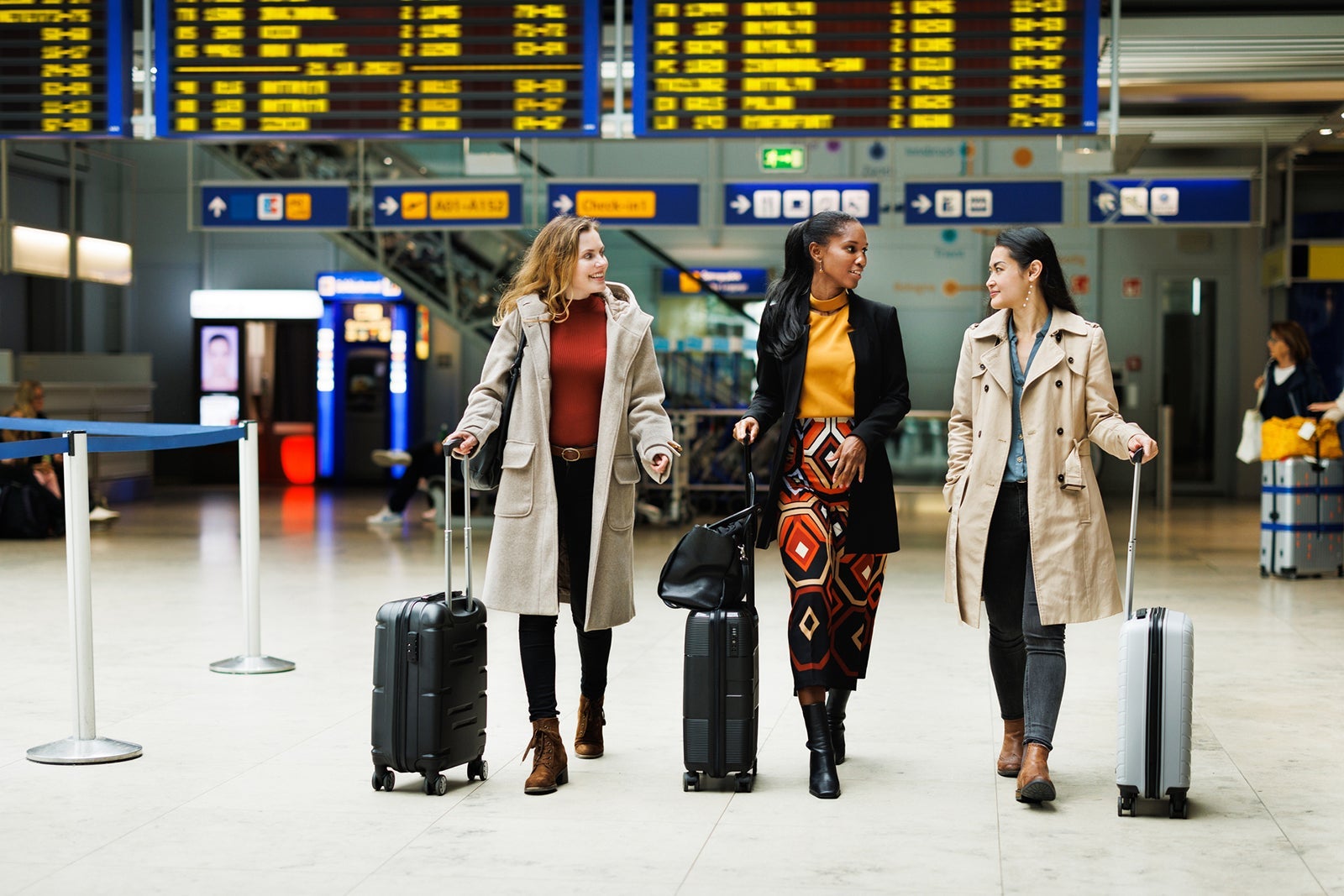
The U.S. Transportation Security Administration monitors carry-on bags just as it monitors checked luggage; TSA prohibits certain items, including firearms, lithium batteries and other potentially hazardous items outlined on TSA’s website.
Within those confines, you’re further restricted to liquids less than 3.4 ounces per the 3-1-1 rule; this limits items like toothpaste, shampoo, conditioner, mouthwash and lotion to 3.4 fluid ounces within a quart-size bag. TSA recommends packing full-size liquids in your checked luggage.
Related: Here’s what to pack in a carry-on bag every time you travel
Your carry-on is the safest place for your most valuable items, such as your purse, electronics, passport, jewelry and medicines.
For inbound international flights to the U.S., you can carry on liquids exceeding 3.4 ounces if you purchased them in the duty-free section and they remain in their secure, tamper-evident bags. You’ll also want to hold onto your original receipt to show you made the purchase within the preceding 48 hours, as TSA may request this for screening.
Other international border agencies have similar rules prohibiting the transport of certain items on airplanes, so be sure to check with your individual airline regarding those rules.
Bottom line
Depending on your fare type, most domestic airlines generally permit travelers to carry-on two items — one that fits underneath the seat in front of them (typically called a personal item) and a second bag that fits overhead. However, the baggage must meet certain dimension thresholds, which vary by airline.
Personal items include small backpacks, purses, briefcases and laptop bags. Larger bags — including suitcases that fit in the overhead bin — are considered larger carry-on items.
Carry-on policies vary greatly among international carriers, depending on the fare type. The fare type also determines the weight requirements for carry-on bags. However, U.S. airlines generally do not have weight restrictions for carry-on items.
Related reading:
Disclaimer : This story is auto aggregated by a computer programme and has not been created or edited by DOWNTHENEWS. Publisher: thepointsguy.com



