
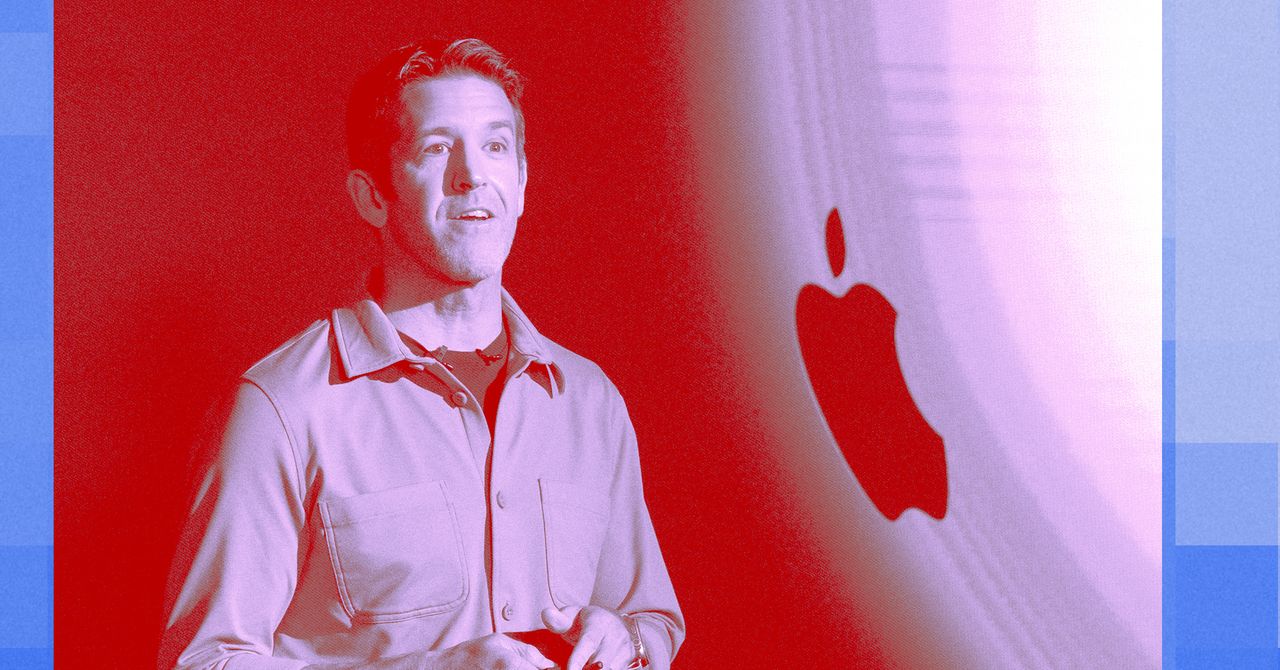
Sometime in the next year or two, Apple’s new CEO, John Ternus, will step onto a stage and tell the world that his company has a revolutionary product. This product, he’ll say, will put the full and awesome power of AI into everyone’s hands. It probably won’t represent a breakthrough in AI research, and it might not let people automate work or perform tasks any better than a lot of technically minded people are doing today. It may or may not involve a new device, though if it doesn’t, one should be in development. But if it all works out, that keynote will mark the moment when Apple did to AI what it has done for desktop computers, the internet, mobile technology, wearables, and music distribution. That is, it’ll offer a solution to a troublesome technology that’s so delightful and right that it seems obvious in retrospect.
This isn’t optional for Ternus. While AI is clearly the future and millions of people use it, even more are suspicious of it. Powerful new AI agent technologies such as Claude Code and OpenClaw are still too risky or technical for most people to adopt. If Apple doesn’t decode this for the masses, someone else will. Current CEO Tim Cook, who announced this week that he’ll vacate his role in September and become the company board’s executive chairman, has done a superlative job guiding the company after Steve Jobs, but he left this important box unchecked. Apple Intelligence, rolled out with much fanfare in 2024, was underwhelming and uncompleted.
Can Ternus shepherd such a product? It’s hard to say, because the current SVP of hardware engineering has spent so much of his career out of the public eye. He only recently started doing more press interviews when it became apparent that he was the top candidate to assume Cook’s job. People see him as a methodical operator like Cook as opposed to a visionary like Jobs, but that might be because of a similar low-key demeanor. Maybe once he’s in the top job, he’ll be liberated to reach for the skies.
My own interactions with him have been sparse. A decade ago I spent a day at Apple’s Input Design Lab with him and his team. “I started in 2001 and have had the good fortune of working on many of our products throughout the years,” he told me by way of introduction. That day he got deep into the weeds on subjects like quantum dots, the environmental impact of cadmium, and the fact that “not all white light is created equal.” It was clear that he was likable; there was a lot of fun banter between him and his team.
Much more recently, I quizzed Ternus and global marketing head Greg Joswiak about Apple’s future, specifically its plans to get ahead of the AI transformation. Ternus acknowledged that AI is “an immense kind of inflection point,” but couched it as one of many leaps that Apple has navigated. Each hit product—the Apple II, the Mac, iTunes, the iPod, the iPhone, iPad—piggybacked on a previous product. “We never think about shipping a technology,” he said. “We want to ship amazing products, features, and experiences, and we don’t want our customers to think about what [underlying] technology makes it possible. That’s the way we think about AI.”
That’s fine, but I look back to the mid-2000s when everybody was waiting for Apple to come out with a phone. When Jobs finally delivered in January 2007, the product defined the mobile era. It’s a big ask for Ternus to do something similar for the AI age—but it’s an opportunity that must be seized. AI threatens to disrupt the entire iPhone ecosystem. By the end of this decade, it’s unlikely that people will swipe on their phones to tap on Uber or Lyft. They will just tell their always-on AI agent to get them home. Or that agent will have already figured out where they need to go, and the car will be waiting without the friction of a request. “There’s an app for that,” may be replaced by “Let the agent do that.”
When I suggested to Joswiak and Ternus that Apple surely must be working on an AI-centric device to accommodate this pivot—maybe like the one that former Apple design wizard Jony Ive is concocting with OpenAI—they didn’t comment, but insisted that the iPhone, which currently hosts various AI models, might be good for another 50 years. “IPhones are not going anywhere,” Joswiak told me.
If we’re reading tea leaves, I’d look more closely at Apple’s other announcement this week. Filling Ternus’s former role as SVP of hardware engineering will be the wizard behind Apple’s silicon strategy, Johny Srouji. Srouji led a movement that shifted the focus of Apple’s hardware operations from design to custom chips. Apple’s bespoke silicon is the secret behind almost all its innovation in the past decade, resulting in more powerful, energy-efficient products. Srouji commands a level of respect at Apple similar to what Jony Ive enjoyed. In 2021, I interviewed both Srouji and Ternus on Apple’s silicon strategy, and Ternus emphasized how effective it was to have a custom chip at the center of the design process.
Apple’s products already have custom AI chips, known as neural engines. I suspect that a big part of its inevitable big move in AI will involve even more powerful neural engines. Perhaps they will deliver to devices a lot of the power of the heavy-duty silicon provided by the industry’s leader in AI chips, Nvidia. Reportedly Apple already has a deal with Broadcom for AI chips to be delivered in the next year or so. Expect them and their successors to find their way into Macs, iPhones, and maybe even an entirely new device that will allow personal agents to thrive while protecting privacy.
This also sets the stage for another Silicon Valley showdown. While Apple doesn’t compete with Nvidia directly, its chip strategy may pit Ternus against Nvidia CEO Jensen Huang for the industry bragging rights on AI primacy. The relationship between the two companies is already tense, reportedly dating back to Steve Jobs’s belief that Nvidia copied Pixar technology in its GPU chips.
That’s all background for Apple’s must-create product that solves AI the way that the Mac solved the desktop, the iPhone solved mobile, and the Airtag solved lost luggage. Apple may be well along on this product, but it will be up to Ternus to tweak it to perfection and pull the trigger. One thing he has going for him is that after 25 years at Apple, he understands what makes products great. “There’s this thing that that happens,” he told me last month. “I’ve never been able to quite put my finger on it, but at some point you just get this intuitive sense of what meets the Apple quality bar. You can look at something and you say, yep, that’s good enough for us, that’s something that we’d be proud of. I could never describe it. It’s this incredible, organic kind of transfer of Apple’s values.”
Tim Cook did a fantastic job as Apple’s CEO, but left hanging how the company would dominate in the AI era. That’s John Ternus’s job. The clock is ticking.
Disclaimer : This story is auto aggregated by a computer programme and has not been created or edited by DOWNTHENEWS. Publisher: wired.com







