Opinion
They’re useful when choosing a hotel – but in the popular arts, star ratings are a bust.
Benji Wilson
Walk past a movie poster, scour the ads for your next dose of must-see TV or hit up Goodreads for a new book, and you’ll find yourself playing the same game: you’re presented with a star rating, usually from one to five, and encouraged to base your next move upon it.
I review TV shows for a living, and part of the job is to assign each and every one a star rating. I get it – the star rating is the first thing a reader looks at, and if it leads them to read any of the words below, then great. Stars twinkle; they get attention. The star rating gets to go on the front page. It gets funnelled into Metacritic and IMDb and so on, in to a great, universal rating that, thanks to Rotten Tomatoes and the like, these days can determine the fate of a show or a book.
I’ve written a whole book myself about star ratings and consumer reviews (called Rate This Book and currently rated 4.4 stars on Amazon) and my conclusion is that star ratings – everyone reading them and giving them for everything from the new series of Slow Horses to your experience in an airport toilet – have taken over the world.
But if star ratings are great for determining which is the best pair of scissors or whether a Booking.com hotel room is worthy of your consideration, in the popular arts, star ratings are a bust. The problem is not so much at either end of the scale. Readers love a bad review – witness the excitement when Kim Kardashian’s world-historically awful Netflix legal drama All’s Fair ignited a firestorm of critical horror, with a slew of zero-star ratings across the world — and a dewy-eyed panegyric to a five-star production like Pachinko or The Wire is a gimme, too.
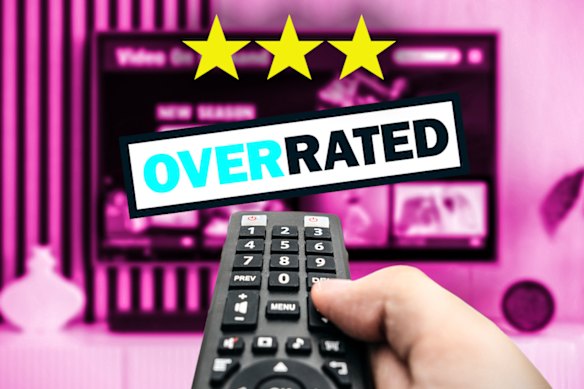
The problem is in the middle. Three stars, the great, gawping ‘meh’ of modern culture, is a meaningless average that gobbles up all comers. When I decide that last week’s episode of The Great British Bake Off, for example, is three rather than four stars, I’m consigning it to a bracket from which nuance instantly evaporates. The temptation is always to regress towards the mean, which is three stars – neither a damnation nor a garland; just a large, padded fence to sit on.
The truth is that everything is not awesome, as The Lego Movie would have it, but then neither is everything awful. Both the laws of statistics and your general life experience will tell you that most television, most stuff, even most people, are to be found somewhere in the region of “OK”.
But that means that saying something is three stars is not really saying anything at all. So you go up to four, or down to two, and then suddenly you’re edging dangerously towards competence, even perfection, or slumping towards censure. With just five ratings to choose from, star ratings flatten criticism. They are simplistic, borderline Philistine and overall mildly insulting to readers, viewers and critics.
Goodreads recently admitted as much, with the announcement that it was introducing not just half stars but quarter stars as well. “More ways to say exactly what you mean,” the popular book-reviewing site announced earlier this month, adding that this was the No.1 request from their 150 million users.
You can see where this is heading. The whole point of a five-star system is to keep things simple. Johnny Punter can glance at the poster, see a panoply of stars and go book his ticket. Breaking the stars down into granules of opinion grants a licence for nuance, but the star rating itself is anti-nuance and pro-clarity. Either it’s simple or it’s not.
Where does all of this starring come from, anyway? The great democratisation of criticism – brought about by the internet, blogs and then social media – means that these days, everyone is a critic. That same great democratisation of criticism came along with an explosion of entertainment choices. People needed prompt guidance through Spotify, Netflix and Amazon’s infinite shelf, and star ratings, which were ported from travel guides in the first instance and then spread through the internet via consumer reviews on e-commerce platforms, offered a universally recognised quick steer.
But the currency has become corrupted. The predominance of ratings aggregators such as Rotten Tomatoes or IMDb means that instead of being a source of wisdom-of-crowds guidance, star ratings have become a meaningless mush. Liane Moriarty is some way better than King Lear, according to Goodreads. IMDb claims SpongeBob SquarePants is virtually equal to the original UK iteration of The Office. Any movie marketing department can find a five-star rating for their poster if they spend enough time looking for it. It turns out that the wisdom of crowds has led to opinion becoming just more food for the algorithm. Rating is overrated.
Want more Verdicts?
From our partners
Disclaimer : This story is auto aggregated by a computer programme and has not been created or edited by DOWNTHENEWS. Publisher: www.smh.com.au