Sept 22 (Reuters) – As China and the US race to build separate AI supply chains, investors are playing both sides, with US banks fundraising for AI upstarts in China and Chinese money flowing to US tech.
The stakes are sizable, with Wall Street banks acting as bookrunners on 19 Chinese high-tech equity capital market deals worth $17.2 billion so far this year, according to LSEG data, accounting for nearly 30% of the sector’s total issuance.
US stocks, particularly semiconductors, are also the favourite destination for China’s outbound mutual funds. The value of US equity held by Hong Kong residents and mainland Chinese has jumped 23% in the past year to top $750 billion, US data shows.
The financial connections, shown in public disclosures, enmesh the competitors in a rivalry analysts say is akin to the Cold War Space race. AI is likely to be in focus when leaders Donald Trump and Xi Jinping meet this week in Washington.
For investors, the mutual exposure is a safety net giving both sides an interest in keeping relations steady, and holding expectations low for the Trump-Xi meeting to break new ground.
It is also at risk of unwinding painfully if US-China relations deteriorate and further cleave AI development in two.
“US and Chinese businesses and investors continue to maintain connectivity and invest in each other despite highly volatile geopolitical conditions,” said Fred Hu, founder and chairman of private equity firm Primavera Capital Group.
“The forthcoming Trump-Xi Summit can hopefully inject more certainty and energy to the essential financial connectivity and broader economic relationship.”
US Treasury Secretary Scott Bessent said he and Chinese Vice Premier He Lifeng discussed setting up a US-China AI dialogue this week, with a notification system for common goals and threats.
FINANCIAL CONNECTIONS
The financial connectivity has held and deepened despite China’s pursuit of AI self-sufficiency and the US Pax Silica initiative, aimed at securing its AI supply lines.
Washington restricts the supply of top-line chips and chip-making technology to China and has restricted U.S. investment into sensitive AI-related sectors in China for several years.
But the investing rules contain a carve-out for publicly-traded securities and have not stopped Wall Street’s involvement in China’s AI listing boom, where investor interest is fuelled in part by China’ self-sufficiency drive.
Wall Street banks this year advised on more than a dozen AI and chip listings and follow-on share sales, LSEG data showed.
Wall Street underwriting Chinese tech IPOs is about “clipping the ticket on both sides of a cold war,” said James Buckley-Thorp, founder and CEO of AI company Atlian.
Optical parts maker Zhongji Innolight, which raised $6.8 billion in a major listing in Hong Kong, counted Goldman Sachs, Morgan Stanley and Citigroup among its joint global coordinators.
Goldman and Morgan Stanley also worked on Hong Kong listings of AI developer MiniMax, chipmakers Montage Technology and Shanghai Iluvatar CoreX Semiconductor, while J.P. Morgan underwrote the roughly $2.6 billion Hong Kong share sale by Victory Giant Technology, which makes printed circuit boards for AI servers.
US banks also show up in shareholder registers of chipmakers on Shanghai’s Nasdaq-like STAR Market, holdings that typically reflect activity on behalf of clients and suggest they are conduits for global cash into the sector.
From investors’ point of view, US technology restrictions could help, rather than hinder development and interest in China’s domestic tech players, said Atlian’s Buckley-Thorp.
“There’ll be two internets, two chip stacks, two rulebooks, and your portfolio needs a passport for both,” he said.
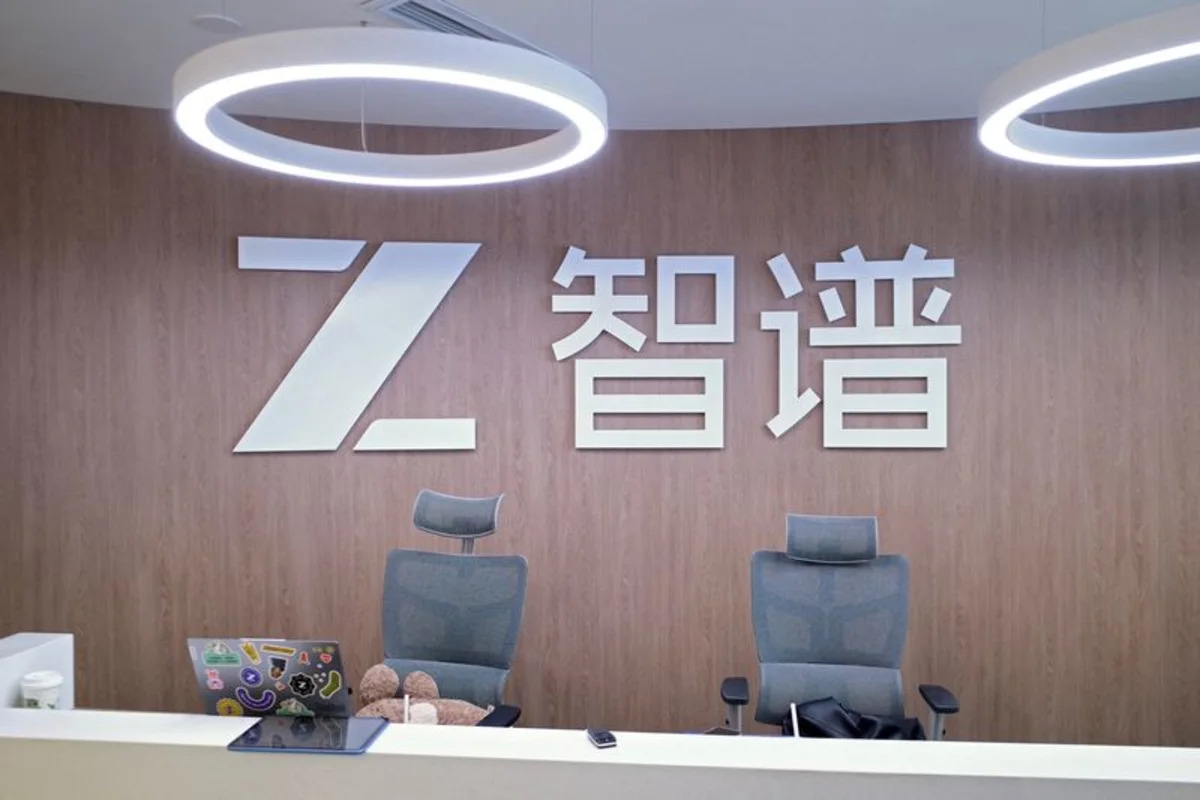
“The Shanghai punter buying Nvidia and the pension fund buying Zhipu in Hong Kong are making the same bet: that the politicians won’t actually pull the trigger. That’s the trade,” he said, referring to the risk of politicians taking a harder line on AI.
CAPITAL IS PROFIT SEEKING
Where it can be tracked, Chinese investment flow to the US has also been strong.
U.S. stocks, and tech shares among them, account for nearly half of the 1 trillion yuan ($150 billion) managed by China’s outbound mutual funds, which invest under quotas controlled by China’s foreign exchange regulator.
The value of Chinese holdings jumped this year in US chipmakers including Micron Technology, AMD, Sandisk Corp, Lam Research and Applied Materials, according to data compiled by Sinolink Securities.
According to S&P Global Market Intelligence, the total value of U.S. AI funding rounds involving investors based in China or Hong Kong has climbed sharply from about $436 million in 2023 to roughly $8.9 billion through mid-September.
To be sure, the flows are shifting and there are frictions close to the surface.
Thilo Hanemann, a partner at research firm Rhodium Group, said wealthy Chinese investors continue to invest in US tech companies through offshore funds, “but there is very limited visibility into these fund structures and thus the magnitude of exposure.”
At least one U.S. lawmaker has criticised JPMorgan Chase and Bank of America for underwriting the Hong Kong listing of Chinese battery giant Contemporary Amperex Technology Co, a company the U.S. says has ties to China’s military.
Washington is also adding a growing number of Chinese tech companies to its list of companies it believes are aiding Beijing’s military. And SpaceX’s website and IPO materials were inaccessible in Hong Kong and mainland China ahead of its listing in June.
Still, investors on either side of the so-called ‘Silicon Curtain’ want to spread their bets, for now.
“There probably won’t be a single winner in the U.S.-China AI race, said Xile He, a China-born-and-educated entrepreneur who’s co-founder and CEO of AI start-up BrentX in San Francisco. “From an investor perspective, I think betting entirely on one side is a big risk.”
($1 = 6.6963 Chinese yuan renminbi)
(Reporting by Reuters Staff; Editing by Kim Coghill)
Disclaimer : This story is auto aggregated by a computer programme and has not been created or edited by DOWNTHENEWS. Publisher: finance.yahoo.com