
Imagine standing in the middle of a dense forest. You can hear leaves rustle, a distant alarm call echoes, and suddenly, a tiger walks past, close enough to feel real, yet you’re completely safe. You haven’t entered the jungle, but the jungle has come to you.
That’s the promise of a new virtual reality (VR) experience at Tadoba-Andhari Tiger Reserve in Maharashtra — one that’s quietly redefining how we explore wildlife.
Stepping into the wild, without being there
Traditionally, wildlife tourism has meant jeep safaris, long waits, and sometimes, no sightings at all. But Tadoba’s new VR initiative flips that idea on its head.
Photograph: (Stock Cake)
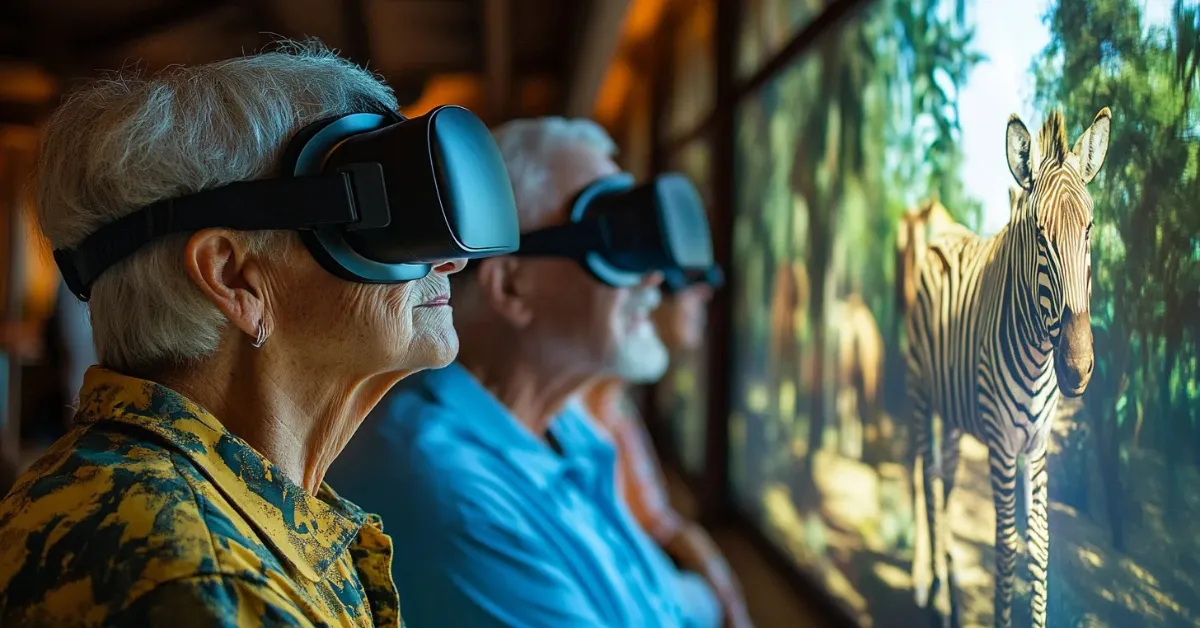
At select entry gates like Moharli and Khutwanda, visitors can now put on a VR headset and watch a specially curated six-minute immersive film. This isn’t just a video, it’s a 360-degree journey through Tadoba’s forests, wildlife, and changing seasons.
The experience lets you move through landscapes that are otherwise hard to access, observe animals up close, and understand the ecosystem in a way that a traditional safari might not always allow.
It’s designed to feel real enough to spark curiosity and respect for the wild.
In a way, it answers a simple question: what if you could experience the jungle without entering it?
A new way to protect wildlife
Here’s where it gets interesting. This isn’t just about tourism; it’s about conservation.
/filters:format(webp)/english-betterindia/media/media_files/2026/05/05/vr-wildlife-tadoba-2026-05-05-12-19-03.png)
Wildlife reserves often face a tricky balance: more tourists bring awareness and revenue, but they can also disturb fragile ecosystems. By offering a VR alternative, Tadoba is creating a low-impact way for people to engage with nature.
Visitors who may not get safari slots, or those who want a deeper understanding, can still experience the forest. This reduces pressure on core zones while still delivering a meaningful encounter with wildlife.
It also becomes an educational tool. By showcasing biodiversity, seasonal changes, and animal behaviour in a controlled format, the VR experience helps build awareness about why conservation matters in the first place.
In short, it’s not replacing safaris; it’s complementing them, making tourism more responsible.
Livelihoods rooted in conservation
What makes this initiative stand out is who runs it.
Each VR unit is managed by local youth from buffer zone villages around Tadoba. For a small fee of around Rs 50 per session, visitors can access the experience while directly contributing to local incomes.
The project is expected to create employment for about 40 people, linking conservation with livelihoods in a tangible way. Instead of being passive stakeholders, local communities become active participants in ecotourism.
/filters:format(webp)/english-betterindia/media/media_files/2026/05/05/vr-wildlife-tadoba-2026-05-05-12-21-12.png)
Photograph: (Marwell Zoo)
This also serves as a reminder that when communities benefit from conservation, they are more likely to protect it.
Beyond safari: Rethinking wildlife experiences
Tadoba has been steadily expanding beyond the idea of just tiger sightings, exploring more immersive and inclusive ways to connect people with nature.
The VR experience fits right into this larger shift. It opens up the forest to the following:
-
People who may not be able to go on safaris
-
Visitors with limited time
-
Those curious to learn, not just spot animals
It also hints at the future of eco-tourism, where technology doesn’t replace nature but helps us experience it more thoughtfully.
Because maybe the goal isn’t always to get closer to wildlife, sometimes, it’s to understand it better, without disturbing it at all.
Sources:
‘Beyond safari: Tadoba launches immersive VR wildlife experience’ by Mazhar Ali for The Times Of India, Published on 1 May 2026.
Disclaimer : This story is auto aggregated by a computer programme and has not been created or edited by DOWNTHENEWS. Publisher: thebetterindia.com



