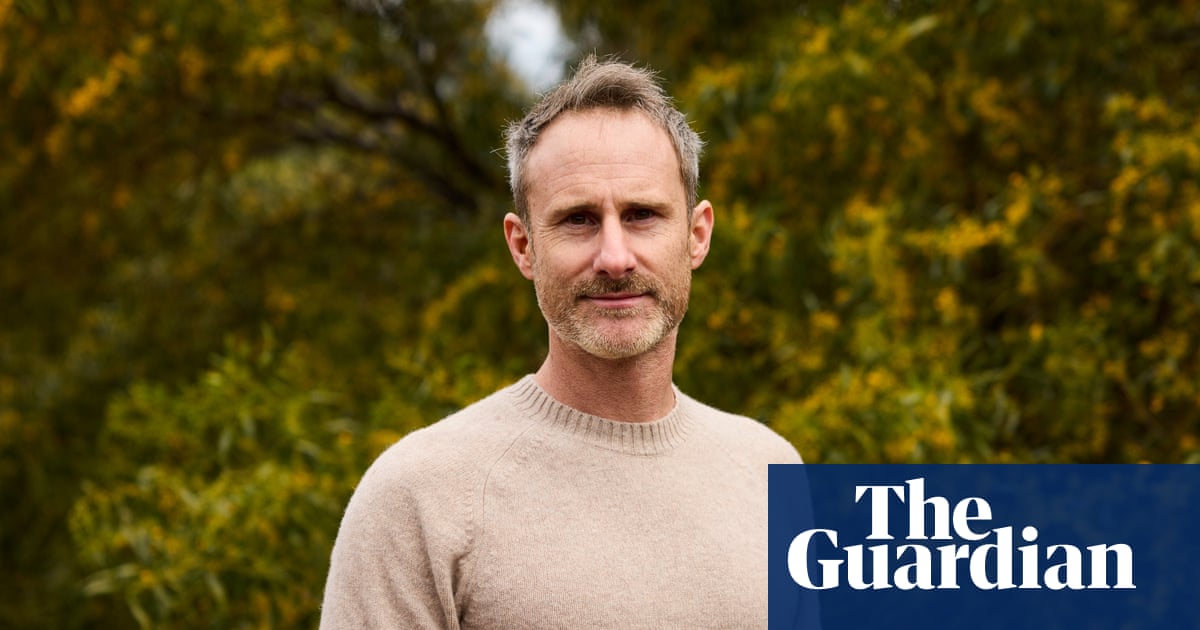
Books by Western Australian author Craig Silvey will be permanently removed from the state’s public school curriculum after he pleaded guilty to child exploitation offences.
The WA education minister, Sabine Winton, confirmed a temporary ban on Silvey’s books being used as texts in public school curriculum will now be made permanent. Winton said:
There is absolutely no place in our school system for works authored by someone who has admitted to such serious crimes.
Now that he has pleaded guilty, those texts will not return to the curriculum.
Predatory behaviour against children is abhorrent and has no place in our community, let alone in materials studied by students in our schools.
Winton said students who had already studied the text this year and planned to use it in their literature exams would not be penalised. Schools will also be supported to adjust lesson plans and switch texts.
Save the Children says debate over return of Isis-linked Australians should focus on giving the children the chance of a ‘normal life’ at home
The chief executive of Save the Children, Mat Tinkler, has told the ABC’s Afternoon Briefing debate over Australian citizens linked to Isis being repatriated to our shores should focus on giving the children among them “space to recover, to survive, to thrive”.
The home affairs minister, Tony Burke, confirmed that the government was aware that four Australian women and nine of their children had begun the journey home, after more than a decade of planning by a joint Asio and Australian federal police counter-terrorism taskforce.
Tinkler said it was expected that some of the women may face criminal charges but this shouldn’t stop them from coming to Australia.
I think we need to move beyond where this debate’s been, which is if this cohort can come back – and whether they should come back – well, the reality is they are coming back. They’re Australian citizens … We need to dial the temperature down.
We need to focus on giving these children the space to recover, to survive, to thrive. Two-thirds of this cohort that we’re talking about in Syria are children. There’s been a lot of focus on the women and the choices they may have made but we need to focus on these children and give them a chance of resuming a normal life in Australia.
He added many of the children’s teeth were falling out, they were dealing with untreated shrapnel wounds and had never been to school.
Children are innocent. They didn’t choose to be in this situation.
‘Pressure to conform’ to position on Israel and Gaza, royal commission hears
A non-Jewish university student (AAD), who has studied Holocaust denial, has told the antisemitism royal commission there is pressure to conform to a certain position on Israel and Gaza.
She says students in her classes fail to make a distinction between Israel and the Jewish people.
And she tells of a lecturer who was talking about the war in the Middle East and, when a student said he disagreed with her, she yelled and threw a microphone “towards him, at him”.
Students are forced to conform with the opinions of teachers and professors, even if they don’t think Israel is committing a genocide, she says.
She has also been removed from a groupchat because of her sympathy for Israeli hostages, she says.
Victoria police alleges ‘serious organised crime’ network behind spate of fires
Victoria’s chief commissioner, Mike Bush, has addressed the media from Melbourne after a spate of fires at licensed premises allegedly linked to organised crime syndicates in the state.
Bush says police are putting forwards “every possible resource to bringing this to a resolution”.
We’re also working with our commonwealth partners, Australian federal police, border force … and we’ve been successful to date in apprehending 35 offenders that are currently facing 140 charges.
That’s a good start. What we know so far, this is [allegedly] a serious organised crime group or network that are facilitating these crimes.
Bush says young people have been tasked to commit the alleged crimes with the use of technology and says the “adult entertainment trade” is being targeted.
What we are determined to work out is what’s the real motive behind these crimes? There’s a number of theories … although we have a body of evidence that might lead us in a particular direction … What we must find out is who is … pulling the strings.
Royal commission hears of 13-year old subjected to Nazi-style slurs and ‘squeezed until he couldn’t breathe’
A father (AAT) whose 13-year-old son was bullied, called a dirty Jew, and a stinky Jew, and subjected to Nazi-style slurs including the Nazi salute, has given evidence to the antisemitism royal commission.
Things escalated, and became physical.
“The physical bullying includes being squeezed until he couldn’t breathe … being dragged across the floor … being thrown into the garbage bin, being dacked,” he says.
Some students were suspended.
He took his son out of school, and AAT felt the school offered them “worse than zero support”, while the bullies did get support, and that in the vice-principal’s response he didn’t refer to the racism and implied that the behaviour was “play fighting”.
The son is now suffering antisemitic slurs at his new school, including a boy putting tape on his lip in imitation of Hitler’s moustache and being given the message that he doesn’t belong because he’s Jewish.
AAT says there is a new form of antisemitism in anti-Zionism, a “hate movement” that says Israel is a coloniser, an enabler of apartheid and genocidal, with an “imaginary Zionist” said to be a “baby killer”.
This “extremely unbalanced” view is repeated in the media, he says. He says:
This, for me, has broken many friendships because I’m worried that my friends think that I’m supporting a genocide and, for me, genocide is the worst thing that any country can do, but I know that Israel’s not doing that.
Police find body after car sinks in weir in Royal National Park near Sydney
NSW police have discovered a body after a car went off the road in the Royal National Park near Sydney and into a weir.
Officials said emergency services received reports the vehicle had done into the water about 1.15am on Wednesday. The driver of the car, a man, 20, was able to escape but the passenger, a man in his 20s, was unaccounted for.
Police divers recovered the body of the missing man about 10.20am. He is yet to be formally identified.
The driver and the driver of another vehicle were both taken to the hospital for mandatory testing.
The vehicle has been recovered and will be taken for forensic examination. Police have established a crime scene and will begin an investigation.
Victorian treasurer denies new lottery deal reason for budget surplus
The Victorian treasurer, Jaclyn Symes, categorically denied that a new deal with the Lottery Corporation announced on the same day as the budget is the reason the state posted a surplus.
The operator of Powerball and Oz Lotto told the ASX yesterday it received an unprecedented $1.14bn 40-year extension to its Victorian licence, allowing them to keep operating until 2068.
Speaking at a Victorian Chamber of Commerce and Industry and Melbourne Press Club event this afternoon, Symes says:
There is nothing in the extension of the lottery’s licence that contributes to the surplus this year or next year. It just doesn’t. It’s also not reflected in the surplus going forward as a lump sum. So the money comes in, but because of the way the accounting treatment of this type of transaction is it flows through the forwards over duration of the 40-year extension. So anybody that suggests that this is contributing to the surplus is wrong. It’s not even a factor in this year’s surplus at all.
She also told the crowd she would consider repealing a legislated 10-year Covid-19 levy on landholdings and payroll if the government recovers borrowings it made during the pandemic earlier:
There is a time limited Covid recovery plan that has … been in place for a few years now. It’s got a 10-year expiration date. And people have asked me, this is a future Jaclyn consideration, but if we’re on track to deliver what we wanted to do earlier … then that’s definitely a conversation worth having.
In her speech, Symes said the state borrowed $31bn during Covid, with more than $15bn directed to “business and economic survival”. It’s contributed to the state’s ballooning debt, forecast to reach $199.3bn by 2029-30.
But she focused on the forecast delivered in 2025-26, and the four forecast over the forward estimates:
We’re in surplus. It means that we are now only borrowing to invest in productive infrastructure. We don’t borrow to pay wages or run programs or even for depreciation of our assets.
The Human Rights Law Centre said today’s high court ruling would remove a legal barrier for the government to send more NZYQ-affected people to Nauru.
Others facing removal to Nauru still face visa appeals.
Josephine Langbien, the centre’s associate legal director, said the Albanese government was “intent on ripping people from their lives here and deporting them to Nauru – even if they may die from lack of medical care”.
Jana Favero, the deputy chief executive of the Asylum Seeker Resource Centre, said “no one should be sent to Nauru”, noting the living conditions, according to people already sent to the tiny Pacific island, were “dire”.
Despite all this, the Albanese government continues to pursue a divisive agenda by deporting people to harm all in the name of politics. It’s disgraceful and shows no regard for human rights, dignity or fairness.
Human rights groups condemn $2.5bn Nauru deal to banish NZYQ cohort
Refugee and human rights groups have criticised the federal government’s “disgraceful” deal with Nauru to banish hundreds of NZYQ-affected people to the tiny Pacific nation after the high court upheld its lawfulness.
As we reported earlier, the high court dismissed an Iranian man’s appeal to prevent his removal to Nauru on the basis he wasn’t afforded procedural fairness because the government did not inform him about the deal with Nauru, or that a visa had been applied for on his behalf.
His lawyers also argued Nauru’s medical facilities were “inadequate” to treat his severe asthma and that there was a “real risk he will die” there.
But the high court found the deal was constitutional, and that the man’s poor health was not a barrier to his removal, owing to laws the Albanese government passed in September last year.
Those laws removed natural justice – access to a fair hearing and to a decision without bias – for noncitizens on a removal pathway. The changes also validated government visa decisions made before the high court’s NZYQ ruling in November 2023 that could have subsequently been deemed unlawful.
So far, eight people have been sent to Nauru since Australia struck the $2.5bn deal.
That’s all from me. Caitlin Cassidy will take things from here. Take care.
A little more on the review of the controversial NSW koala reintroduction project
The National Parks and Wildlife Service produced the report with input from three universities.
The report was reviewed by three external experts, one of whom believed the weather was “the single most important driver for [the] koala mortalities”. Another said while the planning was mostly detailed and thorough, they were not convinced on available evidence that the South East Forest site “contained high quality koala habitat”.
A retrospective leaf analysis conducted for the NSW government by a university expert found the leaves at the translocation site in the South East Forest national park were high in concentrations of toxins and low in digestible nitrogen. A chemical analysis of the foliage had not been carried out before the project.
Further analysis of the koalas’ diet and microbiome to better understand the quality of the koalas’ diet is under way and will be completed later this year.
The report found the response and veterinary interventions as koalas died or fell ill exceeded standards seen in most translocation projects.
The state environment department has made and accepted 15 recommendations. They include conducting a more thorough assessment of leaf biochemistry before future translocations where koalas are being released into unpopulated habitat and reviewing and strengthening “processes through which expert advice informs licensing decision-making”.
Prof Mathew Crowther is a member of the expert panel that recommended against the project. The panel advised the department that if it proceeded it should conduct a captive feeding trial or “soft” release of the animals first, which would have involved closer management of the koalas initially.
He said it was clear from the report that the department had not done enough in its early planning to understand or assess why koalas were not already at the planned translocation site near Bega – one of the concerns raised by the panel.
“They should have done more to establish why koalas weren’t there in the first place,” he said.
NSW government review finds koala translocation failed but process was followed
A NSW government-led review of a controversial koala relocation in which more than half the animals died has found the project was a failure but officials did what was required and the veterinary response was above the usual standard.
The report, published by the state’s environment department, is inconclusive about what caused the deaths of eight of the 13 koalas. It found a combination of factors, including a severe infection – possibly linked to a rain event – and poor-quality foliage leading to low food intake may have contributed.
The animals were moved in March 2025 from the upper Nepean state conservation area to part of the South East Forest national park near Bega to try to re-establish a local koala population.
The review also said the department had been cleared of an allegation of animal cruelty made by the Greens environment spokesperson, Sue Higginson, to the RSPCA.
Higginson criticised the report, which she said failed to accept responsibility for the department’s rejection of advice from the majority of an expert panel which urged them not to proceed with the project. Guardian Australia revealed the advice late last year. Higginson said:
There is a responsibility that has to be held in this tragic situation and there is a glaring hole between the advice of the experts and the decisions made by the translocation teams.
Disclaimer : This story is auto aggregated by a computer programme and has not been created or edited by DOWNTHENEWS. Publisher: theguardian.com