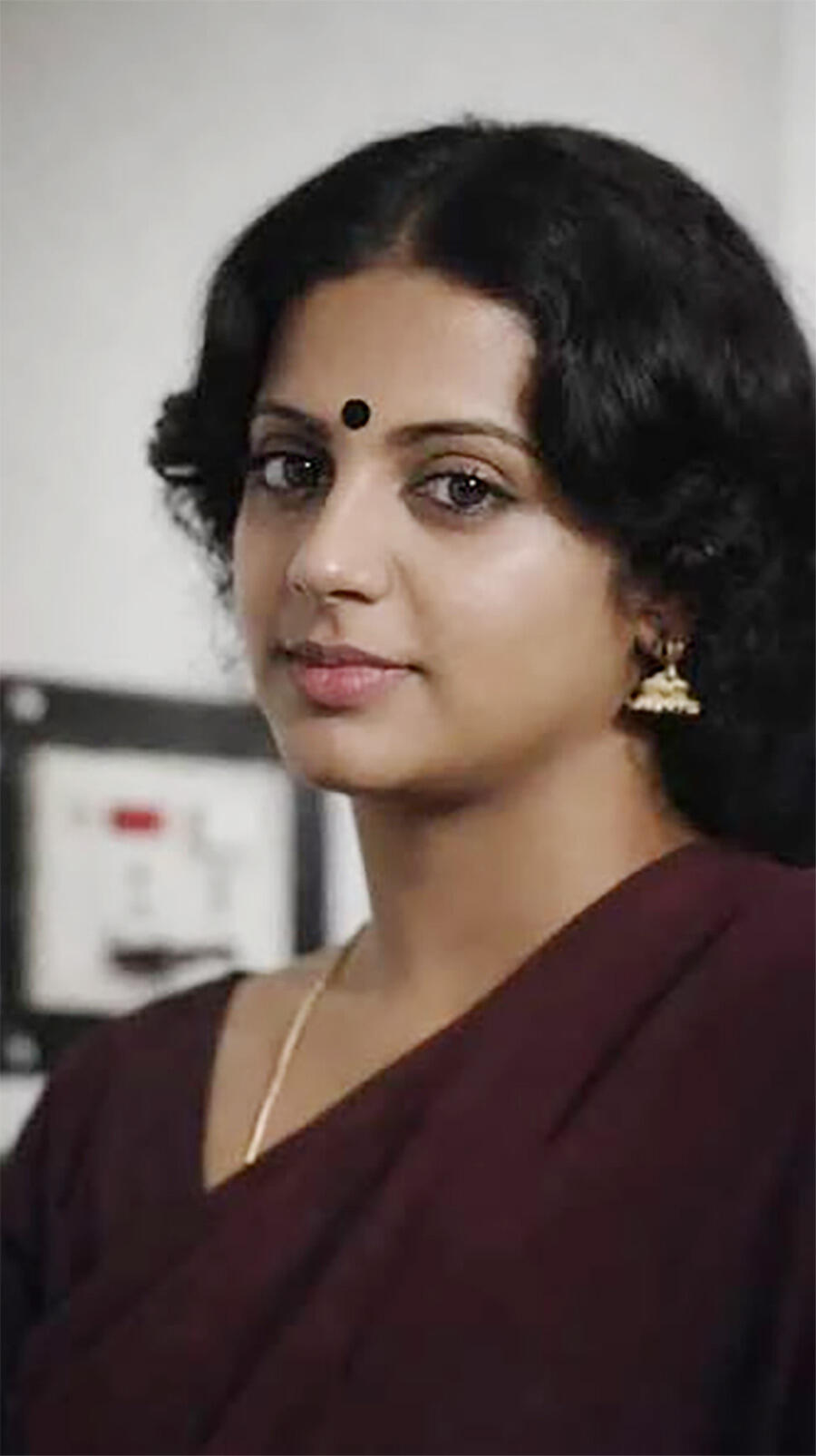
Before talking about Srividya, I have to recount a small incident to put her in perspective. Around 1975, I was a film journalist in what was then Madras. I recall going for breakfast at a hotel there. While I was eating, I saw the serving boys gathered around a table. A man in a yellow T-shirt was horsing around and entertaining the crowd gathered around him. Later, he walked up to me and introduced himself. He said he was a struggling actor and would very much like to be featured in my magazine. I asked him for his photograph and sent it to the magazine I was working for, Nana. They, of course, refused to print it, perhaps due to a lack of foresight on their part or simply an ego issue. They asked me to concentrate on more saleable stars.
Be that as it may, as a film reporter, I had sought an appointment with Srividya for an interview for the magazine. She invited me to the sets of K. Balachander’s Apoorva Raagangal. I saw Kamal Haasan being mobbed by photographers. His fair skin seemed to shine in the flashbulbs.
As I walked across to meet her, a man in a different get-up said hello to me. I couldn’t recognise him. He said, “Sir, I met you at the hotel the other day.” I expressed my inability to get his photograph published in the magazine. He replied, “No problem, sir. It’s, anyway, a good auspicious start.”
On the way home, Srividya offered me a ride in her car. I wryly remarked on how cruel people could be. They were clamouring for Kamal Haasan while royally ignoring the newcomer. Srividya looked at me and said that she had worked with him for two days. She was the first person to predict that he would become a superstar. That man was Rajinikanth. Yes, the stranger I had met at the hotel and on the sets was none other than the megastar Rajinikanth.
Coming back to Srividya, I would call her Vidya, and she would call me Baluji. She had a dancer’s face, with expressive eyes and lips. She emoted with her eyes. Overall, she was the complete package for an actor.
She played my mother in my first film with her, Tharattu. I played her illegitimate son. We shared a good rapport. She was keen that I remake Tharattu in Telugu with Dasari Narayana Rao, but the project never took off. She also offered me a film to direct in Tamil, but somehow, I was not keen to take it up. Many of the heroines I introduced had offered me the opportunity to direct a film, but I feared I would lose my freedom and creativity working for an outside producer, with all the restrictions that might entail.
Around this time, I was engaged to my future wife, Varadha. Srividya would pull my leg with playful innuendo, deliberately using the word ‘Varadha’ in Tamil to complete a sentence with my wife’s name. She would say, “Thookam varudha?” (Are you feeling sleepy?) or “Kobam varudha?” (Are you getting angry?). She would deliberately use my wife’s name as part of the sentence. It was all in good fun.
Once, when she was shooting in Trivandrum, she was reluctant to stay in a hotel for the night. I recall my father picking her up from the Geet Hotel and her spending the day with my wife and family.
Needless to say, she had the aura of a beauty. If you were to ask me to name the five most beautiful women I have ever come across, she would rank at the very top. Despite being slightly overweight, she was beautiful. When she walked, she had a dancer’s grace, as though her feet touched the earth ever so gently.
She sang Aana koduthal um kiliye in my first film as a producer, Oru Painkili Katha. We were to record the song at Chitranjali Studio in Trivandrum. We left our hotels early, as she was keen to visit the Pazhavangadi temple and break a coconut before proceeding to the recording studio. As luck would have it, my coconut broke at the first strike, while hers rolled away without breaking. She was a little upset and wanted to cancel the recording, as she considered it inauspicious that the coconut had not broken. I gently coaxed her and took her to the studio. The song, written by Bichu Thirumala and composed by A. T. Ummer, became a huge hit and was very well received by the public.
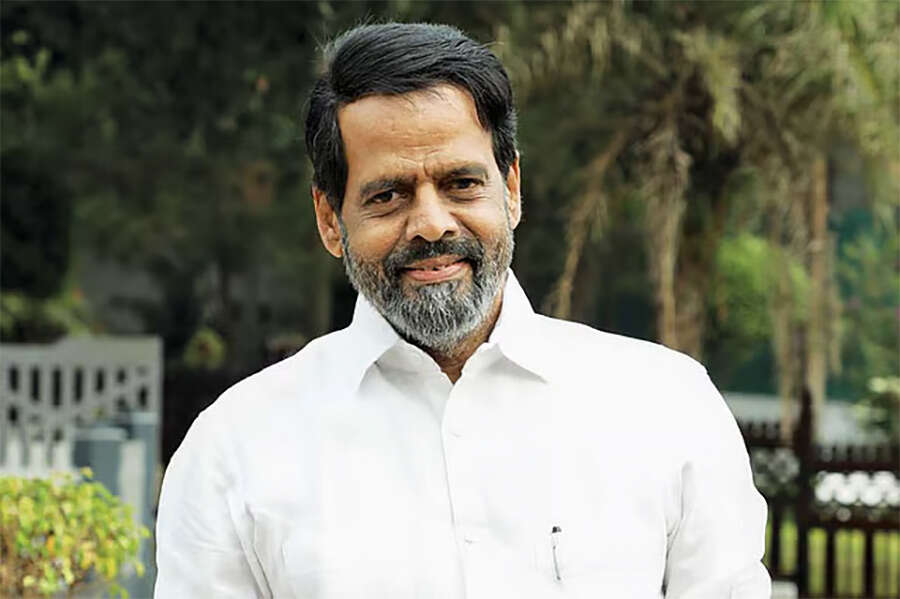
Whenever we travelled abroad for stage shows, audiences would ask us to sing Aana koduthal again. We would sing it together, and she would look at me with a glint in her eyes.
We recorded another song for yet another film, Njangalude kochu doctor. It was a lovely song, but it was taken off the air because a medical association felt I was mocking nurses. That was not true at all. A stay order was issued, and the film was allowed to be released only on the condition that I remove the song.
Despite all the fun and jokes, there was an air of melancholy about Vidya. She was sad. As you know, she had personal problems arising from her hasty marriage, which took a huge toll on her emotionally and mentally. She never discussed them with me, and I never asked.
At film shoots, since we were both musically inclined, we would often sing songs between shots. I recall singing old Malayalam film duets such as Nadikalil sundari yamuna. Another song she loved was Sumangali, sumangali, nee ormikkumo swapnathil engilum ee ganam.
I worked with her again in Arante Mulla Kochu Mulla, in which she and another veteran actor, Lakshmi, played sisters-in-law who were rivals. There was a fierce but healthy sense of competition between them. In the film, both wanted to find bridegrooms for their respective daughters. They engaged in a game of one-upmanship, but never too obviously. Fortunately for me, these two rival actors, Vidya and Lakshmi, completed the film smoothly without giving me any trouble.
I had heard from reliable sources that she was not doing too well towards the end. I also heard that Madhu sir had visited her. Hoping to cheer her up, I called her and said I would like to see her and make her laugh with my jokes. But she declined and confided that her condition was not very good and that she was at risk of contracting an infection. I was a little downcast that she had turned me away despite our association. As I was walking towards my room, the phone rang. She called again and made another practical joke involving the word ‘Varadha’. It was just like old times.
A few days later, she passed away. I went to the VJTI Hall in Trivandrum to pay my respects. I could not believe the cruelty of God, the make-up artist. Her once beautiful face was now a pale shadow of its former self. She looked dark as night; death had seemingly robbed her of her beauty and radiance. Seeing the once-gorgeous Vidya looking so frail was one of the most heartbreaking moments of my life. It broke my heart.
Also Read: Director Fazil: “Srividya and I Bonded Greatly Because of Our Shared Interest in Music”
Disclaimer : This story is auto aggregated by a computer programme and has not been created or edited by DOWNTHENEWS. Publisher: filmfare.com