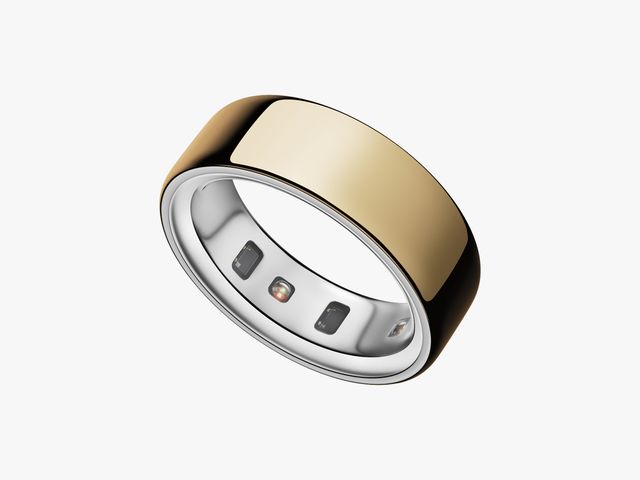
One of the most notable shifts in sleep technology is the transition from passive tracking to active guidance. Increasingly, consumer sleep trackers are offering AI-driven coaching and personalized recommendations that help users translate data into healthier habits. When thoughtfully implemented, this evolution has meaningful potential to improve outcomes.
But at the same time, there’s a valid concern that as sleep tech becomes more advanced, it may also become more prescriptive. The key is to ensure that these tools remain supportive rather than directive, encouraging better sleep quality without fostering pressure, perfectionism, or unnecessary anxiety.
To find the best trackers for most people, I’ve spoken with experts and tested a ton of wearables, from smart rings and smartwatches to headbands and non-wearable devices. After years of snooze monitoring, these are the favorites.
For more health and wellness tracking, check out our guides to the Best Smart Rings, the Best Smartwatches, and the Best Fitness Trackers.
Featured in This Guide


How I Test Sleep Trackers
Sleep trackers can’t diagnose a sleep disorder or replace a clinical sleep study, but the best ones offer reliable data and actionable insights, and are comfortable enough to use overnight. Here’s how I test them:
- I wear each device continuously for at least a month to reveal meaningful trends. Long-term testing also helps evaluate consistency, comfort, and whether the companion app remains useful after the novelty wears off.
- I test trackers during normal life rather than in controlled conditions. That includes irregular bedtimes, travel days, and the occasional insomnia spiral.
- I compare sleep data across multiple devices I’m testing simultaneously, paying close attention to metrics including: total sleep time, sleep efficiency, sleep stages (light, deep, REM), resting heart rate, heart rate variability (HRV), respiratory rate, and blood oxygen levels (SpO2).
- I evaluate comfort for overnight wear. I test devices across different sleeping positions to judge whether they feel bulky, restrictive, or irritating during slumber.
- I test battery life and charging speed against manufacturer claims.
- The software experience is just as important as the hardware. I evaluate how clearly each companion app presents information, whether the insights feel personalized, and whether a subscription is required to unlock key features.
- Depending on what’s available on each device, I also evaluate smart alarms, sleep coaching recommendations, and integrations with broader health ecosystems like Apple Health and Google Health.
- I monitor reliability and long-term performance by checking for syncing issues, app crashes, and inaccurate sleep recordings.
- Some sleep trackers lock advanced sleep analysis behind monthly memberships. I consider whether the premium features justify the ongoing costs.
What Am I Testing Next?
I am testing the new Ultrahuman Ring Pro, the RingConn Gen 3, and the Google Fitbit Air. I’m also reevaluating the Whoop MG, the Muse S Athena Headband, and the Withings ScanWatch 2.
Best Sleep-Tracking Smart Ring


Of all the fitness trackers I’ve tested, the Oura Ring’s sleep assessment has been one of the most accurate. The ring has a multi-sensor suite: an 18-path multi-wavelength photoplethysmography (PPG) to monitor blood oxygen levels (SpO2), heart rate, HRV, and respiratory rate; a negative temperature coefficient (NTC) thermistor to track body temperature; and a 3D accelerometer that captures movement, including your sleep stages and nighttime restlessness. It tracks factors like total sleep, time in bed, and sleep efficiency on a nightly basis via a time graph, and displays trends on a weekly or monthly basis. Auto-detected naps are also factored into your sleep score, which is a huge bonus. The Oura has been the most comfortable to wear to bed, plus the app is user-friendly. You can view your sleep score, as well as personalized tips on optimizing your bedtime.
Note: You do need Oura’s $6-per-month membership to unlock the more advanced health metrics. Without it, you can only view your sleep, readiness, and activity scores and access recorded meditations. But the subscription is worth it and relatively affordable compared to its competitors.
Best Sleep-Tracking Wristband


If you prefer a wristband, the Whoop is a screenless tracker that’s more comfortable to sleep with than an Apple Watch. Along with your sleep performance score, it tracks metrics like sleep sufficiency, consistency, and efficiency, which is the amount of time you actually spend asleep. In the app, you can view the number of hours you’ve slept and see how much of that was restorative. It also accounts for your daily activities—what Whoop calls “strain”—to show how much sleep you should ideally be getting. It tracks factors like your wakefulness and respiratory rate, offering resources to build a better nighttime routine and a journal to record the last time you had a cup of coffee or a cocktail that kept you awake.
In testing, Whoop’s sleep coach was pretty comprehensive, offering personalized bedtime and wake-up recommendations based on your strain levels. You can toggle on a haptic motor that will wake you with a little wrist-based buzz, although given that the Whoop is screenless, you’ll need to double-tap the center of your device or reach for your phone to disable the alarm from the app. Former reviewer Adrienne So also find Whoop to be a little frustrating because it would recommend more sleep than she was capable of getting.
It’s worth noting that Whoop membership has three tiers, and to get the new healthspan, ECG, and blood pressure capabilities, you have to pay for the highest Whoop Life tier at $359/year. However, that’s about the same price as the original Whoop membership (which was $30 per month), and Whoop throws in the updated Whoop MG for free.
Best Sleep-Tracking Mattress Cover

The Eight Sleep Pod 5 is, by far, the best alternative to a wearable I’ve discovered. It’s a mattress cover that not only tracks your sleep but also regulates your temperature. It cools to 55 degrees Fahrenheit and warms to 110 degrees Fahrenheit, with real-time adjustments based on your sleep metrics. If you sleep with your partner, you can set different temperatures on each side of the bed, and it will track each of your sleep patterns independently. The Pod 5 also introduces physical temperature buttons, so you can manually adjust based on personal preference.
When it comes to sleep tracking, the Pod 5 delivers many of the same metrics you’d get from a wearable, including sleep scores, total sleep time, sleep stage breakdowns, HRV, and respiratory rate. Eight Sleep also sends a daily morning text that distills your data into a quick summary, so you don’t even need to open the app to see how you slept. There were some discrepancies in the data, especially in the sleep score, compared to the Oura Ring 4, which I consider my gold standard for accuracy, but it’s reliable enough if you want to avoid wearables. Plus, if I forget to wear my Oura to bed, I have my Eight Sleep auto-tracking my slumber in the background.
Eight Sleep requires a 12-month commitment to its Autopilot plan. The subscription includes automatic temperature adjustments, sleep reports, software updates, and a vibration and thermal alarm. After 12 months, you can still use the Eight Sleep without the subscription via its manual controls, but you wouldn’t have access to sleep reports, which defeats the point.
Compare Top 3 Sleep Trackers
| Product | Type | WIRED | TIRED | Battery Life | Upfront Price | Subscription |
|---|---|---|---|---|---|---|
| Oura Ring 4 | Smart Ring | One of the most accurate trackers I’ve tested; extensive sleep metrics; comfortable for overnight wear | Detailed metrics can encourage overanalysis and hyperfixation on the data | 5-8 days | Starts at $349 | $6/month or $70/year |
| Whoop MG | Fitness Band | One of the most accurate trackers I’ve tested; extensive sleep metrics | Not ideal for overnight wear; requires one of the more pricier memberships | Up to 14 days | Free Whoop sensor with subscription | Starts at $199/year |
| Eight Sleep Pod 5 | Mattress Cover | Dynamic temperature control; comprehensive suite of sleep metrics | Not as accurate as a wearable | No battery | $2,999 | Starts at $17/month or $199/year |
Honorable Mentions

Google Pixel Watch 4 for $350: I’ve tested almost every Wear OS smartwatch for Android, and the Pixel Watch 4 is my favorite thanks to its elegant design, excellent accuracy, and compact size. You do need to pay for a Google Health Premium subscription ($10 per month) to see deeper sleep insights and your daily readiness score, though. It does a fair job of tracking naps, though not always, and with any kind of sleep you’ll be able to see your sleep stages (awake, REM, light, deep) and even your blood oxygen saturation. All of this data is easily digestible in the Fitbit app, and if you have Fitbit Premium you can see long-term sleep trends, changes in your sleep patterns, sleeping heart rate, and how often you are restless. It’s a lightweight watch, so I never found it uncomfortable to wear to bed. —Julian Chokkattu
Apple Watch Series 11 for $399: If you already have an Apple Watch Series 4 or later, you can use it to track your sleep. Between the heart rate sensor and the accelerometer, your Apple Watch can break your slumber down into four stages. Newer models can also measure blood oxygen and temperature. It feels like a general overview compared to some of the other sleep trackers I tried, and there’s no sleep score, though this is obviously by design (it’s debatable whether you need more data).
Garmin Epix Pro (Gen 2) for $1,000: All of Garmin’s fitness trackers track sleep to some extent, but the Epix Pro has what Garmin calls advanced sleep monitoring, or the ability to track sleep stages, your blood oxygen saturation, your respiratory rate, and restlessness. Contributor Adrienne So found that the Epix Pro regularly accounted for her getting a half-hour to an hour more sleep than she actually got most nights, as double-checked by a Whoop and Oura. It also doesn’t add naps to your sleep score.
Google Nest Hub Max for $229: The Nest Hub Max uses radar to track your sleep, which means you don’t need to wear a tracker; it also has a microphone to track snoring, sleep talking, and other nocturnal sounds. I love the Nest Hub on my nightstand for smart home controls, family photos, and listening to sleep sounds or podcasts in bed, but the sleep tracking consistently overestimated my REM phases and missed periods of wakefulness that other trackers recorded. When I used multiple trackers simultaneously, the Nest Hub was the outlier. The second-generation Nest Hub ($100) offers a similar sleep-tracking experience if you’re looking for something cheaper. —Simon Hill
Muse S Athena Headband for $475: This headband has sensors capable of tracking your brain activity, similar to an electroencephalogram (EEG), alongside an accelerometer and gyroscope, and a PPG sensor to measure heart rate and blood circulation. It’s chiefly a meditation aid designed to help you relax, but it can also track your sleep by recording your heart rate, respiration, time to fall asleep, and how much you moved around for an overall sleep score. Sadly, I found it uncomfortable to wear and often woke to discover the sleep tracking had failed, usually because I’d removed it during the night. —Simon Hill
Withings ScanWatch 2 for $370: Wear the Withings ScanWatch 2 to bed and you will get a sleep score out of 100 in the morning. It covers the same four stages as other trackers (awake, REM, light, and deep) but boasts a PPG sensor for measuring your respiratory rate. It can also track your heart rate, temperature, and blood oxygen levels. The ScanWatch 2 provides a wealth of data and advice in the Withings app. Some folks may find it bulky and uncomfortable for sleep, though, and it had problems distinguishing between light sleep and when I was lying awake in bed. —Simon Hill
Withings Sleep Tracking Mat for $200: Another alternative to wearables, this sensor-packed mat from Withings slips underneath your mattress where your chest rests. You need to calibrate it during the initial setup, but it’s quick and easy. It tracks your movements, breathing, and heart rate throughout the night, detects snoring or other sounds, and alerts you about potential breathing problems that might indicate sleep apnea. I have doubts about the accuracy as it assumes you are trying to sleep if you are lying still in bed watching TV or reading, and that can skew your score (though it’s best to only use your bed for sleep if you suffer from insomnia). I found it often marked periods of wakefulness as light sleep. It requires a power outlet, but that does mean you never need to worry about charging). —Simon Hill
Sleep Routine: Tracker & Alarm for $60/year (iOS/Android): Sleep Routine is a sleep-tracking app that provides a report for each night, breaking your sleep into stages. Reviewer Simon Hill says the results were somewhat accurate and broadly matched the Ultrahuman Ring Air, but the app can be a bit wonky. There were frequent occasions where he’d get an error message the morning after with no report or a brief recorded sleep. There was also no indication of why it failed. You can test Sleep Routine for a week before you need to subscribe.
Power up with unlimited access to WIRED. Get best-in-class reporting and exclusive subscriber content that’s too important to ignore. Subscribe Today.
Disclaimer : This story is auto aggregated by a computer programme and has not been created or edited by DOWNTHENEWS. Publisher: wired.com