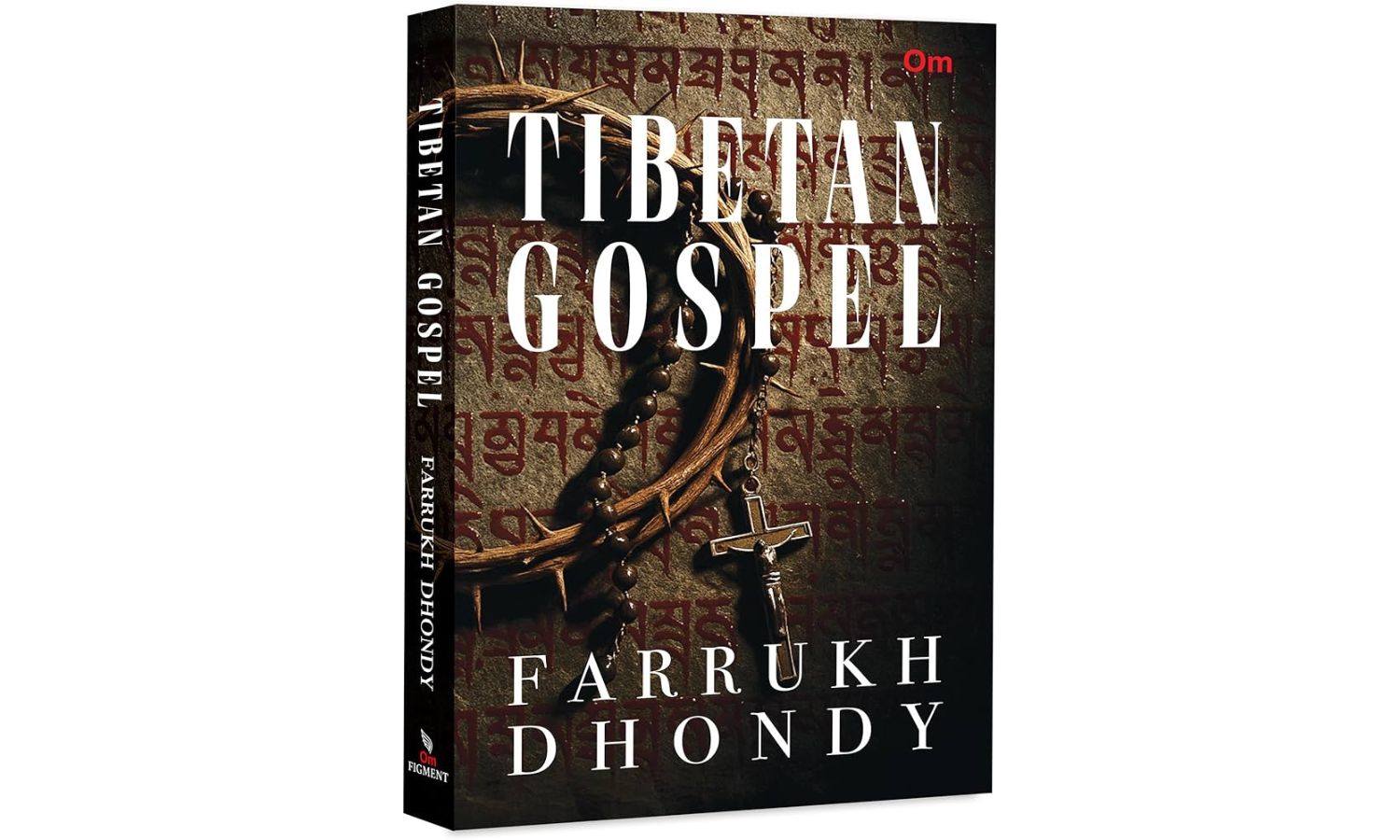
Farrukh Dhondy’s Tibetan Gospel is gripping, tightly plotted, and thought-provoking, and may well be the finest of his fictional works.
Dhondy builds his narrative on the provocative speculation that Jesus Christ did not die on the cross. Instead, his body was secretly removed from the tomb, and he subsequently travelled to Kashmir, where he lived in Buddhist monasteries, adopted the faith, and even preached the doctrine of the Buddha. If this were true, it would challenge the core tenets of Christianity as there would be “no resurrection, no Easter, and no descent of God on earth”.
Faced with such a threat, the Vatican dispatches Fr Francis from Bolivia to India to counter what it considers blasphemy. He is chosen in part because he is originally a Parsi convert — Father Darius Cama, born in Poona (now Pune). To gain access and cooperation, he adopts the guise of a Parsi priest, claiming to investigate whether Christ had encountered the teachings of Zarathustra and whether these influenced his message.
During Dara’s odyssey, a lama reveals the existence of an ancient manuscript written two thousand years earlier by Lama Sonem of the Shugtal monastery. This text, written in Crypto-Tibetan, purportedly proves Christ’s engagement with Buddhist teachings. However, the only dictionary capable of deciphering this document is located at Pembroke College, Cambridge.
Fr. Dara travels to Cambridge to meet Banko, tasked with translating the manuscript. Dhondy adds an intriguing complication: Banko is more interested in the mystical plant Homa (in Zoroastrian tradition), believed to grant intoxication, divine consciousness, strength, and vitality. He agrees to share the translation only if Fr Dara can procure this elusive plant.
To aid in this quest for Homa, Banko enlists Daisy, a botany professor who becomes both collaborator and emotional counterpoint. Her search for Ephedra distachya — the plant believed to yield Homa — takes her on a futile journey only to discover that it has become so polluted and toxic rendering it potentially lethal rather than life-enhancing.
Meanwhile, the Tibetan Gospel recounts Lama Sonem sending his brightest disciple, Pema, to investigate reports of a mysterious preacher in the valley, accompanied by a woman.
Could this be Christ? And who is the woman? Dhondy sustains the mystery with careful restraint. The text is rich with echoes of Christ’s teachings, including paraphrases of well-known biblical metaphors. Yet Dhondy complicates the issue by portraying Christ as a figure capable of strategic warfare; through this duality Dhondy raises a compelling question: is Christ a social reformer, or is He the Son of God?
Despite engaging with profound theological and philosophical issues, Dhondy skilfully balances the narrative with moments of humour. The characters of Banko and especially Daisy provide levity that offsets the novel’s seriousness. Tibetan Gospel is a riveting and thoroughly enjoyable read, culminating in a denouement that is both surprising and satisfying.
Firdaus Gandavia is a chartered accountant with a keen interest in literature.
Tibetan Gospel
By Farrukh Dhondy
Om Books
pp. 349; Rs 395
Disclaimer : This story is auto aggregated by a computer programme and has not been created or edited by DOWNTHENEWS. Publisher: deccanchronicle.com