With more than 300 films on this year’s program, it’s easy to feel overwhelmed by what’s on offer at Melbourne’s annual cinematic banquet. Our reviewers have done some of the heavy lifting, watching features, animations and documentaries from home and abroad. Among their list of recommendations is the film that was favoured to win at Cannes …
The Dreamed Adventure
Veska is an archaeologist, returned to the remote country where she grew up to dig into Bulgaria’s history, but her sharp dealings with local gangsters suggest that her own buried past is murkier than she might want to admit. German filmmaker Valeska Grisebach (whose previous film, Western, was also set in Bulgaria) enjoys pulling at the threads of male-coded genres; Veska, portrayed by amateur actor Yana Radeva, has something of Clint Eastwood about her, in a narrative that is signposted as a crime thriller. Those crimes remain largely unexplained, however; what counts here are the characters, their drinking banter, ambiguous alliances and the wildness of this country, which feels like the far edge of the world. SB
We Are The Shaggs
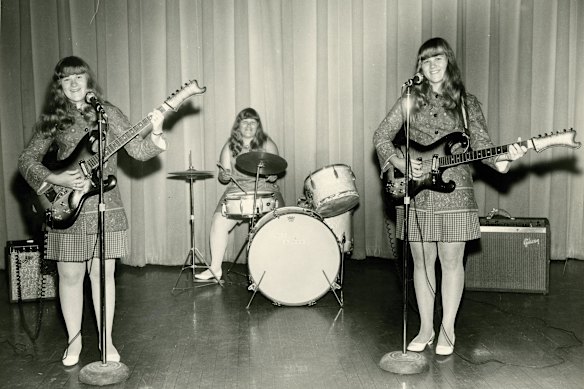
Everyone in Ken Kwapis’ documentary has a hot take on The Shaggs, the outsider-art pop group formed by three teenage sisters in Fremont, New Hampshire, in 1969 under the supervision of their tyrannical father. Gradually a cult formed around them, despite their total lack of conventional musical skill. But how far was this simply ironic appreciation, and how far were fans drawn to their unique musical world? A Hollywood veteran well known for his work on sitcoms such as The Office, Kwapis might seem like a surprising figure to be telling this story. But the film gains from his light, sympathetic touch, as well as his willingness to keep an open mind on the question of what makes art good or bad. JW
Elephants in the Fog
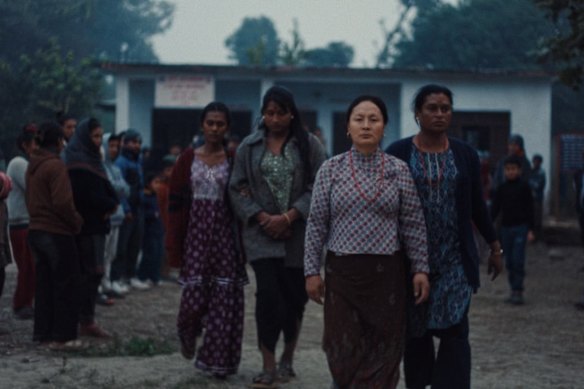
In a small Nepalese village, a household of kinnar – transgender women traditionally supposed to bring good fortune to weddings and births – use their spiritual gifts to help local farmers keep wild elephants at bay. Director Abinash Bikram Shah provides an insight into the kinnars’ cult, now widely threatened with suppression, within what is loosely a detective story. Kinnar matriarch Pirati (the engaging real-life trans activist Pushpa Thing Lama) is about to formally adopt her favourite trans daughter when the young woman disappears. Pirati suspects murder, but the police are not interested in these outsiders; she must run the culprit to ground. Exotic and inspiring, this is also a dark look at a very specific misogyny. SB
The Fence
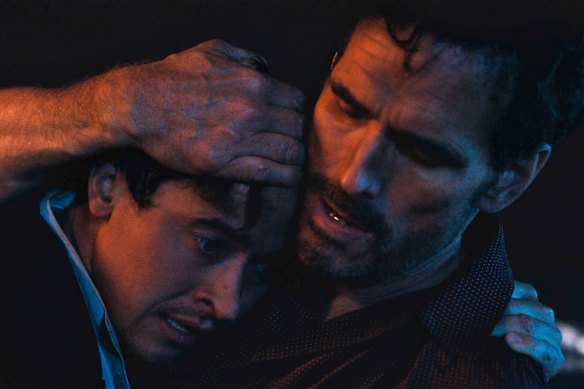
Set on a construction site in West Africa, Claire Denis’ adaptation of a play by the late French writer Bernard-Marie Koltes remains wilfully theatrical, yet depends on making us feel the unglamorous starkness of the desert setting, where there’s little to distract from the core realities of work, desire and death. The symbolic fence of the title separates the site’s American foreman, Horn (Matt Dillon) from a visitor (Isaach de Bankole) who comes to claim the body of a dead worker. Much of the film is built on the contrast between Dillon’s mannered gestures and de Bankole’s stillness, but Mia McKenna-Bruce (How To Have Sex) is more intriguing than either as Horn’s younger wife, the least predictable element in the design. JW
Fatherland
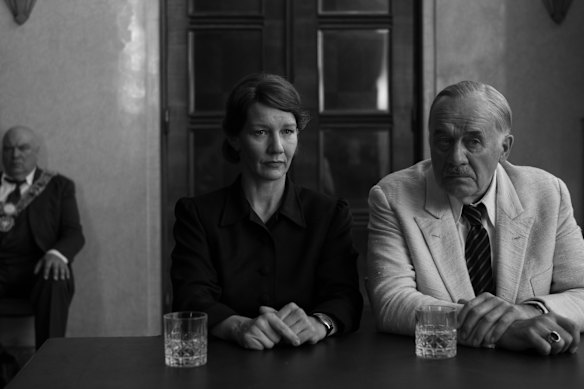
Pipped at the post for the Cannes Palme D’Or, Pawel Pawlikowski’s diamond-sharp sliver of history was nevertheless the festival’s winner for me. Nobel Prize-winning German author Thomas Mann (Hanns Zischler, oozing exhaustion with life) tours the two Germanys in the aftermath of World War II, accompanied by his stolidly self-sufficient daughter Erika (Sandra Huller), to give lectures on the 200th anniversary of Goethe’s death. Both sides of the internal border want to claim Goethe and Mann as their own, despite Mann’s insistence on a tolerant, liberal European humanism that no longer pleases the powerful. Pawlikowski (Ida, Cold War) focuses on the Manns’ intimate exchanges, but always with an eye for details that conjure their crucial cultural context. SB
Blue Heron
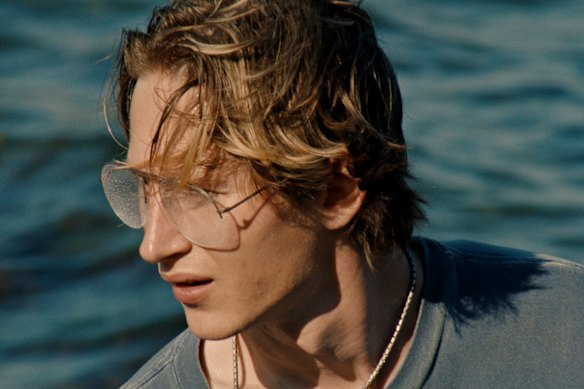
The Hungarian immigrant family in this first feature by Canadian director Sophy Romvari is unhappy in a way uniquely its own. The life of each family member revolves around the troubled oldest son, Jeremy (Edik Beddoes), who spends much of his time alone in his room drawing maps, and when he does go outside is regularly in trouble with the police. This is an innately painful subject, especially as Romvari has confirmed the story is based loosely on memories of her own childhood. But the tone is equal parts sad, tranquil and perplexing: the tricky structure moves between the 1990s and the present, underlining that reality isn’t identical with our vision of it, either in the moment or long after. JW
Rose
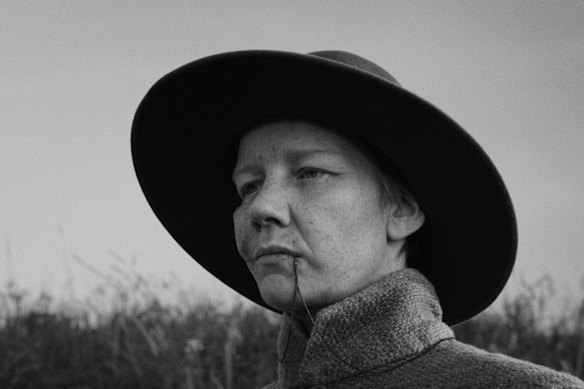
Sandra Huller shows once again what a great screen actor she is in this austere historic fable, set after the Thirty Years War in an anonymous German village. Nobody there recognises the soldier who comes back to claim his father’s old farm, but he is soon accepted as the community sees how hard he works. He has a secret, however, which isn’t rumbled because it is so unthinkable: the village’s new success story is a woman. Austrian director Markus Schleinzer, shooting within a narrow palette of greys, maintains a constant tension as Rose’s inevitable unmasking looms ever closer; while his style certainly isn’t naturalistic, the story – for which there are many real-life precedents – has the ring of truth. SB
Chronovisor
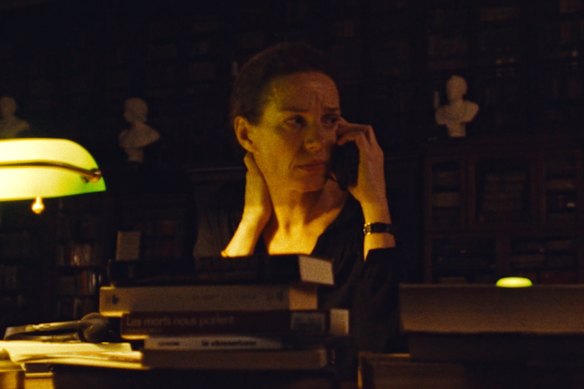
Shot on 16-milimetre film by the US team of Kevin Walker and Jack Auen, this eccentric micro-budget fantasy combines elements of conspiracy thriller, gallery installation, and homage to the written word (Jorge Luis Borges and Roberto Bolano are among the writers name-checked in the credits). At the centre of it all is the (loosely) real-life story of a Benedictine monk who claimed in the 1970s to have invented a machine that could photograph the past, inspiring the wild-goose chase which the academic heroine (Anne Laure Sellier) undertakes decades on.
Literally speaking, almost nothing happens on screen, yet the intangible nature of the whole story still inspires fascination and even dread. JW
Hen
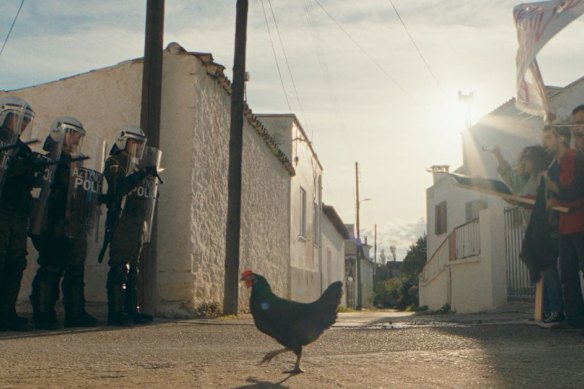
Eight real hens play one plucky, clucky fictional fowl whose adventures provide a bird’s-eye view of human wickedness: an oddity, certainly, but a thoroughly good egg. Hungarian surrealist Gyorgy Palfi is remembered fondly for the fabulously grotesque Taxidermist; this film, constrained by the limits of avian actors, is more conventional and thoroughly heartwarming. Hen’s heroine escapes the battery farm where she was laid, has a couple of scrapes where she is almost eaten, then fetches up as the favoured pet of an old man whose disreputable son-in-law is using his former diner as a holding station for his people-smuggling business. Palfi’s persuasive genius is to tell this story without CGI tricks and without anthropomorphising the star: from beak to tail feathers, she’s always just a bird. SB
MIFF runs August 6-23, miff.com.au
Disclaimer : This story is auto aggregated by a computer programme and has not been created or edited by DOWNTHENEWS. Publisher: www.smh.com.au