
Queensland’s child safety department blew out its budget splashing cash on emergency residential care places at a premium for years as it struggled to recruit more kinship carers, an inquiry has heard.
In one of the final hearings in the 17-month-long inquiry into the state’s child safety system, it was revealed the number of children and teenagers needing a place in care in 2020 had ballooned to nearly 10,000.
The department lacked places for 1372 of those.
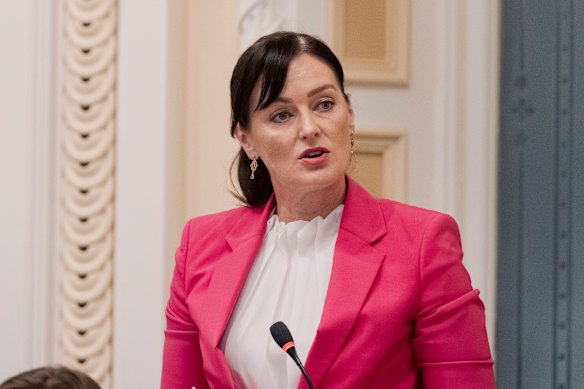
Former minister for children Leanne Linard – who held the position between late 2020 and mid-2023 – told the inquiry there was a “significant gap” between available places and the children who needed them.
“The number of outsourced service delivery places had reportedly reached capacity in 2019, often resulting in emergency and higher-cost residential care options being all that could be sourced to meet the need to remove a child to safety,” Linard said in a statement tendered to the commission on Monday.
She said the number of children and young people entering the system about 2020, following COVID-19 restrictions, had ballooned.
The department had relied on those children returning after restrictions eased, Linard said, but former department director-general Deidre Mulkerin told the inquiry on Tuesday numbers were instead growing.
Last week, counsel assisting Tom Diaz told the inquiry Queensland’s residential care sector had since grown to $1 billion, with the state counting almost 12,500 children in the care system by the end of 2024.
On Thursday, the inquiry revealed the emergency placements used by the department typically cost up to 40 per cent more than a foster care placement with a third-party residential care provider.
Linard confirmed these short-term and emergency placements were also often with unlicensed providers, meaning the number of such provided grew alongside children in the system.
While the department was seeking to boost kinship and family-based carers – which were also the least expensive care option – Linard said it was struggling to fill places.
“We were not getting large in-flows of kin carers … 2022 was when we started to see this increase in kin carers, but it wasn’t fast,” Linard said.
The department also forewent medium-term contracts with residential care providers because it needed guaranteed funding for several years, but had stripped that money pool in its bid to shrink the residential care sector.
“We were not focused on expanding [residential care placements] … we were focusing on kin and making sure we weren’t putting young people on those high-cost agreements,” Linard said.
The department was at the time attempting to halve residential care placements and double family and kinship care placements – aiming for fewer than 10 per cent of children in the system to be in residential care by 2027.
Linard said the result was significant cost blow-outs, with successive budgets only filling the department’s deficit.
“Even if you had had a significant injection of funds at that point in time, you could not have solved everything in one year,” she said.
The department had the option to call on the minister to create a guarantee for future funding with treasury that could have enabled medium-term residential care contracts, but Linard said she was never asked.
“If there was something that practically I could have done … which would have addressed or supported the agency I wasn’t aware of that, but I was certainly aware that the deficits were straining the department,” she said.
Commissioner Paul Anastassiou suggested the department had foregone a possible safety net in medium-term residential care places to instead push for a boost to annual funding, with Mulkerin revealing earlier in the week the department had sought close to $1.5 billion in 2023.
It was instead allocated about $280 million.
The inquiry was expected to resume on Friday. Recommendations were expected to be handed down by November.
Start the day with a summary of the day’s most important and interesting stories, analysis and insights. Sign up for our Morning Edition newsletter.
From our partners
Disclaimer : This story is auto aggregated by a computer programme and has not been created or edited by DOWNTHENEWS. Publisher: www.smh.com.au