For a true-crime documentary, Mark Of A Murderer doesn’t spend a lot time – barely any it turns out – parsing the mindset of deranged killers or re-creating the details of grisly homicides.
Uncommonly for a genre where noble intentions are often overshadowed by shock tactics, its focus lies elsewhere – in the people who are left behind in the wake of terrible crimes and at the mercy of a flawed if not corrupted justice system. Indeed, much of this salutary, four-part series is spent with profoundly decent and upstanding people whose proximity to wrongdoing is enough to see them tarnished as suspects. Or, worse, wrongly accused and imprisoned for a crime they did not commit.
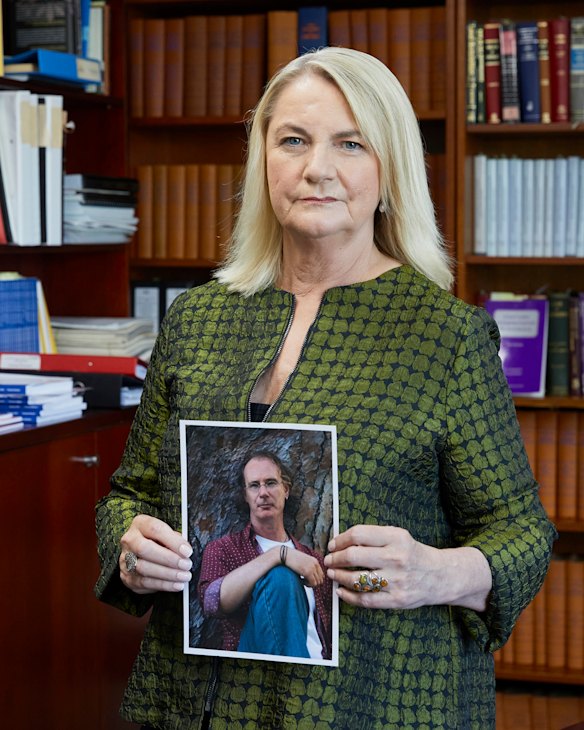
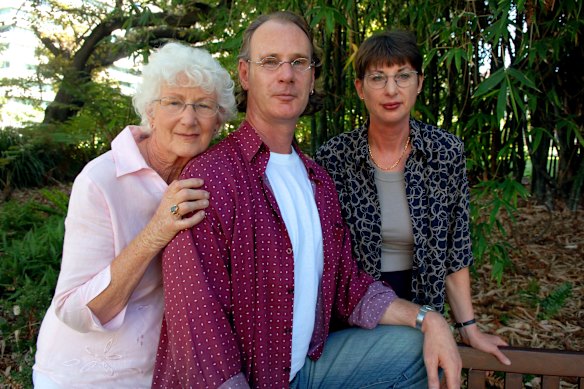
For journalist turned politician Colleen Egan the series marks the end of a crusade that began 28 years ago with a cold call. At the other end of the phone line was a softly spoken woman named Grace Mallard. She asked Egan, then a researcher on a tabloid TV current affairs show, to look into the circumstances around her brother, Andrew, who had seemingly confessed to the murder of Perth jewellery shop owner Pamela Lawrence, one of two women murdered in close succession in Fremantle in 1994. At the time, Mallard was unemployed, hallucinating on marijuana and involved in petty crimes.
Eight years and a High Court appeal later, Mallard’s conviction was quashed. It emerged that Mallard’s “confession” was cooked, to say the least and, more crucially, that key evidence pointing to the likely actual killer was withheld from the defence and jury. Egan won a Walkley Award for her work on the case, wrote a book about it and was a key participant in the 2006 documentary Saving Andrew Mallard, which aired on the ABC.
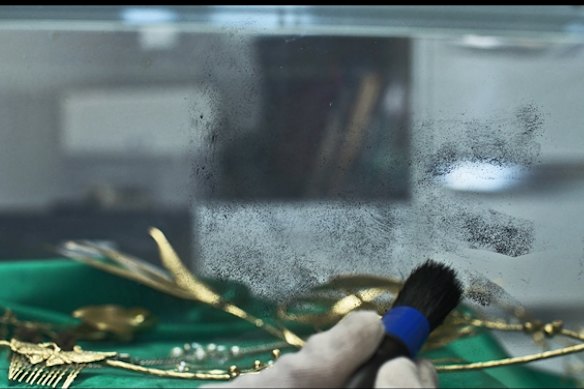
The evidence that would have eliminated Mallard as a suspect was a palm print belonging to a mysterious yet charming, handsome man named Simon Rochford. So in 2023, Egan and a team of producers and researchers at Artemis Media, the Perth-based production house that made the earlier film, reunited with a view to not only tell the full story of Andrew Mallard, who tragically died in 2019, but also to investigate who really did murder Pamela Lawrence.
“I thought Andrew always really wanted his story to be told. He always felt like he didn’t get justice, and his form of justice was people knowing what happened to him,” says Egan on the phone from Perth, where she is the state Labor member for the seat of Thornlie.
“We fought for all those years to free Andrew. We never even heard the name Simon Rochford, and all of a sudden, here he is. We had very little information about him. It was beyond my ability as one journo to research something like that. And that’s when I got back together with Artemis.”
Mark Of A Murderer folds together a gripping, spoiler-laced cold case review and a sobering message about how innocent people can be framed for crimes they did not commit, and the fallout that follows such miscarriages of justice.
Mallard is not the only person in Mark Of A Murderer to be wrongly suspected of a crime. Egan hopes that one of the things audiences will take away from it is “a real understanding of how somebody can look really guilty, but they’re not, of how someone can seemingly confess to something that they didn’t do”.
She says the way she came to regard Mallard was strongly influenced by her personal circumstances. As she notes in the first episode, her own sister was in the same psychiatric hospital as Andrew. “My sister died in Greylands, and it wasn’t long before I started working on this,” she says. “I think it was very much forefront of my mind how vulnerable mentally ill people are. I think that gave me a lot of empathy.”
She says her commitment to social justice was formed growing up in a family that didn’t have a lot of money. “I always had a thing about power needing to be accountable, and the lack of accountability people who don’t have power can get if someone doesn’t advocate for them. I think a lot of it is driven by that sense of if you’re not in the know in Perth, you might not get the same level of justice.”
We also come to understand in Mark Of A Murderer how a wrongful conviction impacts the murder victim’s family. “I really want people to watch this documentary … and understand the compounding of grief and trauma for the family of the victim who went through years of believing someone was responsible for that terrible crime … and then have to accept they’d been blaming the wrong person all that time.”
After leaving newspaper journalism in 2017, Egan became the chief-of-staff to West Australian attorney-general John Quigley who, as a lawyer representing the WA police union, was closely involved in the campaign to free Mallard. Quigley was also a fierce critic of police practices.
Egan firmly believes that Australia needs to establish a criminal cases review commission, similar to those in the UK, New Zealand and Canada. Such commissions have the power to compel the police, prosecution, forensic labs and courts to hand over information that might support a person’s claim to being wrongly convicted.
In Mallard’s case, “we had no ability to look inside the police files and find that palm print. It was sitting there the whole time.”
Egan says it’s impossible to know how many people have been wrongly convicted in Australia, but guesstimates it at about 3 per cent. “And we know it’s certainly more common in the Aboriginal population. They are not only more likely to be wrongly convicted, but they’re more likely to confess to something they didn’t do. We had a case of Gene Gibson here in Western Australia, where he supposedly confessed and pleaded guilty to the death of a man in Broome, but he didn’t have anything to do with it.
Mark Of A Murderer airs at 8.30pm on Mondays on the ABC and streams on ABC iview.
Want more TV? We’ve got you.
Disclaimer : This story is auto aggregated by a computer programme and has not been created or edited by DOWNTHENEWS. Publisher: www.smh.com.au