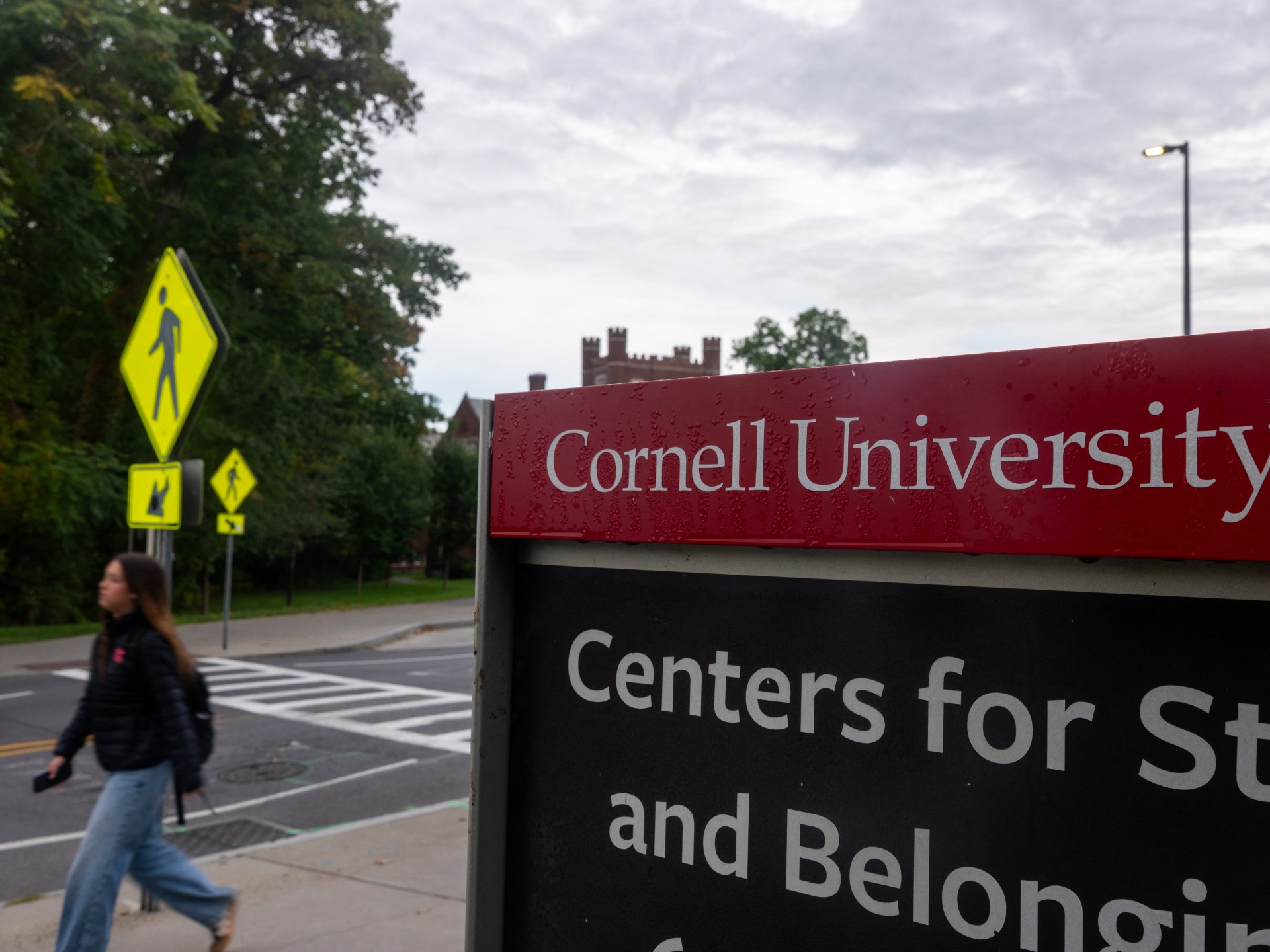
New York lawmakers are renewing a push to change the state’s sexual assault laws after prosecutors in the United States said the current rules made it difficult to bring charges for an alleged gang rape at a Cornell University fraternity house.
At issue is whether someone who willingly becomes intoxicated can be considered mentally incapacitated and therefore unable to consent to sex.
Recommended Stories
list of 4 itemsend of list
Under current New York law, only someone who was drugged or given alcohol without their knowledge can be considered “mentally incapacitated” because of intoxication and unable to consent. The same does not apply to someone who willingly consumed alcohol or drugs.
State Assemblyman Jeffrey Dinowitz and State Senator Nathalia Fernandez are sponsoring bills in their respective chambers that would change that.
In the state Senate, the bill is known as S10632, and in the New York Assembly, it is filed as Assembly Bill A101.
In a post on the social media platform X, Dinowitz said the proposed law would allow prosecutors to focus on whether someone was capable of consenting, rather than how they became intoxicated, and whether the accused “knew or should have known” that the person was unable to consent.
He said people who voluntarily drink or take drugs currently face significant barriers in sexual assault cases, particularly if they remain partly conscious or responsive during an alleged assault.
“The fact that someone made the choice to consume alcohol or another intoxicating substance should never be used to undermine their experience or shift responsibility onto the survivor when they’ve been sexually assaulted,” Dinowitz wrote.
Advertisement
The years-long reform effort has gained new momentum after Tompkins County District Attorney Matthew Van Houten said the existing law was one reason his office initially declined to pursue charges against several Cornell students accused of sexually assaulting a woman on October 19, 2024.
The woman, identified only as Jane Doe, was 20 at the time. She has since filed a civil lawsuit against seven members of the Chi Phi fraternity, as well as Cornell University and several other defendants.
The lawsuit alleges fraternity members gave her alcohol and ketamine and sexually assaulted her after she became incapacitated.
Doe also reported her allegations to campus police in November 2024.
In a statement explaining why his office did not pursue charges afterwards, Van Houten said Doe never claimed at the time that she had been involuntarily intoxicated, physically forced or unconscious. He also said she did not clearly express that she did not consent.
Any of those circumstances could have provided grounds for prosecutors to pursue rape charges under New York law, according to the district attorney.
“On the contrary, Jane Doe’s statement described her participation in drug use and sexual conduct as voluntary, conscious, and consensual,” Van Houten wrote.
“In this case, multiple prosecutors and criminal investigators reviewed Jane Doe’s statement and correctly determined the alleged facts as set forth in the statement do not constitute a crime.”
Since the lawsuit was filed, Van Houten’s office has faced intense scrutiny. It said on Monday that it will reopen the investigation and bring the case before a grand jury, which will consider whether there is enough evidence to indict anyone.
Van Houten also told CBS News on Wednesday that he had not seen a transcript of a campus police interview conducted three weeks after the alleged assault in which the woman said: “I can say with 100% confidence I was raped.”
Cornell has defended its handling of the case, saying it investigated the allegations and disciplined the accused students, with penalties ranging from suspension to expulsion.
On Wednesday, New York Governor Kathy Hochul said the university had agreed to her request to bring in an outside law firm to conduct a new investigation into its handling of the case.
Previous efforts to change New York’s sexual assault laws have foundered in the state legislature. Senate bill S10632 has passed its chamber but has never received a vote on the Assembly floor.
“Rape is the only crime that I’m aware of where, if the victim was drunk, they may not get justice,” Dinowitz, the assembly member, said in an interview with Reuters. “There shouldn’t be any difference in terms of the survivors of sexual assault between the people who are voluntarily intoxicated and who are involuntarily intoxicated.”
Advertisement
New York is one of 19 states where a person can be considered mentally incapacitated because of intoxication only if they did not willingly become intoxicated, according to Elizabeth Jeglic, a professor at John Jay College of Criminal Justice who studies sexual abuse.
“It doesn’t make sense,” Jeglic said. “If you’re incapacitated, you’re incapacitated, regardless of whether you consumed it yourself or somebody else gave it to you without your consent.”
Disclaimer : This story is auto aggregated by a computer programme and has not been created or edited by DOWNTHENEWS. Publisher: aljazeera.com