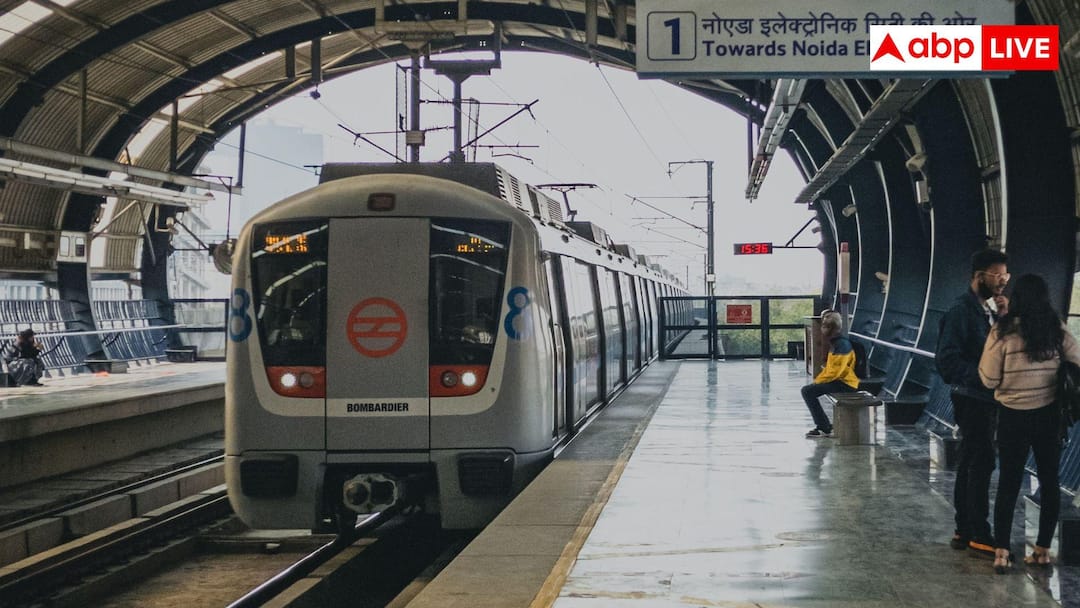
- DMRC informed Supreme Court no metro trains were cancelled.
- 4,157 train trips operated; only 45 stations had restrictions.
- Chairman apologized for contempt; court hearing scheduled Thursday.
The Delhi Metro Rail Corporation (DMRC) has filed a response in the Supreme Court over the restrictions imposed on metro services during the October 10 protest in Delhi, stating that no trains were cancelled and that 4,157 train trips were operated as scheduled.
The response comes ahead of a hearing scheduled for Thursday on the police crackdown during the protest and the closure of metro stations. In the previous hearing, the Supreme Court issued notices to Union Home Secretary Govind Mohan, Delhi Police Commissioner Anurag Kumar and the DMRC chairman over alleged contempt of its earlier order prohibiting unnecessary shutdowns of metro and train services.
The DMRC chairman has also filed a personal affidavit expressing respect for the court, stating that the October 9 order was fully complied with and tendering an unconditional apology for any potential contempt.
DMRC’s Reply In Supreme Court: No Metro Trains Cancelled
In its response, the DMRC said there was no reduction in the number of metro trains and no services were cancelled on October 10. It maintained that trains operated according to the scheduled timetable.
According to the DMRC, 271 trains operated that day, completing a total of 4,157 train trips.
The corporation also stated that entry and exit were restricted at only 45 of Delhi Metro’s 303 stations. All stations were reopened by 10 pm that night.
More Than 85% Of Metro Network Remained Operational
The DMRC said more than 85% of the metro network remained operational despite the restrictions imposed for security reasons.
According to its response, approximately 3.2 million passengers travelled by metro on October 10. This was lower than the usual daily passenger count of around 5.6 million and the approximately 5.8 million passengers recorded on the second Saturday of the month.
The DMRC maintained that the restrictions were limited to station entry and exit at the affected locations, while metro train operations continued.
Why Were Metro Stations Closed During The CJP Protest?
The restrictions were imposed in connection with the CJP protest held in Delhi on October 10. The DMRC stated that 45 metro stations were closed from 9 pm onwards for security reasons, with the restrictions continuing until 10 pm on October 10.
The Delhi administration had initially announced that 57 metro stations would be closed in view of the protests. The Supreme Court subsequently directed that metro services should not be completely suspended because of the demonstrations.
Supreme Court Seeks Controlled Operation Of Metro Services
In the previous hearing, the Supreme Court issued notices to the Union Home Secretary, the Delhi Police Commissioner and the DMRC chairman over alleged non-compliance with its earlier order against unnecessary shutdowns of metro and railway services.
The court asked the central government to ensure that metro and other railway services continued to operate in a controlled and systematic manner, with minimum inconvenience to the general public.
The matter is scheduled to be heard on Thursday, with the DMRC’s response and the chairman’s affidavit forming part of the proceedings concerning the October 10 restrictions.
Disclaimer : This story is auto aggregated by a computer programme and has not been created or edited by DOWNTHENEWS. Publisher: abplive.com