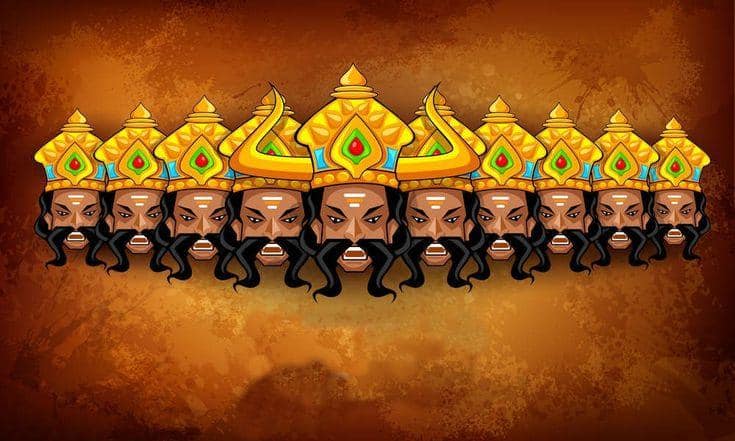
- Dussehra effigy burning warns against arrogance, signifies good’s triumph.
Ravana, the ten-headed king of Lanka, is one of the most recognisable figures in the Ramayana. While he is remembered for his battle with Lord Rama and his eventual defeat, his ten heads hold deeper symbolic meanings in Hindu mythology. They are often associated with his vast knowledge, intellectual abilities and human weaknesses, offering important lessons about pride, desire and the misuse of power. During Dussehra, when Ravana’s effigy is burnt to celebrate the victory of good over evil, the symbolism of his ten heads serves as a reminder of the importance of controlling negative tendencies and following the path of righteousness.
Why Did Ravana Have 10 Heads?
Ravana is also known as Dashanana, which means the ten-faced one, and Dashagriva, meaning the ten-necked one. His ten heads and multiple arms are distinctive features of his depiction in Hindu mythology. One popular interpretation links his ten heads to his extraordinary knowledge and scholarship. According to this belief, the ten heads represent the four Vedas and six Shastras, highlighting his mastery of sacred texts and intellectual achievements. Another interpretation associates the ten heads with human weaknesses, desires and emotions that can influence a person’s actions. Although these explanations differ across traditions, both highlight the complexity of Ravana’s character and the lessons associated with his life.
What Do Ravana’s 10 Heads Symbolise?
In a popular spiritual interpretation, Ravana’s ten heads represent negative human tendencies that can overpower wisdom and moral judgement. These include desire, anger, greed, attachment, pride, envy, ego, injustice, cruelty and the misuse of power. Each tendency reflects a challenge that people face in their lives. Uncontrolled desire can lead to harmful decisions, while anger can cloud judgement. Greed and envy can prevent a person from appreciating what they have, and excessive pride can make it difficult to acknowledge mistakes. The symbolism also highlights how power and intelligence can become destructive when they are not guided by humility and ethical values. It is important to note that this list is a popular moral interpretation rather than a universally accepted scriptural explanation of Ravana’s ten heads.
How Are Ravana’s 10 Heads Connected To Knowledge?
Ravana is portrayed in the Ramayana as a powerful ruler, a learned scholar and a devotee of Lord Shiva. The interpretation connecting his ten heads to the four Vedas and six Shastras reflects his reputation for extensive knowledge. The Vedas are among the oldest and most important sacred texts of Hinduism, while the Shastras refer to various bodies of knowledge and systematic teachings. However, Ravana’s story also highlights the difference between knowledge and wisdom. Despite his intellectual abilities and immense power, his actions and refusal to act according to moral principles ultimately contributed to his downfall. His character is often understood as a reminder that knowledge alone is not enough. It must be accompanied by humility, self-control and respect for others.
ALSO READ | Ravana’s 10 Heads: What Do They Symbolise In The Ramayana? Know Their Significance
Why Is Ravana’s Effigy Burnt On Dussehra?
Dussehra, also known as Vijayadashami, celebrates Lord Rama’s victory over Ravana and symbolises the triumph of good over evil. In many parts of India, the festival is marked by Ramlila performances and the burning of Ravana’s effigy. The ritual represents the destruction of evil and encourages people to reflect on their own actions. Ravana’s defeat is often interpreted as a warning against arrogance, uncontrolled desires and the misuse of authority. The burning of his effigy also conveys the message that even a person with great knowledge, wealth and power can face the consequences of unethical choices.
What Is The Deeper Message Behind Ravana’s 10 Heads?
The symbolism of Ravana’s ten heads offers different lessons about knowledge, human weaknesses and moral responsibility. While one interpretation highlights his scholarship, another encourages people to recognise and overcome negative tendencies. During Dussehra, the story invites devotees to look beyond the traditional celebrations and reflect on the importance of humility, self-discipline and righteous conduct in everyday life. Ultimately, Ravana’s story serves as a reminder that intelligence and power do not necessarily define greatness. True strength lies in using knowledge responsibly, controlling one’s weaknesses and choosing the path of righteousness.
[Disclaimer: The information provided here is based solely on beliefs and information. It’s important to note that ABPLive.com does not endorse any beliefs or information. Consult a relevant expert before acting on any information or information.]
Disclaimer : This story is auto aggregated by a computer programme and has not been created or edited by DOWNTHENEWS. Publisher: abplive.com