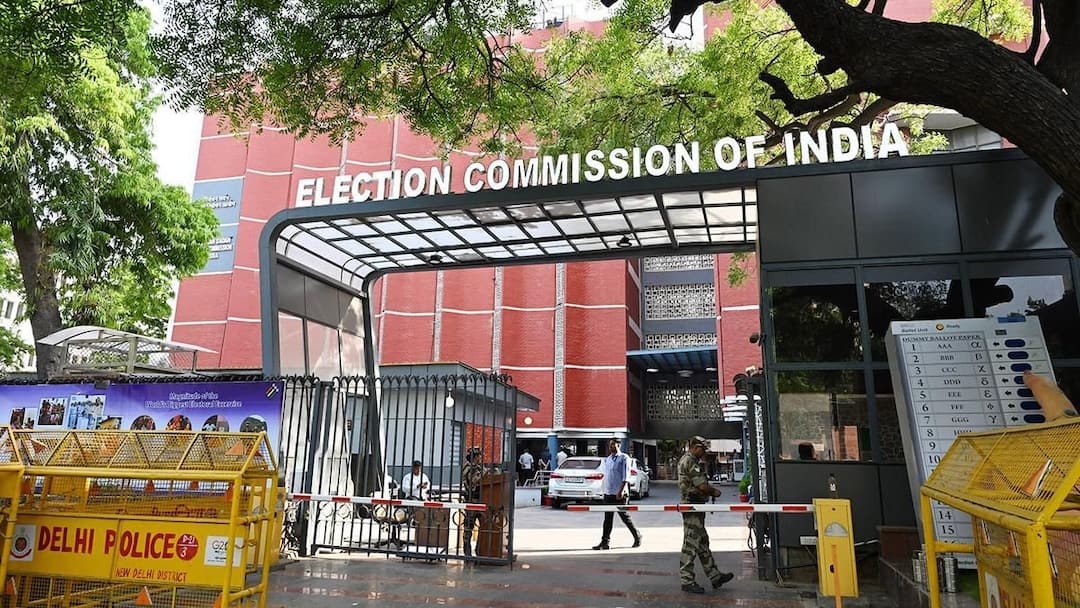
- EC declined disclosing software for electoral roll anomaly detection.
- It cited commercial confidence, trade secrets under the RTI Act.
- An RTI applicant sought software, AI, and automation details.
- EC stated no new software procured for the revision exercise.
The Election Commission of India (EC) has declined to disclose the name and version of the software it used to identify errors and anomalies in electoral rolls during the Special Intensive Revision (SIR), citing commercial confidence, trade secrets and intellectual property protections under the Right to Information (RTI) Act.
In its reply dated October 16, the poll body said the information was exempt from disclosure under the law. The response came after social activist M A Mujeeb Ayyub, from Karimpur in Telangana, filed an RTI application on July 27 seeking details of the technology used by the EC to identify errors, anomalies and inconsistencies in voter lists during SIR, reported The Times of India.
The EC said no new software had been developed or procured for the exercise. It also maintained that Electoral Registration Officers (EROs) decide whether an elector should be included in or excluded from the rolls based on facts and records.
EC Says No New Software Was Developed For SIR
In its response, the EC stated, “No new software has been developed or procured for the SIR exercise. Further, EROs decide on the inclusion/exclusion of an elector on the basis of facts and records.”
An EC official said details of software and algorithms were conventionally not disclosed in response to RTI applications. Similar refusals have been issued in the past by electronic voting machine manufacturers Bharat Electronics Ltd and Electronics Corporation of India Ltd, which declined to share EVM source codes in response to RTI queries.
The EC’s reply, however, did not identify the software or explain which version was used to detect inconsistencies in electoral rolls during the revision exercise.
RTI Applicant Sought Details Of Automated Checks
Ayyub had asked the EC to identify the software, application, algorithm or artificial intelligence platform used to detect errors and anomalies in voter lists during SIR.
He also sought clarification on whether the system automatically flagged electoral records for verification, correction or deletion. If such automated identification took place, he wanted details of the workflow followed after the records were flagged.
The application further sought to establish whether artificial intelligence, machine learning, predictive analytics or any automated decision-support system was used at any stage of the SIR exercise.
EC Says Part Of RTI Query Seeks Clarification
In response to these questions, the EC said the information sought amounted to a request for clarification and did not qualify as information under Section 2(f) of the RTI Act.
The provision defines the information that public authorities are required to provide under the law. The EC’s response did not provide details of whether any AI-based or automated system was used during the process of identifying voter roll discrepancies.
The reply leaves unanswered the specific questions raised in the RTI application about the software’s identity, its version and the process followed after electoral records were flagged for review.
Disclaimer : This story is auto aggregated by a computer programme and has not been created or edited by DOWNTHENEWS. Publisher: abplive.com