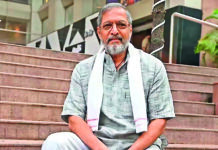
Neeraj Thakur’s twin sons voted in the 2019 and 2024 Lok Sabha elections without anyone questioning their place on Delhi’s voter list. This year, the Election Commission of India (ECI) has asked them to prove it all over again, because they were born on the same day.
They are among the twins across Delhi who have received notices under the Special Intensive Revision (SIR) of electoral rolls. The ECI software that checks voter records treats any two siblings born less than nine months apart as a possible error, and it has no provision for twins. Families who did everything asked of them have submitted documents, attended hearings and waited. A month after the notices arrived, they still do not know whether their children will make it to the final electoral roll, due on December 4.
Also Read: CEC Gyanesh Kumar Row: Ex-Officers Say ECs Risk Cover-Up Charge
Cleared at the Door, Flagged by the System
Neeraj Thakur’s family is originally from Himachal Pradesh. His twin sons, Shourya Singh Thakur and Shubhang Singh Thakur, were born on November 17, 2000, and grew up in Delhi. The family lives in IP Extension in East Delhi. Shubhang is a journalist in Delhi, and Shourya is an actor in Mumbai.
The brothers turned 18 in 2018. They have voted in both the 2019 and 2024 Lok Sabha elections, and in Delhi elections as well.
When the SIR began in Delhi on June 30, a booth level officer (BLO) visited the family during the house-to-house enumeration. The family told the BLO that the boys were twins and handed over their documents. The BLO checked everything and cleared them. When Delhi’s draft electoral roll was published on August 31, both brothers were on it.
Then a BLO returned to the house, this time with notices. Shourya’s notice, issued for the Vishwas Nagar Assembly constituency, ticks a single reason: “The age gap between you and another progeny linked with the same parent in last SIR, is less than 9 months.” It summoned him for a hearing on September 28 with his original documents, and warned that they would be “sent for verification of their authenticity.”
“Our family was shocked to receive this notice. During the Delhi SIR exercise, the local BLO came to our house, and my sons clearly told the BLO that they are twins. The BLO went through all our documents, verified them and cleared everything. After that, my sons’ names appeared on the Delhi voter list and there was no problem at all. Then, out of nowhere, this notice arrived,” said Neeraj Thakur.
The family has since submitted fresh documents to the Election Commission. Weeks later, they have had no decision.
“It is basic common sense that two children born on the same date are twins. Some people even have triplets. How can the ECI’s software fail to account for something so simple? What is the point of a BLO visiting our home, of us explaining everything and the BLO clearing it, if the software can simply override the BLO’s decision? This is absurd,” Thakur said.
Born Four Minutes Apart, Still a Discrepancy
In Mayur Vihar Phase 3, also in East Delhi, the Soman family is in the same position. Asvath Soman was born on July 6, 1998, at 4.40 am, and his brother Akshan followed four minutes later, at 4.44 am. The family, originally from Alappuzha in Kerala, votes in the Kondli Assembly constituency, and the twins have voted in past elections.
Both brothers were on the August 31 draft roll. Then the ECI software flagged them, and both received notices from the Electoral Registration Officer of Kondli with the same box ticked: a sibling age gap of less than nine months. They were asked to appear for a hearing on September 16.
The family submitted all their documents, and the BLO uploaded them. Soman, the twins’ father, explained to the BLO that his sons are twins.
“We told the BLO that our sons are twins. He understood, but said he could do nothing because it is a system-generated notice. The system has no provision to recognise twins. We have submitted every document, and the BLO has uploaded all of it. Now we are simply waiting for the final list,” said Soman.
They are not alone. The Probe has learnt that many more twins in Delhi have faced similar issues and are all waiting for the final list.
Also Read: SIR and Citizenship: ‘You Are a Foreigner Until Proven Otherwise’
How the ECI Software Turns Twins Into Suspects
The trouble begins with how the SIR checks voters. Every voter is matched against the roll from the last intensive revision, which in Delhi’s case dates to 2002. Young voters who were not on that roll, like these twins, are linked through a parent who was. The ECI software then groups every voter linked to the same parent as siblings and runs a set of automated checks for “logical discrepancies.”
One of these checks flags any two siblings born less than nine months apart, since separately born siblings cannot be that close in age. The rule is meant to catch fake or wrongly linked entries. Twins have an age gap of zero, so the ECI software flags every pair of them, every time.
“Logical discrepancy” is not a term found in election law. In this phase of the SIR, the ECI has reportedly widened it to as many as 11 categories, and Delhi’s notices are reported to be issued under 11 types of mismatch. The Commission has not officially published the list. Besides the sibling rule, the categories reported so far include a parent-child age gap under 15 years or over 50 years, a grandparent-grandchild gap under 40 years, more than six children linked to one parent, and mismatches in a voter’s own name or a parent’s name.
The Delhi Chief Electoral Officer has described the notices as system-generated. Once the software flags a voter, the BLO who verified the family at their door cannot overrule it. Only an electoral registration officer or an assistant electoral registration officer can clear the case, after examining the documents. And no document in India certifies that two people are twins. Families can only offer separate birth certificates showing the same date and parents, and hope an officer accepts them.
The Election Commission’s Silence on Twins
The ECI has not issued a single public statement on twins, in Delhi or anywhere else. The only official acknowledgement has come from Karnataka, where election officials said twins can create a logical discrepancy because of identical birth dates, and that such cases are examined individually with supporting documents.
The ECI’s public responses have been general. On September 20, it said a notice does not mean a voter’s name will be deleted. It has not said why the ECI software was built without an exception for twins, how many twins it has flagged, or when their cases will be decided. The process has also been opaque. The notice numbers on the Soman twins’ notices carry the date September 6, and Shourya Thakur’s September 7.
On September 17, petitioners told the Supreme Court that no definition or criteria for logical discrepancies had been placed on the Delhi CEO’s website. Only on September 19 did the CEO’s office say the list of voters issued notices had been uploaded. By then, the Somans had already been summoned for their hearing.
On September 22, a Supreme Court bench led by Chief Justice Surya Kant observed that notices were going out “almost mechanically,” and said the basis for identifying a logical discrepancy needed clarification. Four days later, the ECI ordered a review of its ECINET platform by a committee that includes an independent expert from an IIT or IIIT. It has not said whether that review will fix the rule that flags twins.
Also Read: Election Commission Press Note Fixes What It Said Wasn’t Broken
One Software, Lakhs of Notices
The twins are a small part of a much larger upheaval. Before the SIR, Delhi had 1,45,10,299 registered voters. The draft roll published on August 31 carried 97,53,577 names, leaving out 47,56,722 people, or 32.78 per cent of the electorate. That was the highest deletion rate of any state or Union Territory where the SIR has been held. Of those left out, 43.32 lakh were marked as permanently shifted or absent, 2.82 lakh as dead and 1.41 lakh as duplicates.
Even voters who made it onto the draft roll were not safe. The ECI software flagged 33.13 lakh of them for notices, about one in three. Of these, 19.33 lakh were flagged for logical discrepancies and 13.79 lakh because they could not be mapped to the 2002 roll.
The net has been wide. Even Delhi Chief Minister Rekha Gupta received a notice over an age discrepancy involving her parents. External Affairs Minister S Jaishankar, former Chief Minister Arvind Kejriwal and former deputy prime minister L K Advani were flagged as unmapped. Election Commissioner Sukhbir Singh Sandhu, a member of the Commission running the exercise, received a notice over a mismatch in his own name.
Other states have seen the same pattern. In West Bengal, where the logical discrepancy category first appeared, the Supreme Court questioned why a parent-child age gap of 15 years or less was treated as suspicious. For ordinary families, every notice means gathering papers, taking time off work and waiting. As of late September, about 2.98 lakh hearings had been held in Delhi, a fraction of the 33 lakh people flagged.
Waiting for December 4
Under a revised schedule the ECI issued on September 26, Delhi voters can file claims and objections until October 30, and election officials must decide all notices by November 30. The final electoral roll will be published on December 4.
Until then, the Thakur and Soman families can only wait. Both sets of twins have voted before. Both families told their BLOs the truth, handed over every document and responded when summoned. What stands between them and the final roll is a rule in the ECI software that cannot account for two children born on the same day.
Why should voters who have already voted, and who were verified at their own doorsteps, carry the burden of proving their eligibility again? The ECI has yet to answer several questions:
-
Why was the ECI software built without an exception for twins and triplets?
-
How many twins in Delhi have received notices, and how many cases are still pending?
-
Why can a system-generated flag override a BLO’s verification at the door?
-
Why have the 11 logical discrepancy categories not been officially published?
-
Will the ECINET review fix the nine-month rule before the final roll?
For four young men in East Delhi, and an unknown number of twins across the city, the answer will come on December 4.
Disclaimer : This story is auto aggregated by a computer programme and has not been created or edited by DOWNTHENEWS. Publisher: theprobe.in