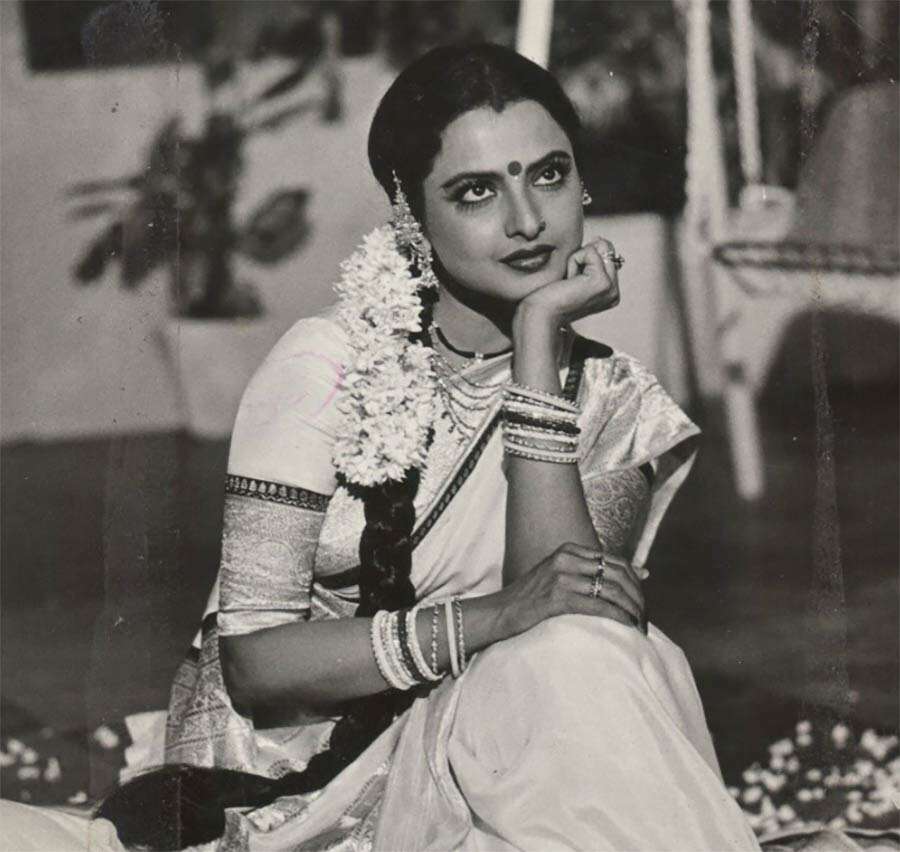
It’s been twenty years since I met her. We have that mandatory meeting once a year, plus the warm hugs and embraces at the Filmfare Awards. I’ve travelled with her to Chennai for the Filmfare Awards. I’ve hung out at a coffee shop where she looked Fedora-esque in her glares and red lipstick.
On an impulse, she’s taken me on a drive and an ice cream. There is always warmth, but a veil of secrecy over certain matters. Perhaps life’s experiences, a childhood she left behind, and unrequited love have all taken their toll.
But in her moments of candour, she can be an ace raconteur, taking me back to the ’70s, talking about doing double and triple shifts and narrating funny anecdotes about stars and superstars.
I met her in her sea-facing office room as the evening shadows lengthened. All of 20, I think. Dirty sneakers and a baseball cap. The beauty remained intact, with no ravaged scars of time. The sun rays slanted through the window, lighting up the face as always.
And my memories keep coming back. Of that desolate waiting in a station room of Ijaazat (1987). Of unrequited love in Umrao Jaan (1981). Or the forbidden love in Kalyug (1981).
In her case, you couldn’t separate the craft from the artiste. The hallmark of a truly great actor. I had gone with a senior colleague. It was a moment out of Madame Bovary, with me eyeing her while she sized me up.
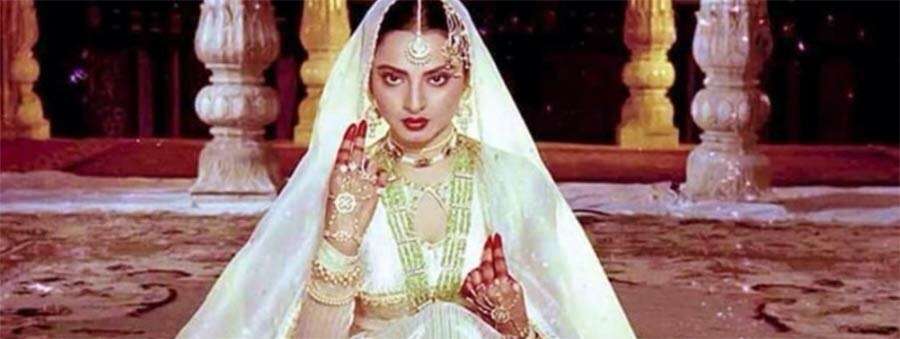
The next day, a photo shoot was in progress at Rakesh Shrestha’s. She signed an autograph for me on a card with her photo. Shrestha had made a bunch of them. And like a storybook princess, she disappeared into a room with her loyal secretary, Farzana. Time out.
She has been dissed and discussed. Diva, ivory tower queen, sexy superstar are among the kinder epithets that have come her way. Rekha Ganeshan has outlived them all. You could say the ingredients of her life had the makings of a classic Greek tragedy:
All of which has been chronicled in the purple pages of film rags and unauthorised biographies. Which is perhaps just as well because people need to know what goes into the making of a great actor. Great actor she is. But she never got the opportunities, say like a Shabana has.
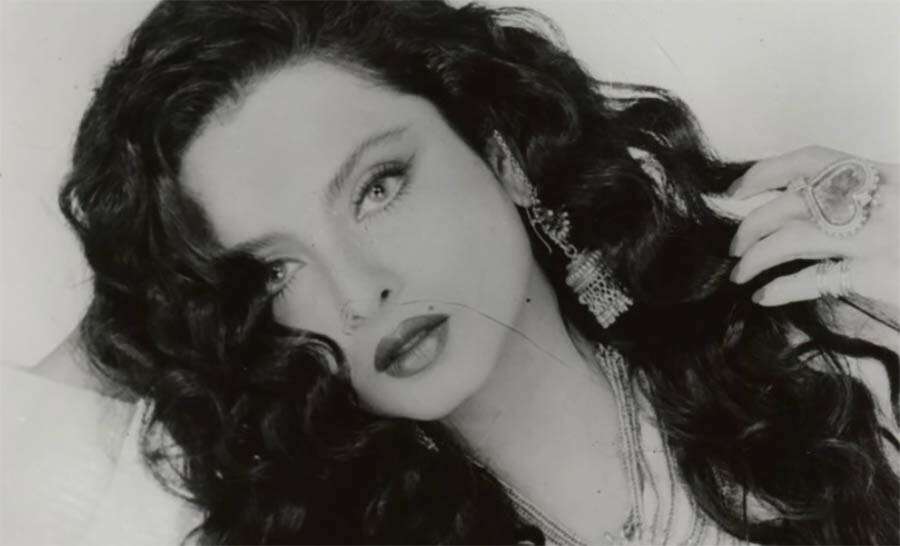
Perhaps it was her stardom, her larger-than-life persona or just her alleged mercurial ways. Or maybe she just didn’t chase roles like other actors did. Her total recall as an actor to reckon with came once again from Ghar (1978).
Directed by Manik Chatterjee, who passed away during the making of the film, the film was completed by Gulzar.
Ghar is a Gulzar vehicle right from its dialogue to song sequences. As a housewife dealing with the aftereffects of rape, Rekha wrenches out every bit of your sympathy.
She’s first-rate, and you can see it in the close-ups in the Phir Wohi Raat song and her final outburst with her empathetic husband Vinod Mehra. Ever after Ghar, she flounced around in several commercial chartbusters until Prakash Mehra’s Muqaddar Ka Sikandar (1978) happened. A last-minute addition to the script, an adaptation of Devdas.
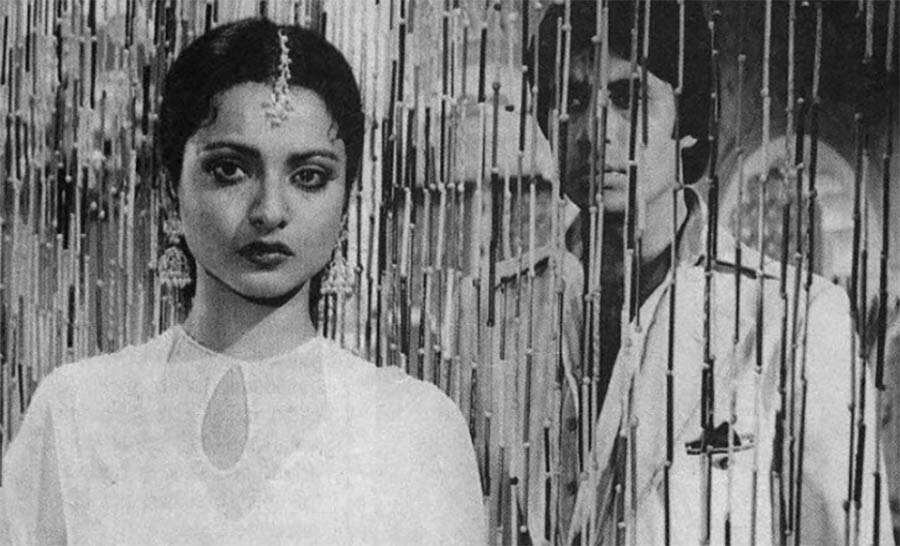
Rekha’s Zohrabai, a modern Chandramukhi, is the entire spice rack in this eminently watchable masala caper. Her long lines of dialogue in her death scene are masterful as they are moving. Here was classic Rekha. Give her an opportunity and she would seize the day.
This same decisiveness she showed in Shyam Benegal’s adaptation of Mahabharata, Kalyug (1981). Despite a minuscule role, she knocks it out of the park in the scene where the income tax guys are going through her intimate belongings, a metaphor for Draupadi’s Vastraharan scene. That she’s a changeling is also best seen when she switches from cold and calculated in her dealings with her husband Raj Babbar to her warm, almost bordering on sensual, demeanour with her brother-in-law Ananth Nag.
The early ’80s were her annus mirabilis. After specialising as the other woman or the courtesan, opportunity came in the form of Yash Chopra’s Silsila (1981). Perhaps too dangerously close to real life, people looked for drama.
Despite being saddled with an unsympathetic role, Rekha makes you look beyond her glossy lipsticks and China silks – observe her close-ups in the Neela Aasman song, her long silences in her scenes with husband Sanjeev Kumar, her breakdown with Amitabh in Lodhi Gardens or just her unshed tears in the confrontation with Jaya Bachchan. What a performance!
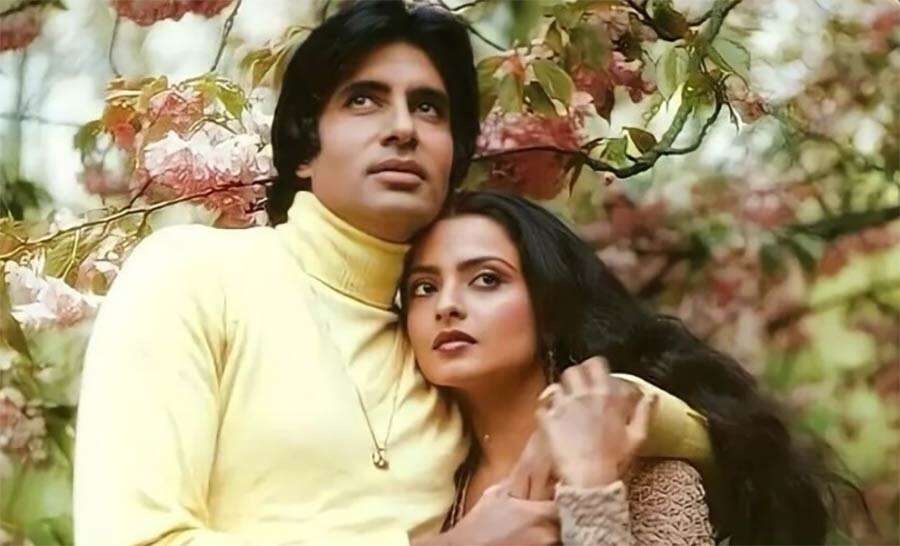
A reflection of her free-spiritedness showed in Hrishikesh Mukherjee’s Khoobsurat (1980)! As the goofy Manju, Rekha was in top form. Be it in her Piya Baawri classical dance or her final scene at the railway station. This was that phase where the metamorphosis of the tender gosling into the swan had truly begun.
Her ascent as a commercially viable top star was punctuated with yet another great turn in Umrao Jaan. Perhaps not as a tour de force as Jennifer Kendall’s performance in 36 Chowringhee Lane (1981), that year, Rekha inhabited the skein of poetess Umrao and gave it the right amount of sadness and desire.
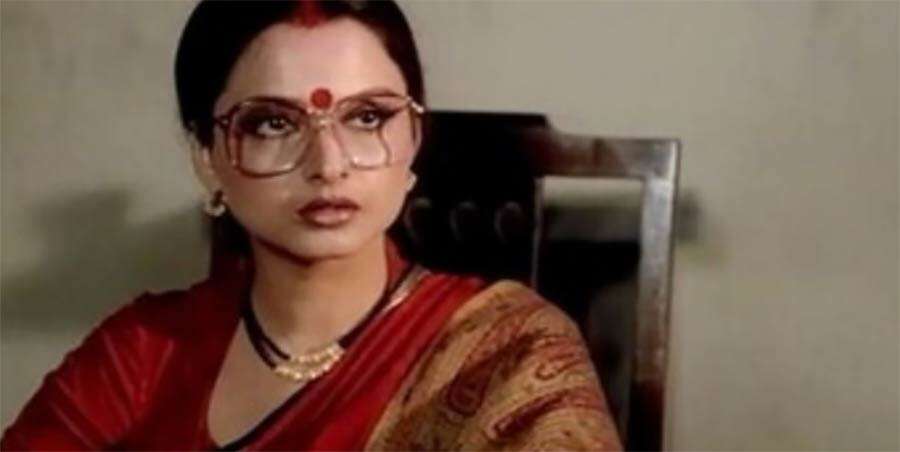
Justuju jiski thi…usko toh na paaya humne…Asha Bhosle’s voice poured poetry into the performance. But Rekha gave it soulfulness. Desolation never felt more poetic than in Umrao.
Gulzar captured this same desolation in a railway station in Ijaazat. At close to 30, Rekha’s body language of a woman with a history is note-perfect. Mera Kuch Samaan and Khaali Haath Shaam Aayi Hai were perhaps tributes to a childhood lost in translation, an adult life lost to the vagaries of love.
As Sudha, Rekha is the every woman who embodied practicality and pain.
The camera is still in love though we rarely see it save for an occasional Zubeidaa (2001) or an award show appearance. There is subterranean depth still waiting to be plumbed, emotions still waiting to be explored.
It’s funny, for a diva of her stature, she can travel light and actually be fuss-free, as I’ve seen time and again. She comes for the Filmfare Awards function, she’s attended a sister magazine event, she’s met die-hard fans of hers because I have asked her to, she’s sung a Malayalam song for me.
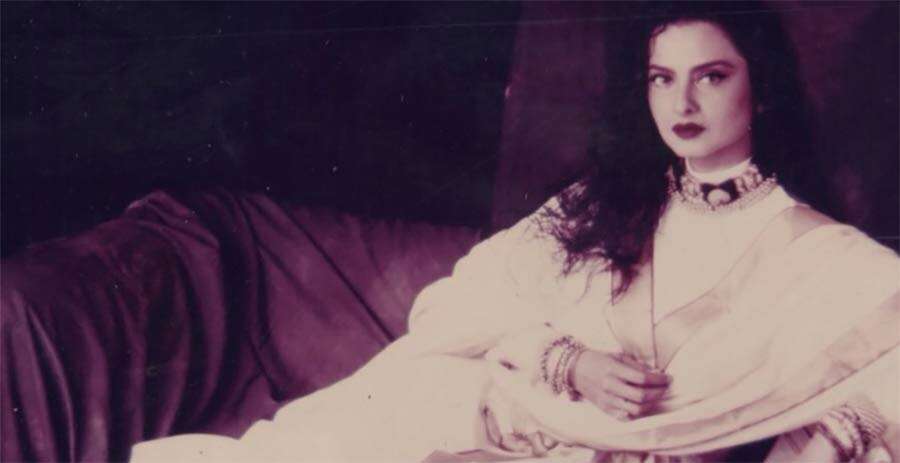
I would be endlessly fascinated with her photo shoots. When screen and real life meld. She’s launched a thousand magazine covers and lurid thoughts. She’s milked the desirable other woman for ages now. She’s the image, the image is her. Most days you cannot tell the difference.
And then the painful contradictions also stare you in the face. She can be peremptory, cut off communication for a year or two because something you said ticked her off.
How do you reconcile the two opposing sides of Rekha- gentle and kind. Fierce and petty. And therein perhaps is the secret of her longevity. Her chameleon-like ability to be different people at different times.
I’m often taken back to the times a child of 13 was forced to do things she didn’t want to do on camera and sometimes off it. The lack of a strong father, the humiliations, the abuse, the unrequited love. But none of it shows on her face. Perhaps she’s internalised her demons; she’s compartmentalised her life in neat boxes like she does her baubles and trinkets.
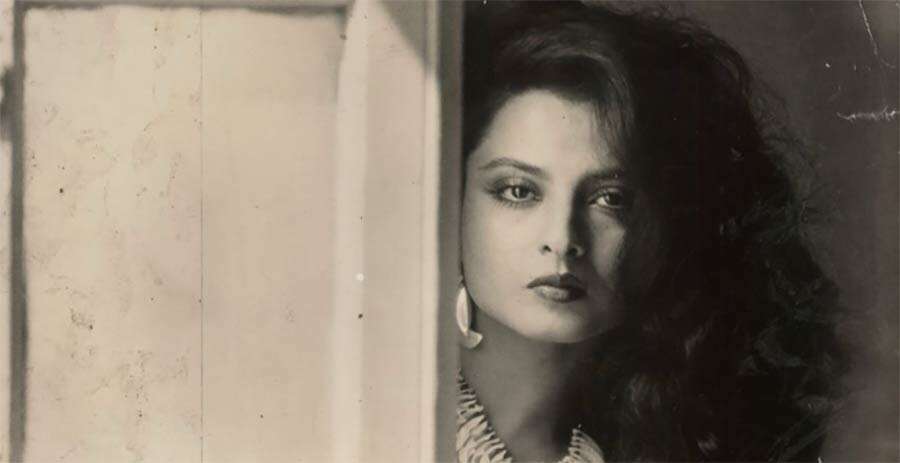
What then is Rekha aka Maya Memsaab? A conjurer of a million lurid dreams. A hark back to my childhood in 1987, when I was first gifted a poster of her. The mistress of spices, the promise of the forbidden. Over-the-top assemblage – from Khoon Bhari Maang (1988) to Madame X (1994).
Everything about her could be tawdry, but she saved most men and gay men suffering from identity crises and other issues. Because she was the other woman who, despite being damned, would stay out in the darkness but wouldn’t let it envelope you.
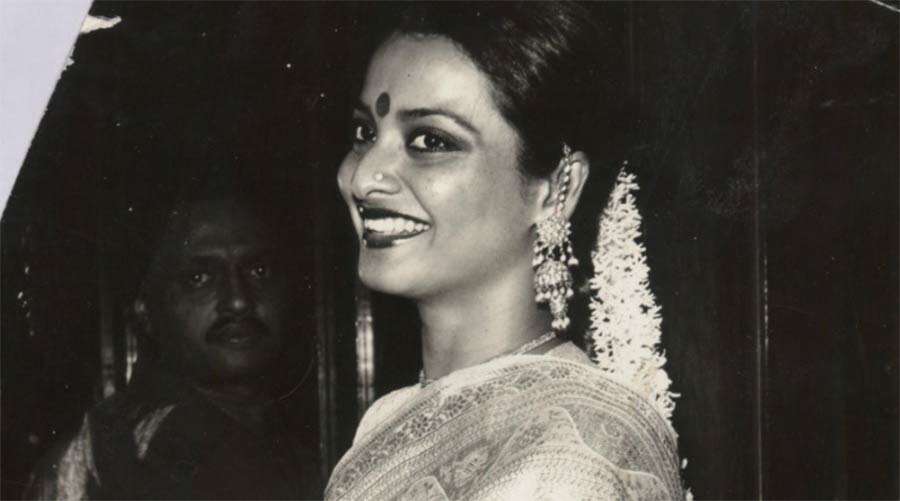
A love child of Pushpavalli and Gemini Ganeshan, she saw the darkest of dark and emerged like a wounded but successful warrior. She’s outlasted the epithets and probably the movie business too.
I wish she wasn’t caught up in her own understanding of her situation. I hope she hasn’t made peace and seeks solace in the fact that people only remember Umrao Jaan, Ijaazat, Silsila and Khubsoorat. Perhaps history will be kinder to her than life has.
Also Read: Editor’s Take: Tragedy Queens, How Madhubala and Meena Kumari Paid The Price for Love and Fame
Disclaimer : This story is auto aggregated by a computer programme and has not been created or edited by DOWNTHENEWS. Publisher: filmfare.com