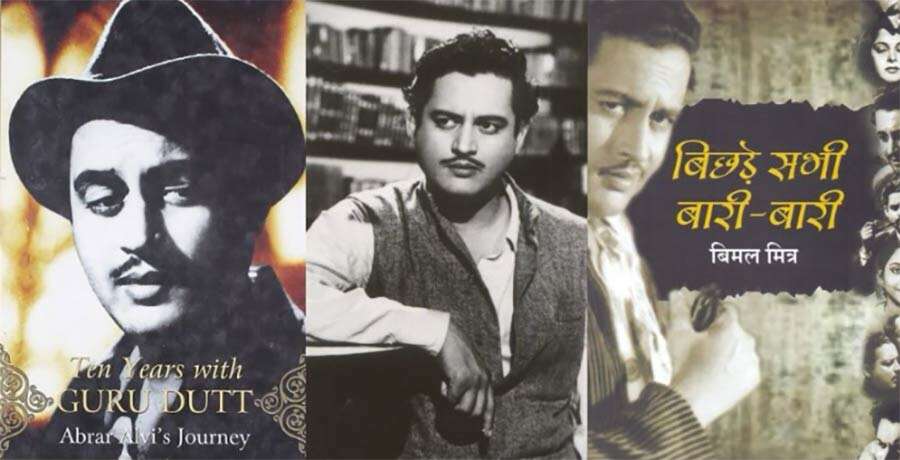
Two Guru Dutt books retell the tale of heartbreak, genius and the darker side of showbiz, looking back at the tortured genius with misgivings and, of course, empathy.
Ten Years with Guru Dutt by Sathya Saran
Confession: I can be obsessive about some film personalities, especially those dead and gone. I usually go into a deep, dark rabbit hole researching them, finding trivia and interviewing colleagues, lovers and friends. I’m all over Alice in Wonderland.
I had read Sathya Saran’s unassuming but wonderfully researched book on Abrar Alvi, Ten Years with Guru Dutt. The late Alvi is a delightful raconteur, but he is also bitter about the past, and his anger is often directed at his mentor. The reason? Alvi directed the classic Sahib Bibi Aur Ghulam. But to this day, people dismiss him as a dummy director and credit Dutt as the muse behind the film based on Bimal Mitra’s eponymous novel.
Saran gently prods Alvi through a maze of bittersweet memories and comes out with a cracker of a book. I was in my early twenties when the book was first released, and it seemed ho-hum then. But today, almost twenty years later, I read between the lines and am able to detect nuance, genius and heartbreak.
Alvi, who was just a hands-on gofer on the sets of Baaz, got his big break with Guru Dutt on Aar Paar and went on to work with him until Baharen Phir Bhi Aayengi. He also wrote some excellent screenplays for films like Professor, Sangharsh and Manoranjan for outside banners.
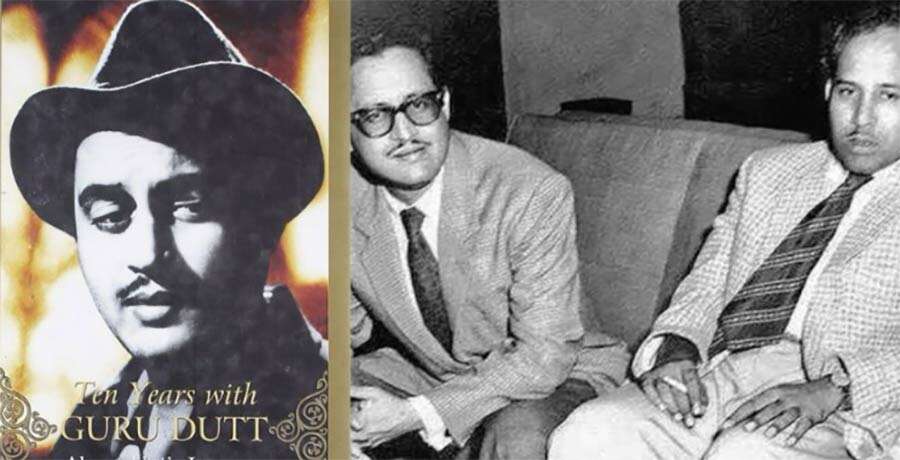
But that’s not the point. Alvi was handed the reins of Sahib Bibi Aur Ghulam. After the commercial failure of Pyaasa, Dutt never wanted to officially direct another film. So M Sadiq was given Chaudhvin Ka Chand, while Shaheed Latif was handed charge of Baharen Phir Bhi Aayengi.
Alvi went on to become Dutt’s trusted screenplay and dialogue writer. The sharpness and economy of expression can be seen in films like Mr and Mrs 55, Pyaasa, Kaagaz Ke Phool and Chaudhvin Ka Chand, to name a few. To Alvi, we can also credit the move away from verbose filmi dialogue towards more real, everyday lingo, delivered with wit and ease.
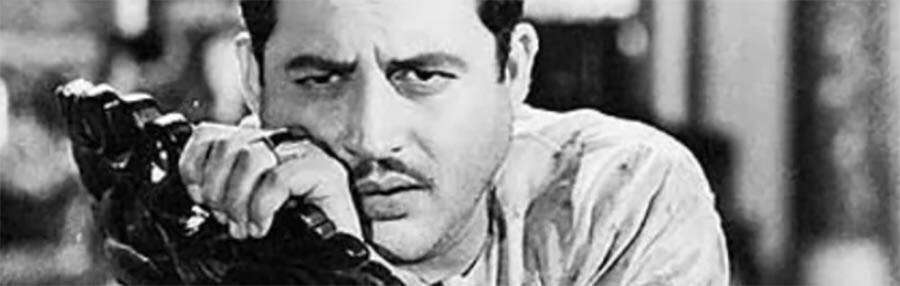
Alvi recounts with affection how Waheeda Rehman was discovered at 17 after doing a dance sequence in the Telugu film Rojulu Marayi. He also recounts his own experiences and love story with a streetwalker, which was immortalised in Pyaasa.
Alvi is trenchant when he talks about not getting due credit for Sahib Bibi Aur Ghulam. He admits that while Dutt directed the songs and a few scenes with Waheeda, Alvi did the major bulk of the heavy lifting, a fact attested to by Dutt. But, as always, history hasn’t been fair to the director. The fact that Alvi didn’t make any more films after that only fuelled the “ghost-direction” rumours.
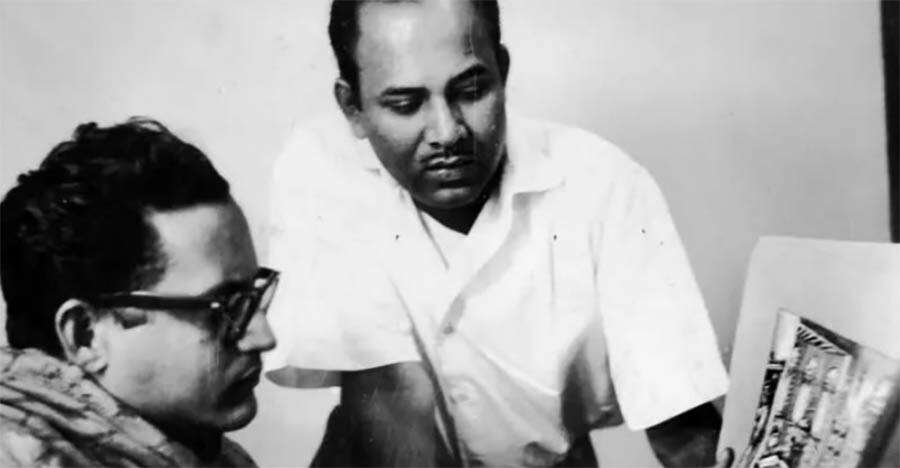
Alvi bristles at the injustice in the pages. He recounts fractious and combative moments with his mentor on the sets and once even resigned in a huff. But Dutt coolly told him that he was the director of the film and must bear the onus wholeheartedly.
Alvi throws light on the stormy relationship between Geeta and Guru Dutt. While his anecdotes are filled with affection, he minces no words when he suggests that Dutt was perhaps being cuckolded. He also categorically credited his mentor for cutting ties with Waheeda Rehman around 1961. The last parting is not a happy memory, and Rehman was forbidden from even entering the studios.
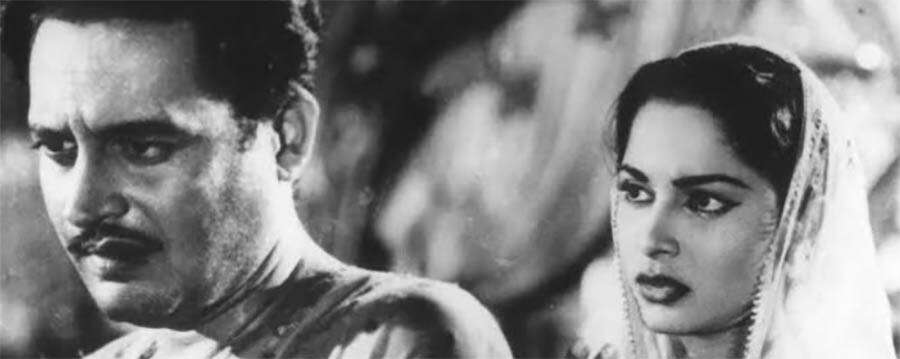
The maker and his muse met a couple of times after that, but it was formal and polite. Alvi says he had a tough time convincing Rehman to come back and shoot the last scene of Sahib Bibi Aur Ghulam. While he praises her for her dignity and demeanour throughout her stint in Guru Dutt’s films, he wonders if she had been miscast as Jaba in Sahib Bibi…
Geeta is not spared either, with Alvi blaming her hyperactive and suspicious mind for creating havoc in an already fractured marriage. Alvi emphatically states that Dutt hated her friends, including actress Smriti Biswas, and felt that Biswas was largely responsible for putting ideas into Geeta’s mind. There is also mention of an elaborate charade about a “letter” and Geeta’s other couple friends, such as Hemen Gupta and his wife Ratna, Mannu Ladha and his wife, and Hiren Nag and his wife. The episode featuring them is a telling and somewhat unsettling one.
Here is a wife whose singing career was cut short cruelly and who was told to sit at home. And a 17-year-old muse who was transplanted from her comfortable middle-class existence into something her mind had not envisaged. To date, she has maintained her dignity when speaking about her mentor and continues to praise his abilities as a filmmaker
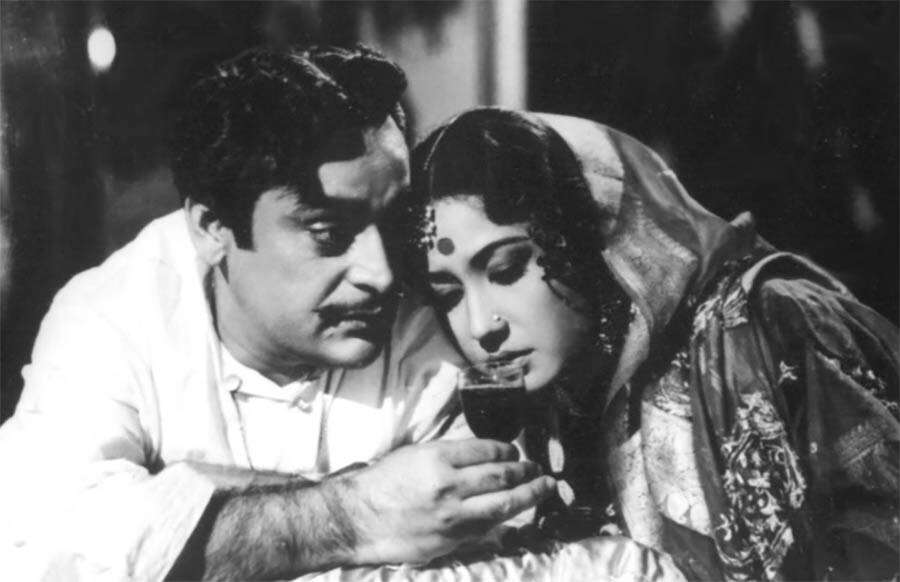
Alvi was probably the last person to meet Dutt the previous day before his death, as they were working together on the scenes of Baharen Phir Bhi Aayengi. Dutt’s alcohol addiction, his addiction to sleeping tablets, his Hamlet-like indecisions and his vacillations are discussed threadbare in the book.
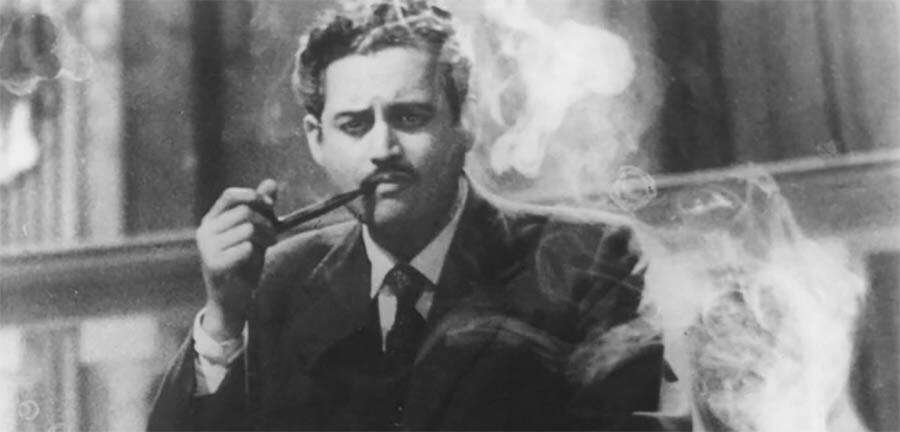
I particularly liked the music chapter, which recounts how Dutt rejected SD Burman’s original tunes for Yeh dil na hota bechara and Rangeela re, both of which made their way into other films such as Jewel Thief and Prem Pujari. And you better believe that the gossamer beauty of the title track composed by Ravi for Chaudhvin Ka Chand was rejected until Alvi, with his presence of mind, helped save the song from rejection.
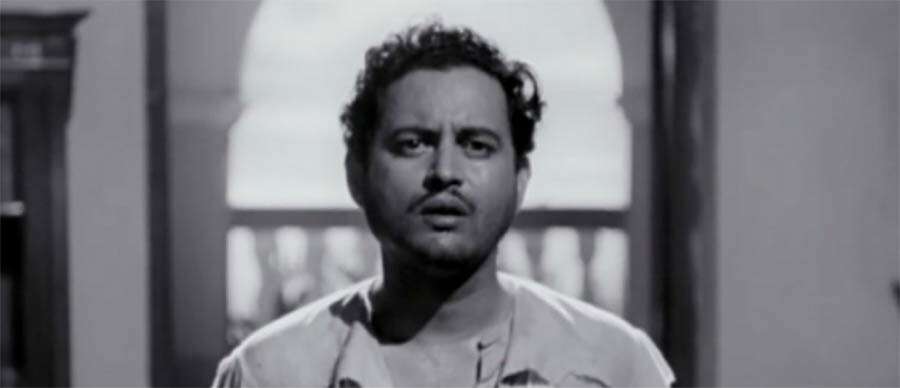
For those who love to go behind the scenes of films and explore their interior life, Ten Years with Guru Dutt is masterful. How much of it is Alvi’s fevered imagination, one doesn’t know. Nostalgia and truth have a way of being open to many interpretations. And today, since none of the dramatised personae, including Alvi, are alive, we just have to take the book at face value.
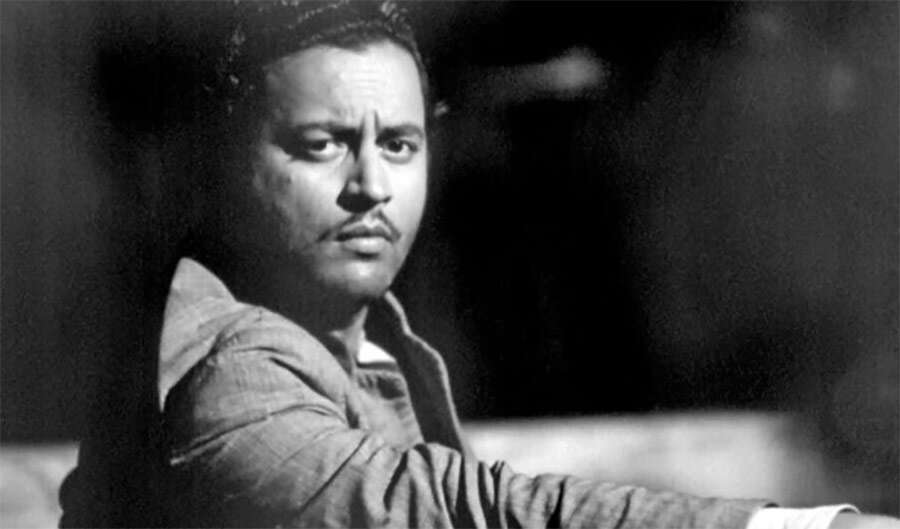 Saran, the journalist, has a more serious and neutral stance and doesn’t look like she is raking over the past or has any deep-seated agendas.
For die-hard Guru Dutt, Geeta and Waheeda Rehman fans, the book is overwhelming and sometimes exasperating. Why? Because truth is indeed stranger than fiction. And truth, like fiction, is sometimes just two sides of the same coin. Interpretation, like familiarity, breeds contentment and sometimes contempt.
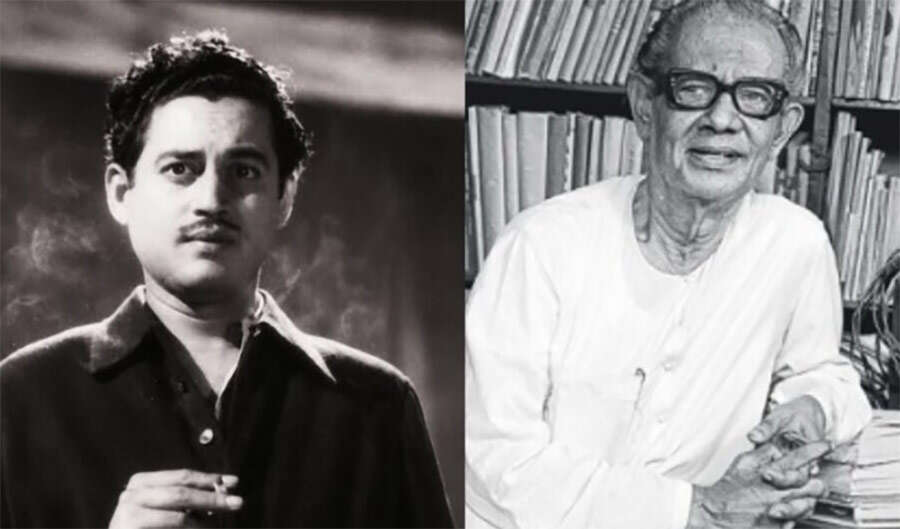
Bichhade Sabhi Bari Bari by Bimal Mitra
It’s probably the first book I have read in Hindi, and I’m struggling. Bichhade Sabhi Bari Bari is a Hindi translation based on Bimal Mitra’s Binidra in Bengali. Mitra, a bestselling novelist in Bengal, wrote Sahib Bibi Aur Ghulam, which Guru Dutt and Abrar Alvi made into the eponymous film.
Mitra, who had no film connection, recounts how he was charmed by Guru Dutt’s personal gestures and flew to Bombay to work on the film. You may get tired of Mitra’s overestimation of his own art and craft. He is disarmingly disdainful of the whimsical ways of the film world, with a borderline holier-than-thou attitude.
He enters the scene when Dutt is at his lowest ebb, as Kaagaz Ke Phool has bombed at the box office and he begins work on Sahib Bibi Aur Ghulam. His first interaction with Geeta after the casting is finalised is telling. She remarks dryly to him, asking if they didn’t get anyone else other than Waheeda Rehman for the role of Jaba.
Binidra, or sleepless, describes in great detail Dutt’s tryst with insomnia, his inability to get off alcohol, his addiction to sleeping tablets and, of course, his crumbling marriage.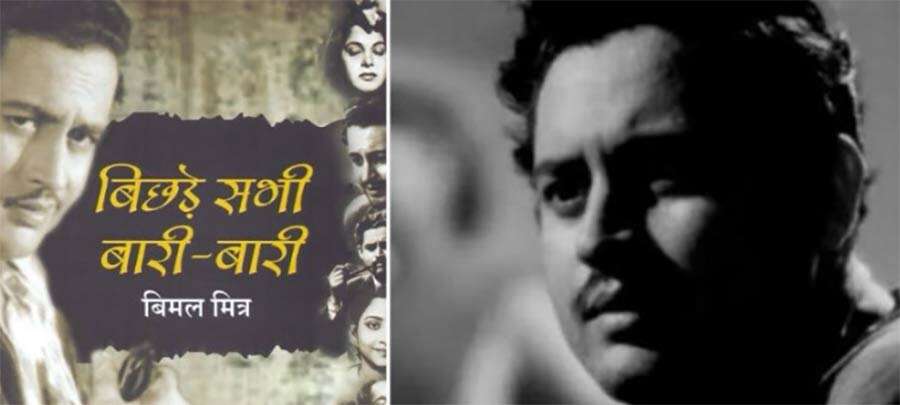
The novel is filled with information that helps you understand Dutt’s many vacillations and indecisions. His stubbornness when it comes to his projects sits alongside his innate curiosity: his desire to build a farm in Khandala, his fascination with watching chickens incubate and his experiments with cooking vegetarian food there.
Post-Sahib Bibi Aur Ghulam, Dutt is inundated with offers to do films in Madras, now Chennai, and there are some wonderful anecdotes about living in Pondicherry during the shootings of Bahurani, Suhagan and Bharosa. Dutt, who had hitherto worked only in his home productions, is secretly pleased that he is recognised as a bankable actor by outside producers and paid handsomely.
Mitra avers that all the money Dutt makes goes back into running his office and paying his staff, to the tune of forty thousand rupees a month, besides sundry household expenses. Mitra’s adoration for Dutt’s gentler demeanour is a far cry from, say, Abrar Alvi’s estimation of his mentor in his book. It’s almost like you are reading about two different people.
Mitra remembers coming to the beautiful bungalow at 48, Pali Hill, and the scenes of blissful domesticity at the Dutts’. He also painfully recalls the tearing down of the sprawling bungalow as the fights between Geeta and Guru Dutt increase. Mitra is full of empathy towards Geeta and rebukes Guru Dutt for not letting her work.
He offers no judgement on the Waheeda-Guru Dutt mentor-muse relationship and is also empathetic towards Rehman, giving her a clean chit. He squarely blames Dutt’s restlessness, lack of focus and inability to steer things clearly. But at all times, he applauds his genius. Mitra also sees his generosity of spirit on many occasions.
Mitra, not accustomed to the ways of the film world, often and rightly talks about its inability to hold on to relationships, the shallow pursuit of success and the heavy price of moral ambiguity. Especially revealing is the scene at K Asif’s house after the premiere of Sahib Bibi Aur Ghulam. Asif suggests to Guru that he change the ending and make it a happy one. The initial trade numbers are low and a confused Guru orders a reshoot of the climax. But better sense prevails and he decides to stick to his version rather than Asif’s suggestion.
The marriage between two strong powerhouses like Geeta and Dutt is a disaster. After the initial happy years, it quickly degenerates into a slugfest. Guru Dutt, in an attempt to reconcile with Geeta, also starts the Bengali film Gauri with her. Disaster strikes during the shooting and Dutt squarely blames Geeta for the unfinished Gauri.
Mitra gingerly tells of Dutt storming out of the shoot, getting drunk and booking a trunk call from the Grand Hotel, asking Waheeda Rehman to help him stay afloat. Rehman reminds him that he is a married man and should try to repair things. At all times, Rehman’s dignity and strong sense of self come through. She must have been around 21 years of age then.
Mitra painfully recounts the family physician administering painful injections in Dutt’s stomach because of his liver problems caused by excessive drinking. He recalls Geeta’s many stormy walkouts and also Dutt’s painful suicide attempt, when he is saved in the nick of time. Clearly, Dutt always had a death wish.
The book is filled with suggestions but never innuendo. At points, I get the feeling of a writer of bestselling novels coming to terms with his own sense of morality and with the morality of a frenetic Bombay film industry.
Mitra segues frequently into his own life in Kolkata, walking the tightrope of writing and serialising novels for special Bangla editions, magazines and newspapers. His fanboy adoration of Dutt is also excessive.
But there’s a lot to glean from the novel. It is an outsider’s perspective of an inchoate but creative industry where split-second decisions can impact an entire lifetime. It is also a peek into a very flawed genius whose art has stood the test of time and the legacy he left behind.
In our minds, we as an audience, deify screen images of love and creativity as gospel. The truth about creative people, as we know by now, is of course very different. In those days, issues of domestic violence and mental health unfortunately weren’t addressed with the seriousness they are today. Perhaps the lack of awareness and an ecosystem that brushed aside uncomfortable truths contributed to the misery.
Guru Dutt passed away on October 10 at the age of 39, leaving behind unfinished films and loads of wonderful memories for Mitra to pen an indulgent but richly rewarding memoir about his dear colleague, who introduced him to chaos and genius in equal measure.
Bichhade Sabhi Bari Bari is about loss and longing and, ultimately, hopelessness, with no redemption in sight.
Also Read: Editor’s Take: Tragedy Queens, How Madhubala and Meena Kumari Paid The Price for Love and Fame
Disclaimer : This story is auto aggregated by a computer programme and has not been created or edited by DOWNTHENEWS. Publisher: filmfare.com