Emergency doctor ‘completely terrified’ of looming winter pressures on NHS
-
Published
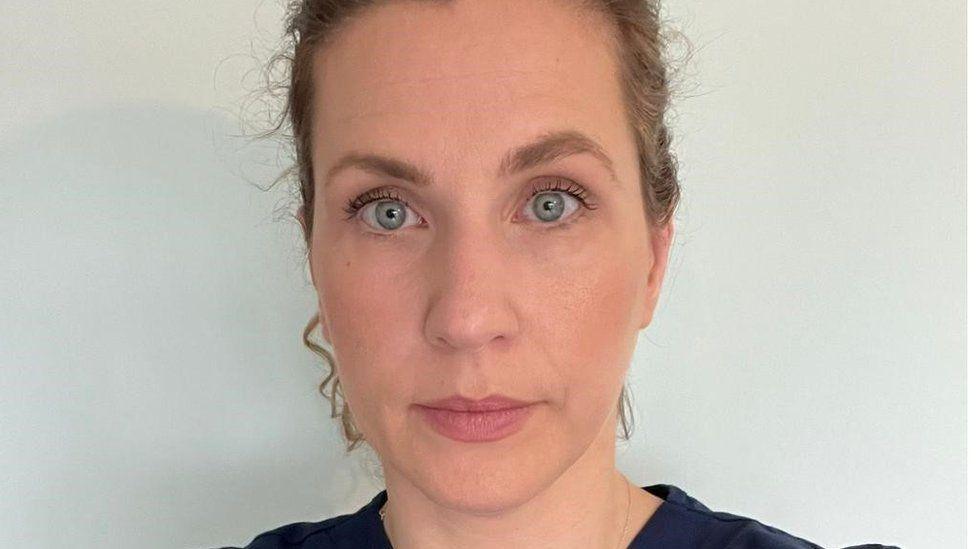
A leading emergency doctor has said she is “completely terrified” about upcoming winter pressures on Scotland’s already-stretched NHS.
Dr Fiona Hunter, vice chair of the Royal College of Emergency Medicine Scotland, said A&E departments were providing “unsafe” levels of care, with some patients spending 72 hours on trolleys in hospital corridors.
Although Health Secretary Angela Constance vowed in August to “eradicate” corridor care, Hunter told BBC Scotland’s The Sunday Show there had been a “toxic normalisation” of this practice which can lead to patients dying.
Constance told the programme that the winter would be “difficult” but reiterated that corridor care was unacceptable.
She said her priorities were to reduce avoidable hospital admissions, including with “robust” public messaging, to ensure people were accessing the right sort of medical care.
She said she wanted to remedy a lack of statistics kept around corridor care and to move towards a system where preparing for winter was a “year round” activity.
A&E ‘stacked with ambulances’
Last month First Minister John Swinney confirmed plans to cut the number of mainland health boards from 11 to two in a bid to free up more time and capacity for treatment.
But with major reform some way off, fears are growing about the months ahead.
Asked how concerned she was, Hunter said: “Completely terrified, to be clear about the situation currently, before we get into proper winter where the viruses really hit.
“We are providing unsafe levels of care in emergency departments.
“There has been a real toxic normalisation of corridor care. We accept it on a daily basis.
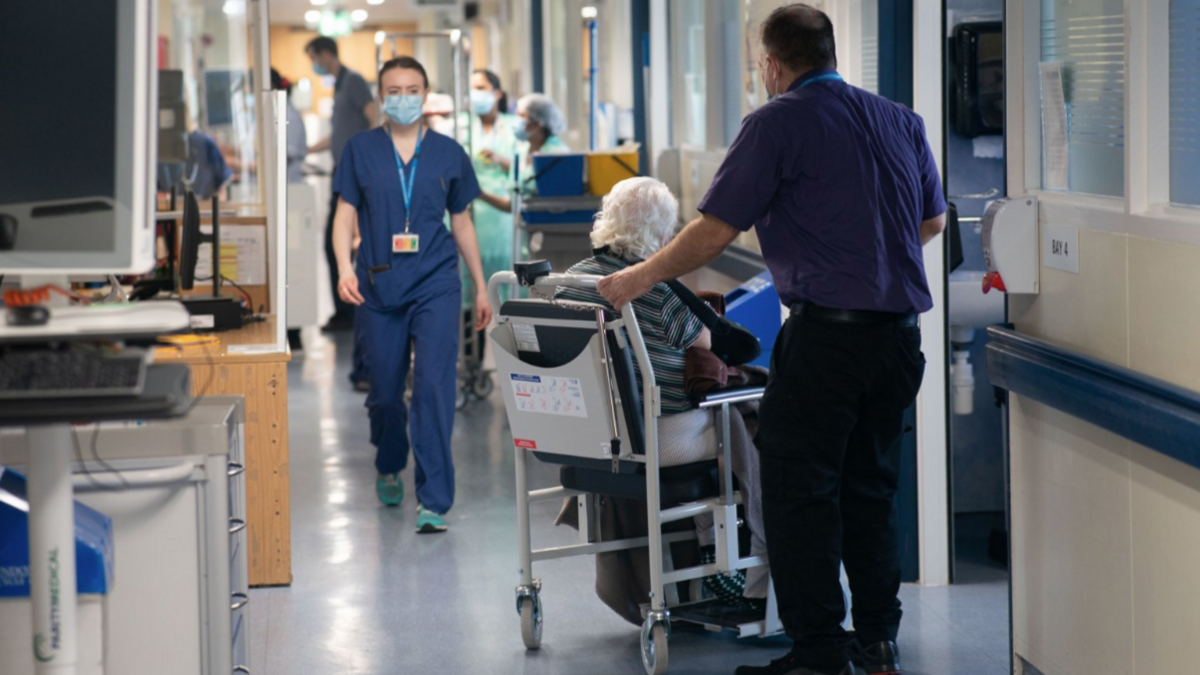
“You come into a department that is completely stacked with ambulances outside and we have got trolleys up and down corridors.”
She added trolley mattresses were designed to keep patients for up to four hours but some are being kept for “up to three days”.
Hunter said: “We know that excess mortality happens when you languish on a hospital trolley.”
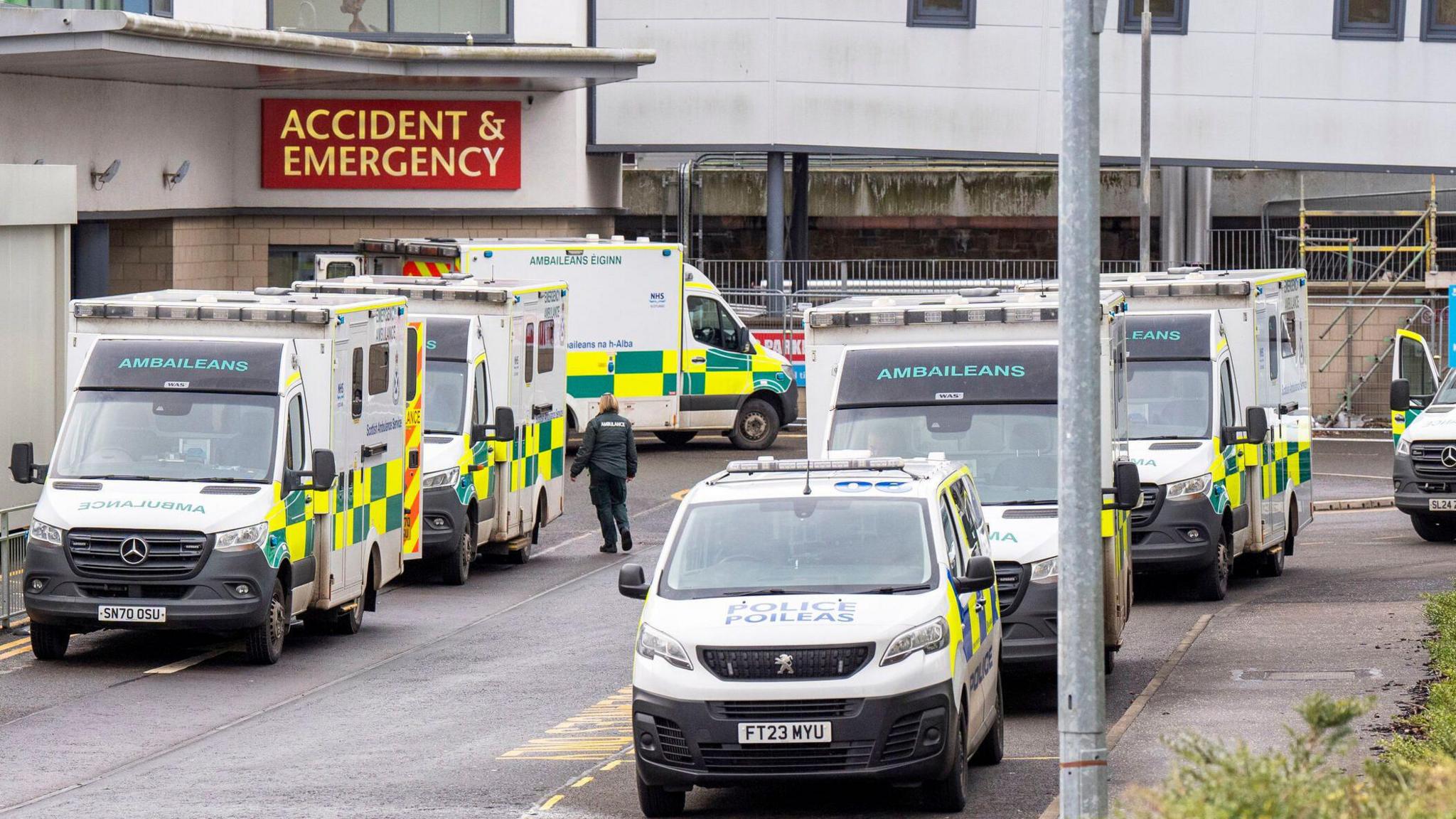 Image source, PA Media
The doctor said she did not want to “scare patients away” from coming to an emergency department.
However, she warned: “We are not able to provide safe levels of care because what emergency staff are being asked to do across the country is to look after essentially a ward’s worth of extra patients and keep seeing every patient that comes through the front door.
“Some departments across the UK are working at 500% capacity but they don’t have 500% extra staff to deal with that.
“So we have really high rates of sickness and burnout among staff – and this is before the viruses really hit.”
She told the programme staff naturally want to isolate sick patients but were unable to do so due to “completely stowed out” waiting rooms.
Hunter added: “It is just impossible.”
The medic said that, month-on-month, almost 2,000 patients were experiencing delayed discharge across the country.
She said: “If we could free up a quarter of those patients then we would have flow to bring our patients through the system.”
-
Has Scotland’s NHS recovered from the Covid pandemic?
-
Published23 March
-
-
Will walk-in GP clinics deliver one million extra appointments?
-
Published25 February
-
Councillor Paul Kelly, Cosla spokesman for health and social care, agreed the problems facing the NHS now amount to a “year-round crisis”.
He told the programme: “Like everybody we are very worried about what the winter will bring.”
Asked about the additional time some people are spending in hospital, Kelly said: “Delayed discharged is a significant problem, as is people waiting for a care package in the community.
“We are very, very clear to the government that we need to see investment in social care.”
The health secretary earlier told the programme that there should not be a focus on outcomes, not just money.
But Kelly responded: “I think we have to focus on the money.
“If we are saying the government are focusing on delayed discharge then part of that is about the role of councils and supporting people to get out of hospital.”
He told the The Sunday Show that health and social care partnerships currently had “almost half a billion pounds of a budget gap” but added it was vital to invest in the workforce.
Kelly said “urgent” investment was required and added: “We don’t want to see anybody in hospital longer than they should be.”
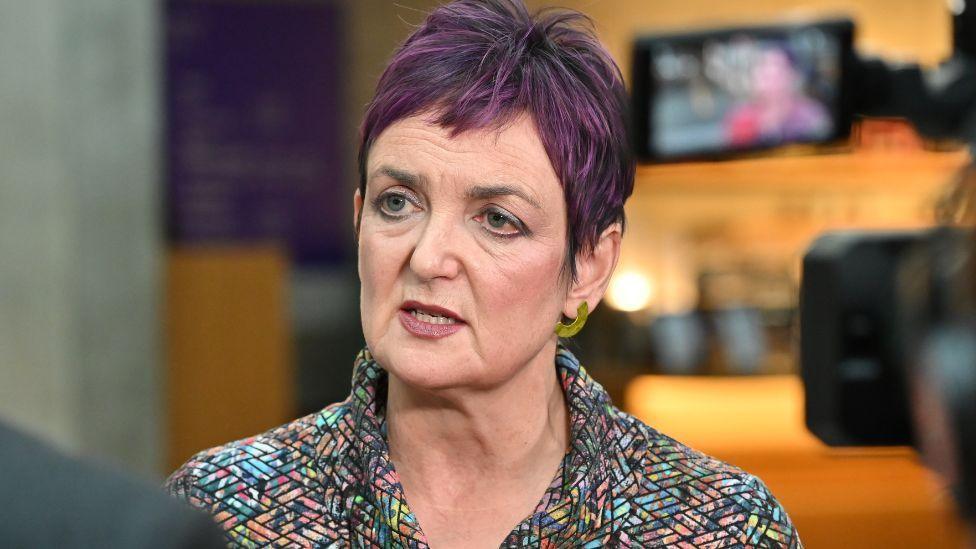 Image source, Getty Images
Earlier, the health secretary was asked about the outlook for the coming months.
Constance said: “We do know that the winter will be difficult.
“There are always increased pressures as we enter the winter season but what we have seen in Scotland, over the past few years, is an increase in demand on our NHS services.”
The minister said a range of factors were responsible but added the government was aiming to reduced “avoidable hospital admissions”.
She also stressed the importance of the public choosing the right service for advice and treatment.
Challenged on lack of capacity, Constance said: “We are supportive, both financially and in terms of a policy perspective, of being able to get, what they call, a better flow through the hospital when people have to be admitted.”
The health secretary was also asked if treating patients in corridors was “becoming the norm”.
She said: “We cannot accept corridor care.”
The minister said the problem was particularity acute in certain hospitals and parts of the country.
Asked about concerns delays were costing lives, Constance said: “Our NHS is safe but we need to be sure that people get the right care at the right time.”
BBC Scotland has asked the Scottish government for a response to Hunter’s comments, which were broadcast after the health secretary’s interview.
Disclaimer : This story is auto aggregated by a computer programme and has not been created or edited by DOWNTHENEWS. Publisher: BBC