
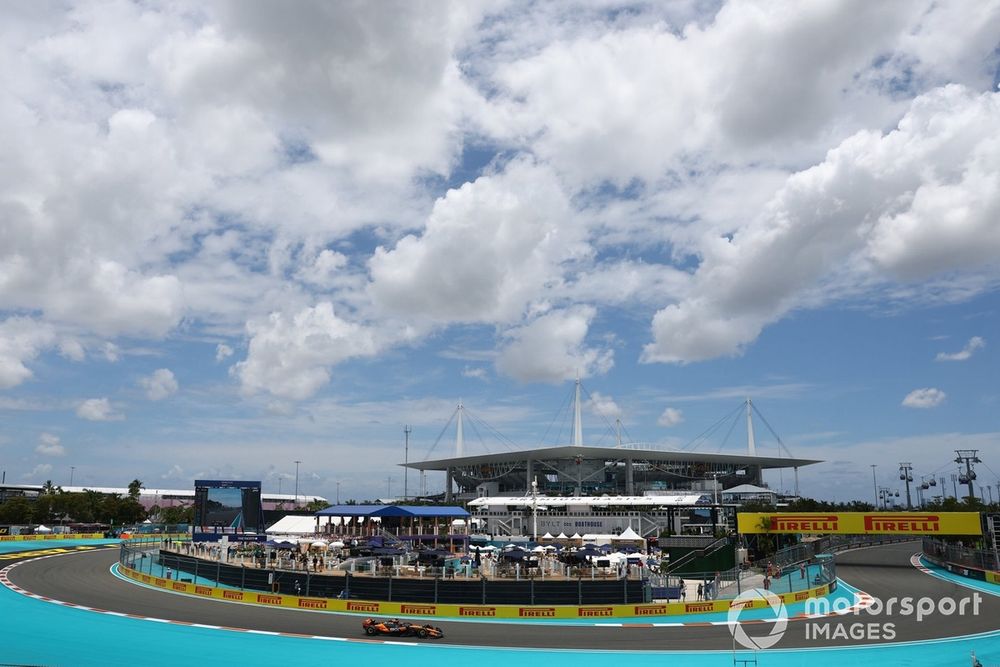
After multiple discussions between technical representatives, all teams, the FIA and Formula 1 reached agreement on Monday over a package of tweaks ahead of the Miami Grand Prix. As expected, the changes mainly concern energy management and are aimed at making qualifying more on the limit again, while also improving safety by addressing the closing speeds.
These measures will not fundamentally change the overall product, partly because both the FIA and F1 believe that the racing itself – despite complaints about yo-yo racing – is entertaining. FIA single-seater director Nikolas Tombazis therefore describes it as an evolution rather than a revolution.
“I think it’s important to know that no one believed that the patient, our sport, was in intensive care. I mean, there were clearly issues to be drawn, but we were not in intensive care.
“Maybe the patient needs to exercise a bit more, eat a couple of apples a day, take some vitamins, and that’s what we’ve been acting on. It’s an evolution, it’s not a revolution,” Tombazis said. “We fundamentally believe we’ve got a good package and it’s normal to make adjustments as it happens.”
Regarding those areas of improvement, the focus until Sunday afternoon in Suzuka had mainly been on qualifying. After Oliver Bearman’s crash, safety moved to the very top of the agenda, although the measures are still not far-reaching when it comes to the actual racing. The latter would also be politically sensitive, as Toto Wolff immediately made clear that only a scalpel was needed, not a baseball bat.
The ideas behind raising the super clipping limit
The adjustments made with that scalpel can broadly be divided into three themes in terms of energy management. The first change was already suggested by McLaren team principal Andrea Stella during winter testing in Bahrain: increasing super clipping to the full 350 kilowatts.
Where normal harvesting through braking and lift-and-coast logically amounted to the full 350 kilowatts, the limit for super clipping had been capped at 250 kilowatts. From Miami onwards, that will be increased for both qualifying and the race – a change that had been on the cards for quite a while, especially as it’s widely supported in the paddock.
Oscar Piastri, McLaren
Photo by: Mark Thompson / Getty Images
Although super clipping is not exactly the most popular aspect of the 2026 regulations and increasing it may not sound like something fans want to see, the FIA considers it a step forward for two reasons.
Firstly, it should make the speed profile slightly more predictable and therefore safer than certain lift-and-coast manoeuvres used to recharge the battery. Secondly, the governing body says it reduces the workload on drivers, simply because more energy can be harvested while the driver is at full throttle, meaning they have to think less about unnatural or “funny” ways to recover energy, as Tombazis described it.
Harvesting limit: What is the effect of that one megajoule?
A second intervention that had also been anticipated is the reduction of the harvesting limit during qualifying. The FIA already implemented this in Suzuka, although that was not originally the plan.
After the evaluation following the Chinese Grand Prix, the idea had been to wait until the break before Miami, but when new simulations for Suzuka were analysed, the FIA deemed it wiser to intervene for that event as well.
From Miami onwards, that step becomes structural by lowering the harvesting limit from eight to seven megajoules. This essentially makes the cars slower, but should make qualifying more on the limit again. It sounds paradoxical – making drivers push more by making the cars slower – but it comes from the fact that drivers have to focus less on recharging the battery during a qualifying lap.
Recovering less energy logically means less electrical power to deploy, but the FIA estimates the lap time loss at around one second per lap. Super clipping should be reduced to between two and four seconds per lap, making that trade-off worthwhile.
There have also been suggestions to go even further – for example to six megajoules – but Tombazis explained that many simulations underpin the decision to take seven megajoules as the baseline for now.
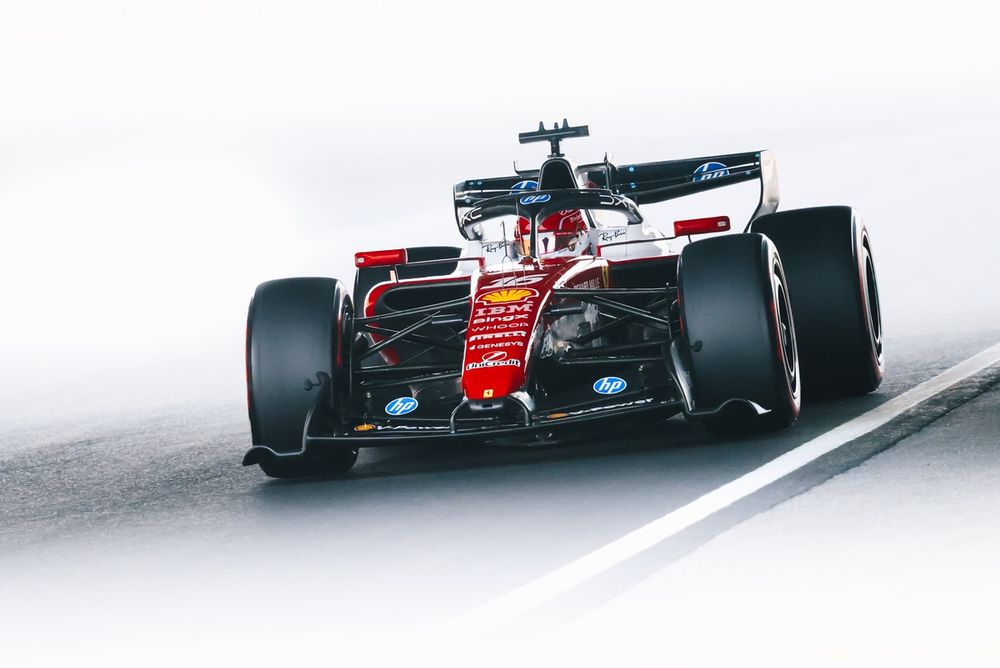
Charles Leclerc has been one of many drivers advocating for changes to make qualifying more on the limit.
Photo by: Ferrari
“I think it’s important to understand that all of these changes are far more than just a few pages of regulations. They involve thousands of simulations, a lot of meetings, a lot of analyses and what-if scenarios. The staff has been working tirelessly for weeks to put together the final package that we voted on.”
That said, the FIA can still lower the figure of seven megajoules for 12 races on the calendar – more than half – if it deems it necessary, as it did in Suzuka. That number of races was initially eight, but has been increased after Monday’s meeting.
Are the tweaks enough to prevent a repeat of Bearman’s crash?
While the above concerns changes on the harvesting side, other adjustments relate to the deployment. In what the FIA calls “key acceleration zones”, the full 350 kilowatts of electrical power remains available to deploy, but in other parts of the circuit it will be limited to 250 kilowatts.
“That has been obviously a safety topic and we’ve been discussing how to resolve it. The main feature there is that in some specific parts of the circuits, mainly where we have corners or where they’re a bit more twisty, we will be limiting the maximum power, that electrical power that cars can have, going down from 350 kilowatts to 250,” Tombazis explained.
“And there will also be a boost limit. Basically, when the driver presses the boost button, he won’t be able to increase his power, and it will not go beyond 150 kilowatts if he’s at zero power.”
Both measures together – the 250-kilowatt limit and boost cap – are intended to reduce large speed differentials. The idea is that all cars can deploy maximum electrical power in areas where it is expected by all drivers – for example in straight mode zones – but that restrictions are imposed in more ambiguous sections of the track to prevent large differences in deployment. It is precisely those differences that contributed to Bearman’s heavy crash.
“So, in that respect, it means that the sort of problem we saw with Ollie Bearman’s crash in Suzuka should basically be avoided from the next race onwards,” Tombazis added.
How the safety system for starts will work
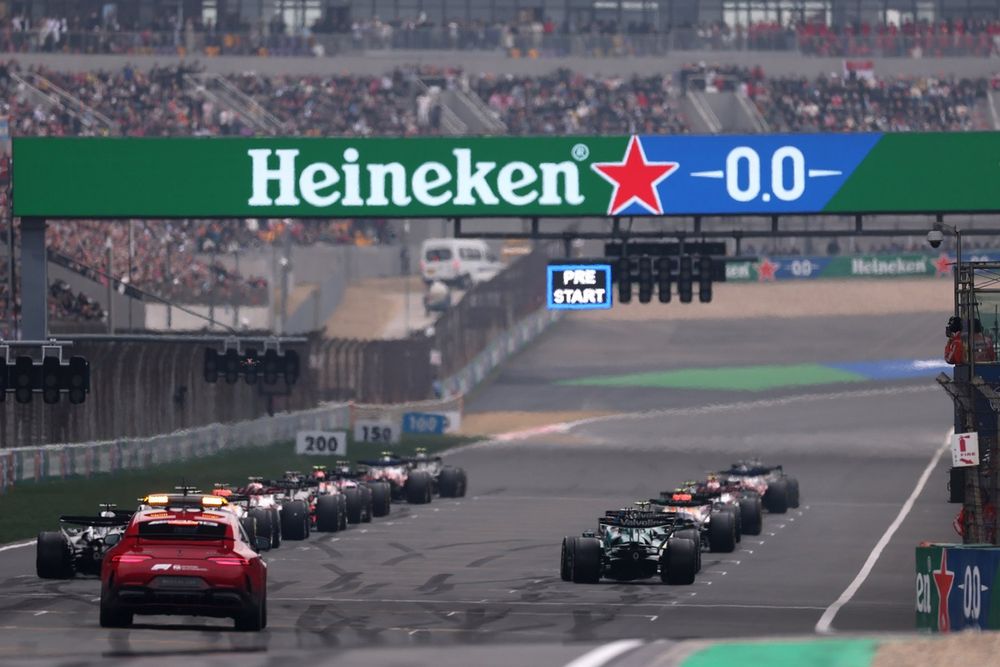
The FIA will trial a new safety mechanism in Miami, including a “low power start detection” system.
Photo by: Lars Baron / Getty Images
Finally, the FIA has discussed several more specific scenarios. These include safety in wet conditions, but also starts. That topic is politically more sensitive than the above, as it is linked to certain design choices, such as Ferrari’s smaller turbo.
The Scuderia had already indicated in the early weeks of the season that sufficient concessions had been made by adjusting the start procedure, with Frederic Vasseur at one point stating: “Enough is enough.”
Further changes to the start procedure would therefore be difficult, but from Miami onwards the FIA will test a safety mechanism – not the actual procedure, but linked to the MGU-K.
This concerns a “low power start detection” system that, after the clutch is released, detects whether there is “abnormally low acceleration”. In that case, the system automatically triggers limited deployment from the MGU-K. This will not result in a competitive start – the driver will still be disadvantaged by a poor launch – but it should ensure that the car moves off the line quicker to prevent a safety issue.
“From the next race, we’re going to be testing some stuff. It will probably take two or three races to fully introduce. We’ll be doing some tests and some modifications in Miami and Canada, but what we’ll have effectively is a safety net,” Tombazis explained.
Political reality makes major changes difficult
With the overall package, the FIA hopes to address two safety topics – closing speeds and starts – while making qualifying slightly more on the limit. It will not dramatically improve the overall picture or eliminate yo-yo racing, but it should ideally alleviate some of the key concerns.
Tombazis acknowledges that more fundamental changes during the season are very difficult, partly due to the political interests of teams and the ‘baseball bat’ that Wolff immediately warned against.
“I think it’s important to note that whether we are talking about drivers, teams or power unit manufacturers, Formula 1 is an extremely competitive sport,” Tombazis said.
“People are fighting each other on the track all the time and the stakes are very high, so it’s not easy to find consensus amongst everybody. It is the role of the FIA to try to find the best compromises, which is what we’ve been working very hard to do.”
For now, this is the compromise that has been put in place, although the FIA says it will keep a close eye on the situation in case further changes prove necessary after Miami.
We want your opinion!
What would you like to see on Motorsport.com?
– The Motorsport.com Team
Disclaimer : This story is auto aggregated by a computer programme and has not been created or edited by DOWNTHENEWS. Publisher: motorsport.com



