Families of RAF Chinook crash victims ask court to allow case to proceed
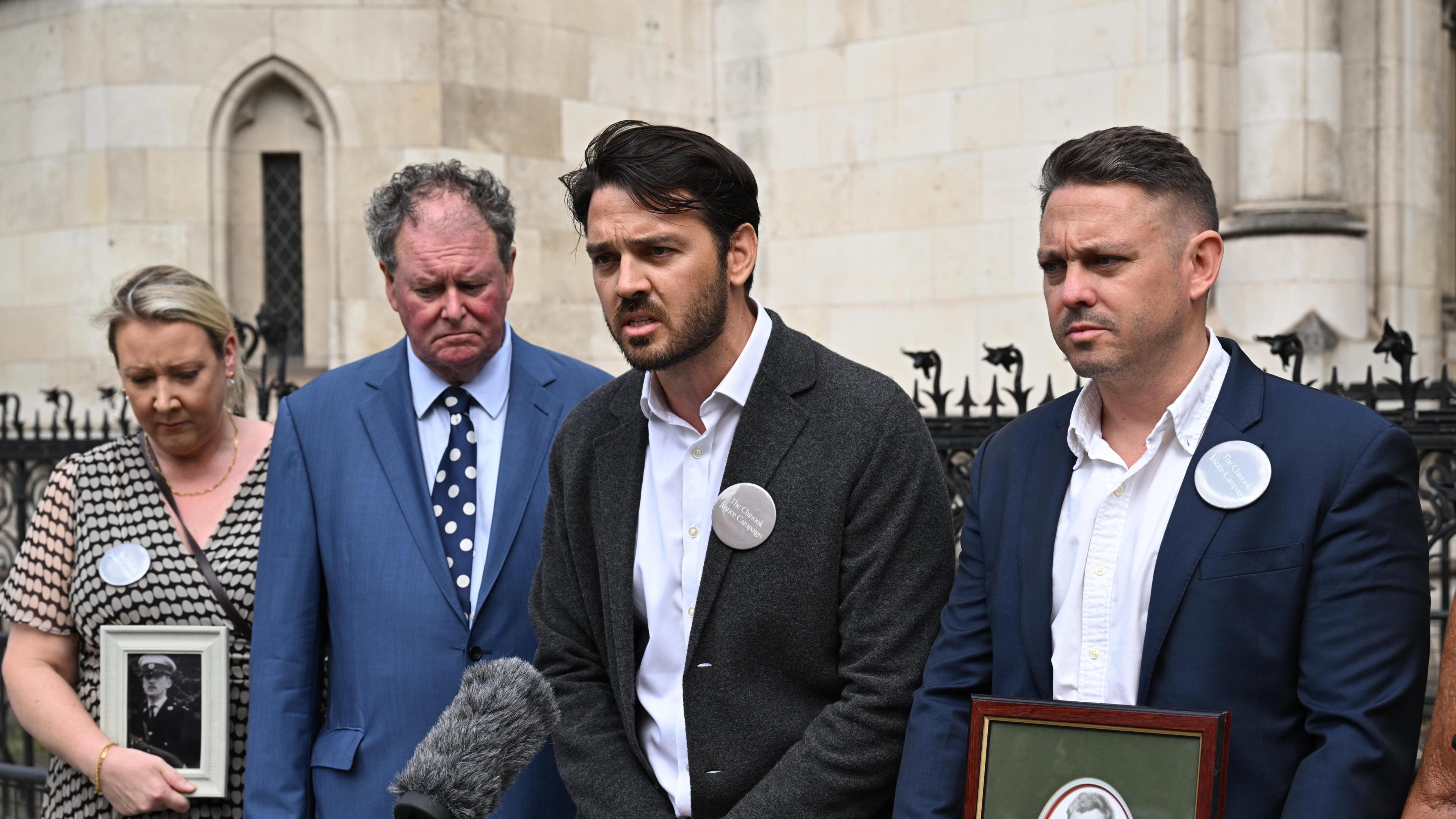 Image source, PA Media
-
Published
A legal challenge against the Ministry of Defence (MoD) over the 1994 RAF Chinook helicopter crash should be allowed to proceed, representatives for the victims’ families have told the High Court.
A Chinook helicopter carrying 25 passengers and four crew crashed in the Mull of Kintyre in Scotland on 2 June 1994, killing all of those on board.
The legal team for the Chinook Justice Campaign (CJC) group representing the victims’ families has said the challenge should be allowed to go ahead over concerns about the airworthiness of the aircraft.
The MoD is defending the legal bid, with its barristers telling the court that the claim has been brought too late.
The families involved are seeking an independent review of the crash, which it has said is an “ongoing failure” on the part of the MoD.
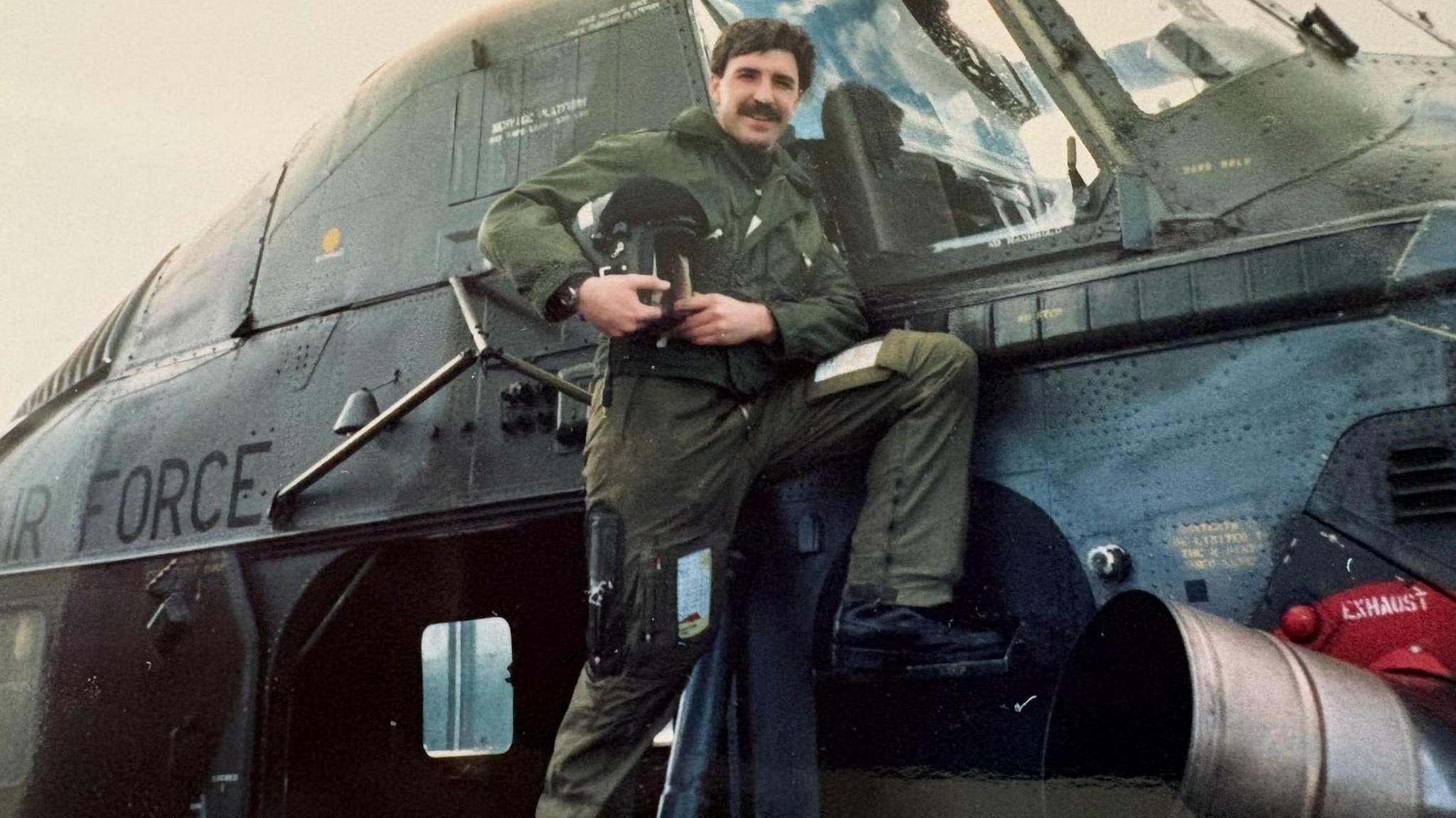
The incident was first investigated by an internal Board of Inquiry in 1995, which concluded that there was an error on the part of the pilots, Flight Lieutenant Rick Cook and Jonathan Tapper.
The Mull of Kintyre Review was commissioned in 2010 following years of criticism over the decision to blame the pilots.
That review, which was reported in 2011, exonerated the pilots of any blame but did not give a conclusion on the cause of the crash.
The CJC, which is made up of more than 55 family members of 25 of the victims, has said that failing to order a public inquiry is a breach of the UK government’s human rights obligations.
The MoD denies the claim that human rights have been breached by the government’s actions.
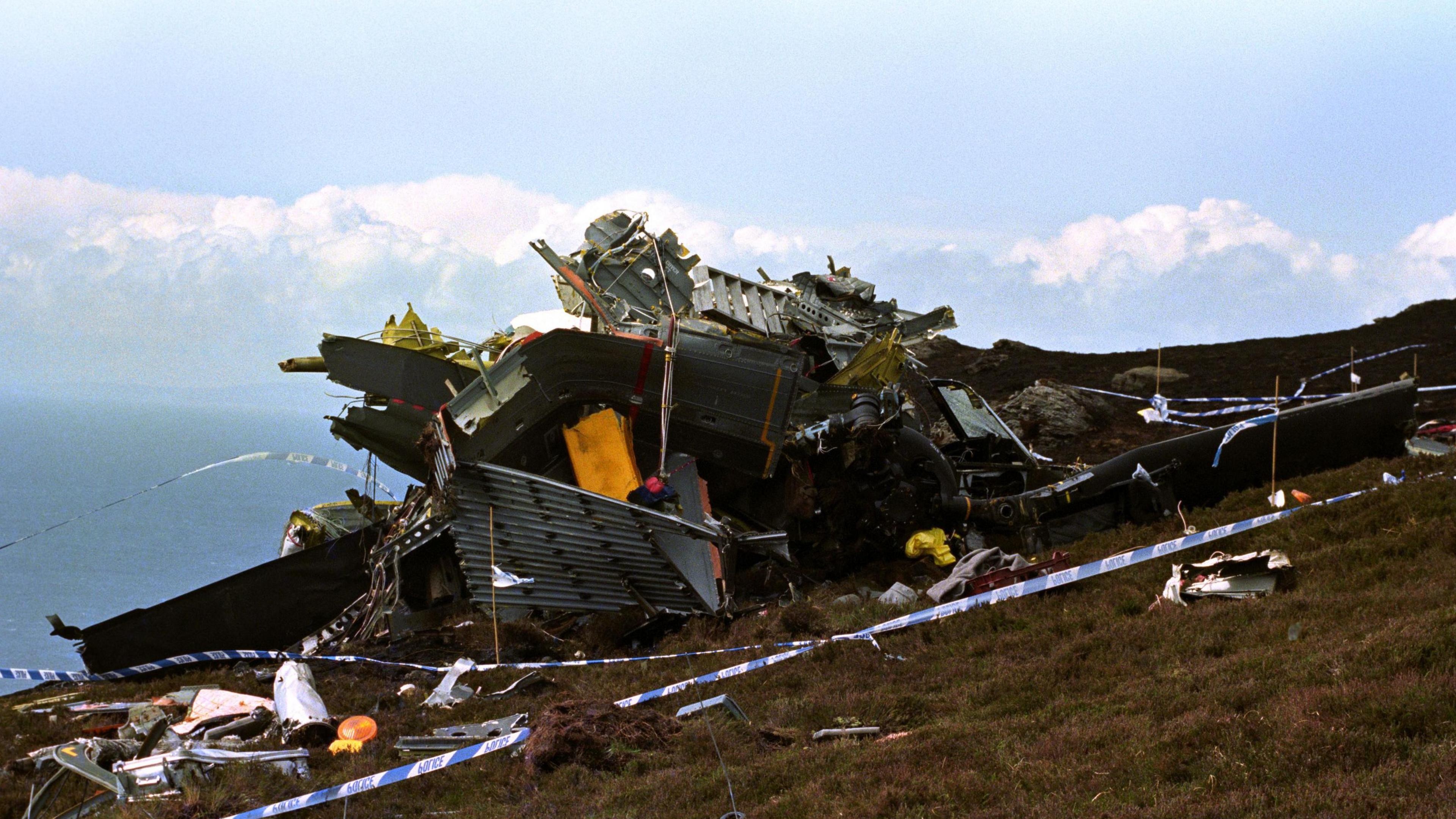 Image source, PA Media
Lawyers for the CJC told the High Court on Tuesday that information regarding the Chinook’s airworthiness “raises a more than arguable claim that… those individuals who died in the crash were placed on an aircraft known to be unsafe”.
They added that there were “profound and stark” concerns as to airworthiness, but that no investigation had ever considered the issue despite several probes into the crash.
“It is historic, but it is also extraordinary, that the bereaved families of 29 individuals… still face unanswered questions into the circumstances of what is often described as the RAF’s worst peacetime disaster,” Sam Jacobs, for the CJC, told the court in London.
Several relatives of those who died attended court, some of whom wept during the hearing.
Andy Tobias, whose father Lieutenant Colonel John Tobias MBE died in the crash, called it a “hugely momentous day”.
The helicopter was transporting 25 intelligence experts and four special forces crew from RAF Aldergrove in Northern Ireland to Fort George near Inverness when it crashed in foggy weather.
In written submissions, Jacobs said that the crash came two days after the helicopter was delivered, following a “fraught upgrade and introduction”.
He continued that the MoD was suing Boeing over the upgrade before the crash, and that a safety-critical engine control system on the helicopter was described by the Aircraft and Armament Experimental Establishment as having a “density of deficiencies”.
Jacobs also said that the helicopter involved in the crash needed one of its engines replaced three times in the months before the incident, with issues also reported with its second engine.
He said: “It is plainly arguable that airworthiness caused the crash; indeed, arguable that the HC-2 should not have been flying at all.”
Daniel Beard KC, for the MoD, said in written submissions that the crash has been the subject of “extensive investigations”, and that the CJC has not “raised any information even arguably capable of reviving any investigative obligation”.
He also said that the Boeing litigation was “not relevant to the crash” and that the CJC’s case was based on “vague assertions” about the helicopter’s airworthiness, without explaining why the legal challenge had not been brought sooner.
He added that “given the paucity of evidence and the passage of time, it is unlikely that further meaningful investigation is possible, or that further investigation would serve a practical purpose”.
He continued: “The claimant understandably wants to bring the full facts to light.
“However, that aspiration must be considered in view of the evidential limitations, the civil claims that have been resolved, the lessons that have been learned and the transformed operational context.”
The hearing is due to conclude later on Tuesday.
-
-
Published9 June
-
-
-
Published2 June 2019
-
Disclaimer : This story is auto aggregated by a computer programme and has not been created or edited by DOWNTHENEWS. Publisher: BBC