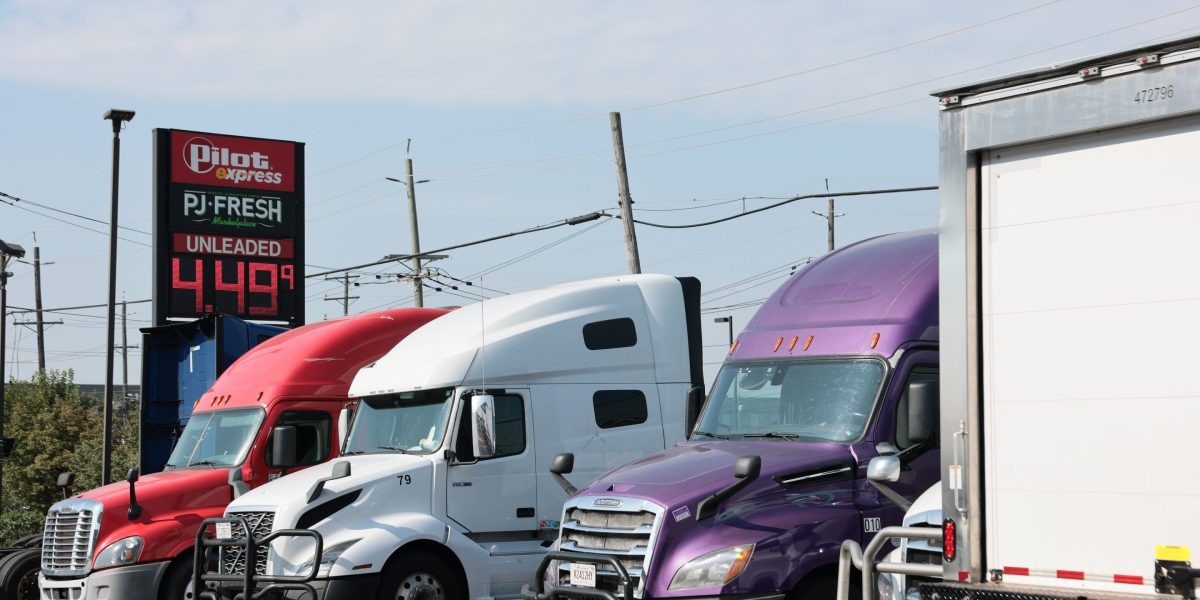
The latest spike in fuel prices is harder to stomach than the one earlier this year as businesses and consumers have less capacity to absorb the shock, while fresh price data show inflation is spilling over beyond energy.
While crude oil prices have somewhat moderated despite the Iran war re-escalating recently, refining constraints have kept gasoline and diesel costs high. Average diesel prices hit $6.30 a gallon Wednesday, up about 68% from before the Iran war, according to AAA. And because diesel is especially critical as an industrial fuel used in manufacturing, farming, and transportation, its price surge has been pervasive across sectors.
The Labor Department’s consumer price index showed core inflation rose to 2.6% in September from 2.4% in August, signaling businesses are passing on more costs. Meanwhile, the retail sales report showed core spending outside gas stations rose just 0.2% as fuel took a bigger bite out of wallets.
Those trends were backed up by the Federal Reserve’s latest Beige Book survey of business and economic conditions, which was riddled with red flags about higher fuel prices across the country.
It showed that not only were more fuel surcharges popping up throughout the supply chain, but that profit margins were also getting squeezed and consumers were pulling back on spending to offset the pain at the pump.
The New York Fed said a food manufacturer had not seen such broad-based inflationary pressures since the pandemic. The San Francisco Fed noted a manufacturer complained that every material purchased in recent weeks came with a freight surcharge.
The Boston Fed noted that existing trucking contracts helped keep produce prices in check, but when they are renegotiated, costs could jump. Similarly, the Philadelphia Fed pointed out that the expiration of some hedges that kept costs stable has given manufacturers greater pricing power, allowing them to pass on increased costs.
“Higher fuel costs remained the dominant driver, and several contacts noted that these costs were spilling over into freight, packaging, and petroleum-based materials,” the Cleveland Fed said in the Beige Book, adding that one builder referred to high fuel costs and tariffs as a “double whammy.”
Consumer spending in the Cleveland Fed’s district was flat after four straight periods of decline, with retailers across sectors blaming slow activity on high fuel prices. Not every district saw a pullback: Most reported little or no change in overall consumer spending, and the Richmond Fed said spending there grew moderately.
While trucking companies are charging more, they are also eating costs too. The Richmond Fed said carriers struggled to turn a profit when diesel prices rose after they had locked in contract rates. To cover the cost increases out of pocket, trucking firms have drawn down savings, redirected spending away from maintenance, or halted purchases of fuel-efficient trucks.
Another business that the Richmond Fed surveyed described how higher fuel prices have turned costs upside down.
“A regional grocery chain noted that with diesel prices rising 30% since last year, they now pay more to transport a head of lettuce from California than the cost of the lettuce itself,” the Beige Book said. “At the same time, the grocer noted extreme customer price sensitivity and an inability to pass along those rising transportation costs.”
The volatility of fuel costs was an issue too. The Minneapolis Fed reported that a Montana timber company said fuel costs had more than doubled on a project contract signed several months ago.
The Kansas City Fed said higher diesel costs have forced suppliers, distributors, and customers to renegotiate contract terms to protect profits, with a majority of firms in its district expecting demand to weaken further if fuel prices remained elevated.
Some districts also reported signs of supply strain. The Kansas City Fed said several regional contacts in rural Colorado reported “intermittent diesel shortages at gas stations in recent weeks, causing some buyers to take early delivery of fuel shipments to ensure availability.”
Added fuel expenses are also spilling over into the labor market as workers demand higher pay, potentially stoking more inflation via a wage-price spiral.
The Cleveland Fed reported that several of its business contacts handed out pay raises due to higher living costs, particularly for gasoline and electricity. And the San Francisco Fed’s contacts mentioned employees requesting, and some receiving, cost-of-living pay hikes to offset higher fuel and food prices.
“The higher price for diesel reigned supreme in terms of the most commonly cited factor driving up costs, impacting freight, agriculture, and airline prices as well as causing widespread margin compression across numerous industries,” the Dallas Fed said.
While consumers have demonstrated surprising resilience weathering President Donald Trump’s tariffs and war on Iran, they have lost a major buffer.
When gas prices jumped this spring after the Iran war started, Americans were starting to get tax refunds boosted by last year’s One Big Beautiful Bill Act. But now that the war has entered its eighth month, with no end in sight and gas prices are surging again, consumers don’t have that cushion to fall back on.
“Higher gas prices are beginning to bite because, unlike earlier in the year, there’s no offset this time around from fiscal policy,” Michael Pearce, chief U.S. economist at Oxford Economics, wrote in a note Thursday. “We estimate the cumulative additional spend on gasoline so far this year now outweighs the rise in tax refunds from a year ago.”
Disclaimer : This story is auto aggregated by a computer programme and has not been created or edited by DOWNTHENEWS. Publisher: fortune.com