For Chef Nooresha, returning to Hyderabad is more than the opening of another restaurant. It is a return to a city that was once part of her life, long before Izumi became the Japanese dining brand it is today.
She first came to Hyderabad in 1992, when she was still studying and working at a hotel in a front office role. The city she remembers from those days was defined by greenery, rocky landscapes and open spaces. Coming back now, decades later, has been an experience of seeing just how dramatically the city has changed.
“It is very different. Look at what has happened to Hyderabad. I was here in 1992. At that time, there was greenery, there were rock formations, there were open spaces. Now it is buildings and buildings and more buildings,” she says.
Chef Nooresha
Yet, amid the transformation, she found something familiar in the location she chose for Izumi. Set beside a lake (Durgam Cheruvu Cable Bridge), the restaurant offers the openness and natural setting that appealed to her, away from the intensity of the city’s busiest commercial stretches.
“Something about this spot still has that openness. It has the lovely lake in front. There is so much sunlight and breeze during the day. When I saw this place, it was a decision I could make very easily,” she says.
The return is particularly significant because the woman opening Izumi in Hyderabad today is very different from the young woman who once worked at a hotel in the city. “At that time, I was still in school and college. I was doing my graduation by correspondence when I worked in a hotel at the front desk. Now it is a completely different role,” she says.
That journey into food was itself unexpected. Nooresha had spent around two decades in the garment industry. After her son was born, she took a break from work and eventually decided that she wanted to return to professional life through something she genuinely loved: food.
“I love food. I love to cook, I love to eat and I love different kinds of cuisine,” she says.
Her interest in food was deeply rooted in how she and her husband travelled. They would seek out local food wherever they went, often choosing small, informal places rather than conventional restaurants. One such experience took them to a modest home in Maharashtra, where they were told that the family cooked excellent local food. They ordered a meal and were asked to return two hours later while the family went out to source the ingredients.“That sort of thing is what we love. We love to experiment with food,” she says.
Japanese cuisine entered her professional life almost by accident. When she started a small delivery and catering business, she was asked whether she could prepare Japanese food for an event. “I did not know how to make Japanese food at that time,” she recalls.
With the help of someone working with her who knew how to prepare sushi, she took on the challenge. The response was encouraging, and what began as catering under the name Sushi Koi gradually developed into something much larger.
Nooresha then decided to learn the cuisine properly. She travelled to Japan and studied at the Tokyo Sushi Academy, where she learned the fundamentals of sushi and seafood preparation. She returned to Japan again to study Japanese cooking, including hot dishes, sashimi, ramen, gyoza and yakitori. Later, she travelled to Yokohama to study ramen at the International Ramen School and also worked in her teacher’s restaurant.
Inside Izumi Hyderabad
“I loved Japan. Every part was beautiful. The more I saw, the more I liked it. The more it made sense to me and I felt an appeal to the kind of things I like,” she says.
Back in India, she spent a year practising what she had learned before opening a small 16-seater restaurant and cafe. It became popular enough to require a larger space, eventually growing into the Izumi that diners know today.
Across its restaurants in Mumbai, Goa and now Hyderabad, some elements remain central to the Izumi experience. The live sushi counter and yakitori grill are among them. But Nooresha says the challenge of entering a new city is to make Japanese food accessible without stripping it of its character.
When Izumi first opened in Mumbai, Japanese food was still relatively unfamiliar to many diners. The restaurant introduced people to the cuisine gradually, starting with a more approachable menu before expanding its offering.
Hyderabad, she believes, calls for a similar approach. “We are not diluting anything, but our menu has a combination of both,” she says.
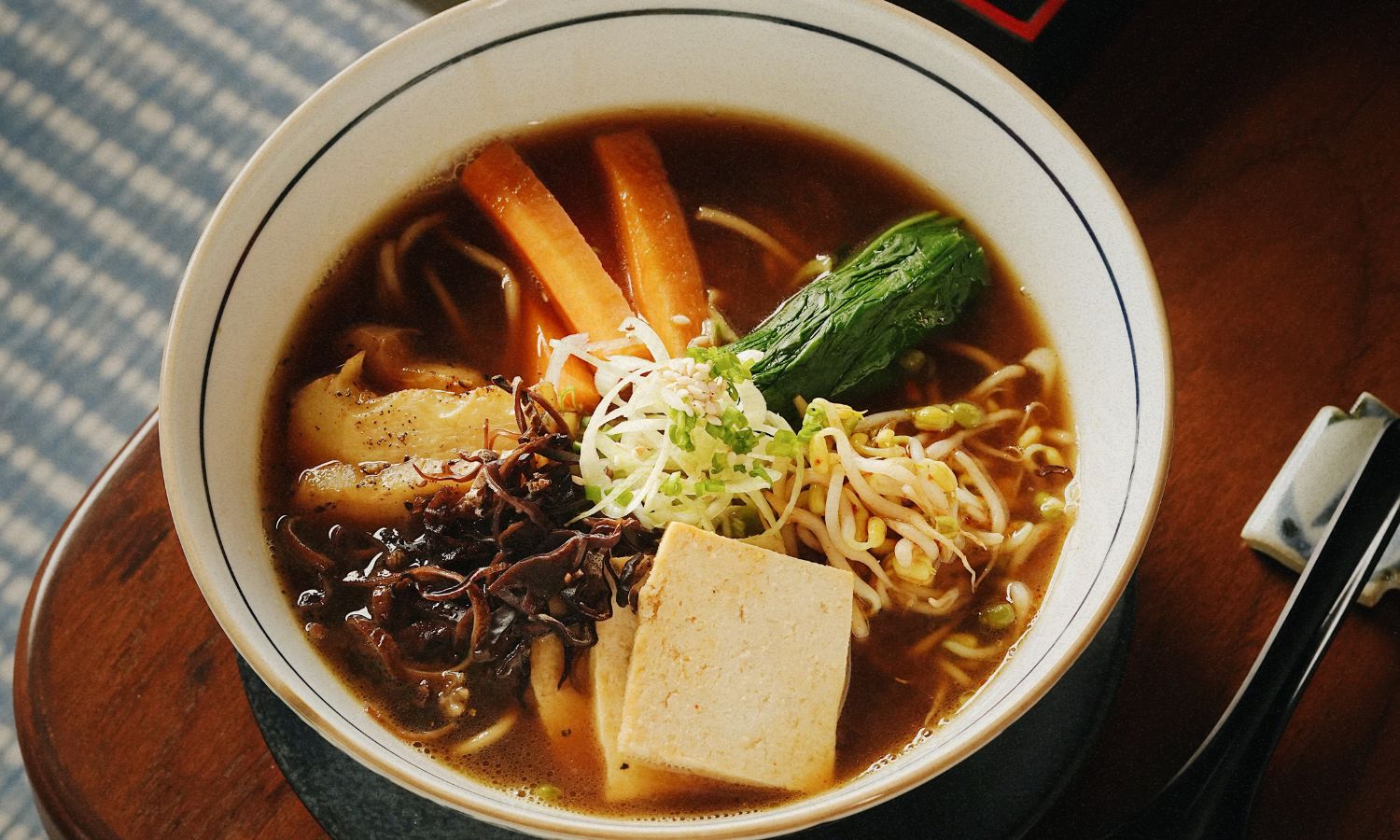
That means diners unfamiliar with Japanese cuisine can begin with dishes such as chicken, yakitori, gyoza and ramen, while those already comfortable with the cuisine can explore more traditional preparations and sushi.
For Nooresha, comfort is an important part of that experience. Japanese food should invite curiosity rather than create apprehension. “It should not scare people when they are looking at it or eating it. It should not intimidate a person,” she says. “When you receive a dish, you should feel, ‘okay, it looks like I can get around it’. That is comfort.”
She also believes Japanese cuisine naturally offers a familiarity that can appeal to a broad audience through its balance of flavours. “Japanese food has sweet, salty, sour and umami. These flavours are present in the dishes. Automatically, it makes it more appealing when you put it in your mouth,” she says.
Smoked Hamachi Sashimi
Hyderabad’s own food culture has also found its way into the restaurant, although not necessarily through a deliberate attempt to localise the menu. One addition came about when Chef Amarthya, who heads the Hyderabad kitchen, spent time training in Japan.
During his month-long stint, he worked across a sushi restaurant, a kaiseki restaurant and an izakaya. At the izakaya, he encountered a spicy chicken preparation that immediately struck him as something Hyderabad diners might enjoy.
“He just realised it would be perfect for Hyderabad,” Chef Nooresha says. The dish eventually found its way onto the menu.
For her, this is the ideal way for a restaurant to evolve in a new city. Rather than forcing local flavours into Japanese food, the menu can develop organically through the experiences of the people cooking and eating it.
The same philosophy applies to the larger challenge of opening Izumi in a new market. “You have to protect what people already love. Otherwise they will come and say, ‘Bombay is better. It is not the same here’,” she says.
At the same time, simply reproducing the existing experience is not enough. “If you don’t give them anything new, they will also ask what is new here. So it is a balance,” she reasons.
For Izumi, Hyderabad is not an entirely unfamiliar audience. Many Hyderabadis have encountered the brand during visits to Goa, particularly in Assagao, where Izumi has become part of the city’s dining circuit.
Yuhi No Salsa (left) The Last Bell at Izumi Hyderabad
“There are lots of Hyderabad people who have houses or visit Goa regularly. So they know the brand,” she says. But the restaurant is also meeting diners who have never tried Japanese food before. For them, Nooresha returns to the idea that has guided her approach from the beginning: the food should feel welcoming.
“You have to make them feel that this is not too snobbish. It can be what you want it to be. That is important,” she says.
The restaurant’s physical setting follows a similar philosophy. Designed by Minnie Bhatt, who also worked on the Mumbai Izumi, the Hyderabad space incorporates elements that have become part of the brand’s visual language. Water, blue tones, open counters and lanterns feature prominently. “Blue is my favourite colour, so there is a lot of blue everywhere,” Nooresha says.
The open sushi and yakitori counters are designed to make the preparation part of the experience, while the lanterns add a distinctly Japanese visual element. Even the positioning of the lighting was considered with the surroundings in mind. Nooresha wanted people passing across the nearby bridge to catch a glimpse of the restaurant’s glow.
Food, however, remains at the heart of the story. When asked what flavour Hyderabad might leave on Izumi’s identity, she pauses before arriving at an answer that feels characteristically connected to the city. “Sweet,” she says. “Everyone here eats sweet. They will want a dessert after a meal no matter what. So that can be the one thing.”
For someone whose journey began with an unexpected introduction to Japanese cuisine, Izumi’s arrival in Hyderabad represents another chapter in a story built around curiosity. From a hotel front desk in the Hyderabad of the 1990s to sushi school in Tokyo and ramen school in Yokohama, from a small catering operation to restaurants in Mumbai and Goa, chef Nooresha’s path into Japanese food has been shaped less by a predetermined plan than by a willingness to learn.
Now, she is back in Hyderabad, in a restaurant overlooking the lake, bringing that journey with her. “I like it,” she says of the new space. And perhaps that simple response captures what this return means best. After all the changes the city has undergone, she has found a place where some of the openness she remembers is still there, only now with Izumi’s sushi counter, lanterns and Japanese flavours overlooking the water.
Disclaimer : This story is auto aggregated by a computer programme and has not been created or edited by DOWNTHENEWS. Publisher: deccanchronicle.com