
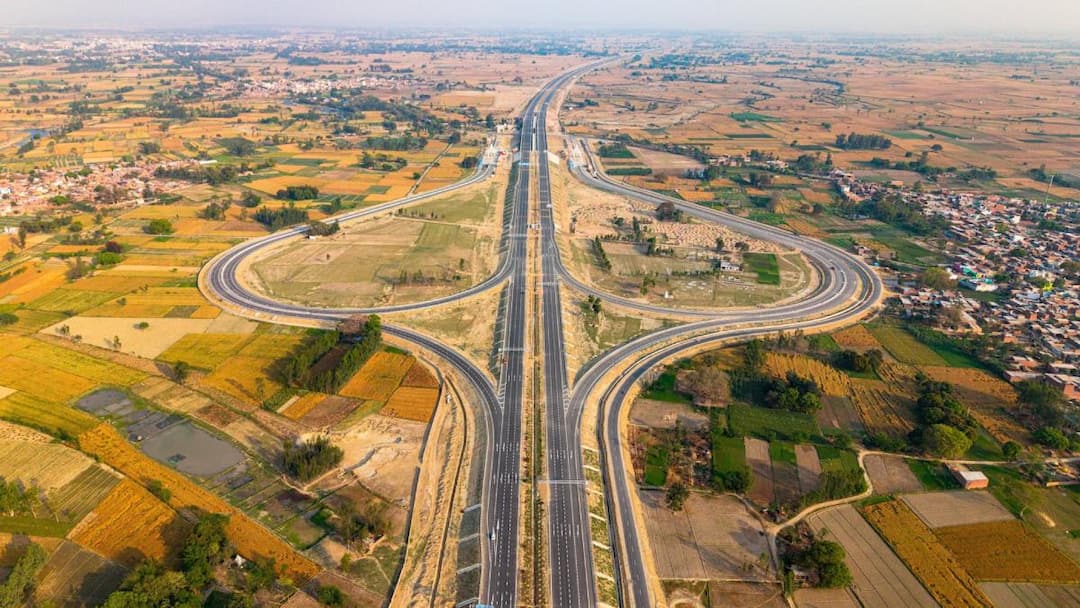
- Ganga Expressway toll set for inauguration, details emerge.
- Per-kilometre toll rates estimated for private and commercial vehicles.
- Automatic toll collection system to eliminate manual stops.
- Faster travel promised, with time savings offsetting costs.
Ganga Expressway Toll: Prime Minister Narendra Modi is set to inaugurate the Ganga Expressway in Hardoi, but beyond the scale and speed of the project, one key question is grabbing attention: how much will commuters actually pay to use it? The 594-km-long corridor promises faster travel between Meerut and Prayagraj, but its toll structure is expected to play a major role in shaping how frequently people choose this high-speed route.
Ganga Expressway Per-Kilometre Toll Rates: What To Expect
Another day another major inauguration in India, this time Ganga Expressway! pic.twitter.com/srzWU4EONp
— Indian Retail Investing (@IRInvesting) April 28, 2026
Early estimates suggest that toll charges on the Ganga Expressway will be calculated on a per-kilometre basis. For private car owners, the expected rate is around Rs 2.55 per kilometre. This means a full journey across the expressway could cost roughly Rs 1,500 or more, depending on the exact entry and exit points.
Commercial vehicles are likely to face higher charges, with rates estimated at about Rs 4.05 per kilometre. For trucks, which form the backbone of goods transport, toll costs could go up to Rs 8.15 per kilometre. These rates are in line with other access-controlled expressways and reflect the premium infrastructure offered.
14 Toll Points, But No Waiting At Booths
The expressway will have 14 toll plazas in total, including two major collection points at Meerut and Prayagraj, along with 12 additional entry and exit locations.
However, unlike traditional highways, drivers will not need to stop and pay manually. The entire tolling system is designed to be fully automatic, using sensor-based technology to deduct charges as vehicles pass through. This approach is expected to eliminate long queues and reduce travel interruptions, especially during peak hours.
Faster Travel, But At A Price
While the toll costs may seem significant, the expressway offers a clear trade-off. Vehicles are expected to cruise at speeds of up to 120 km/h, cutting down the Meerut to Prayagraj travel time to around six to seven hours. Earlier, the same journey could take nearly twice as long.
For daily commuters, logistics companies, and long-distance travellers, the savings in time and fuel could offset the toll expense. At the same time, the pricing may influence how different categories of users adopt the route.
ALSO READ: ‘Vintage Grandpa’: Opposition Mocks PM Modi’s Gangtok Football ‘Optics’ Amid National Concerns
What’s Driving The Cost Factor
The toll pricing also reflects the advanced features built into the expressway. From a 3.5-km emergency airstrip designed for the Indian Air Force to modern road engineering and seamless traffic flow systems, the project positions itself as a next-generation highway.
As the Ganga Expressway opens to the public, its toll structure will remain a key factor in determining its popularity and real-world usage across Uttar Pradesh.
Before You Go
West Bengal Phase 2 Voting LIVE: Abhishek Banerjee Claims Big Win, TMC Predicts Massive Victory
Disclaimer : This story is auto aggregated by a computer programme and has not been created or edited by DOWNTHENEWS. Publisher: abplive.com



