
As the Iran war, a conflict President Donald Trump vowed would last no more than six weeks, now stretches past its second month, U.S. allies are increasingly going public with their discontent.
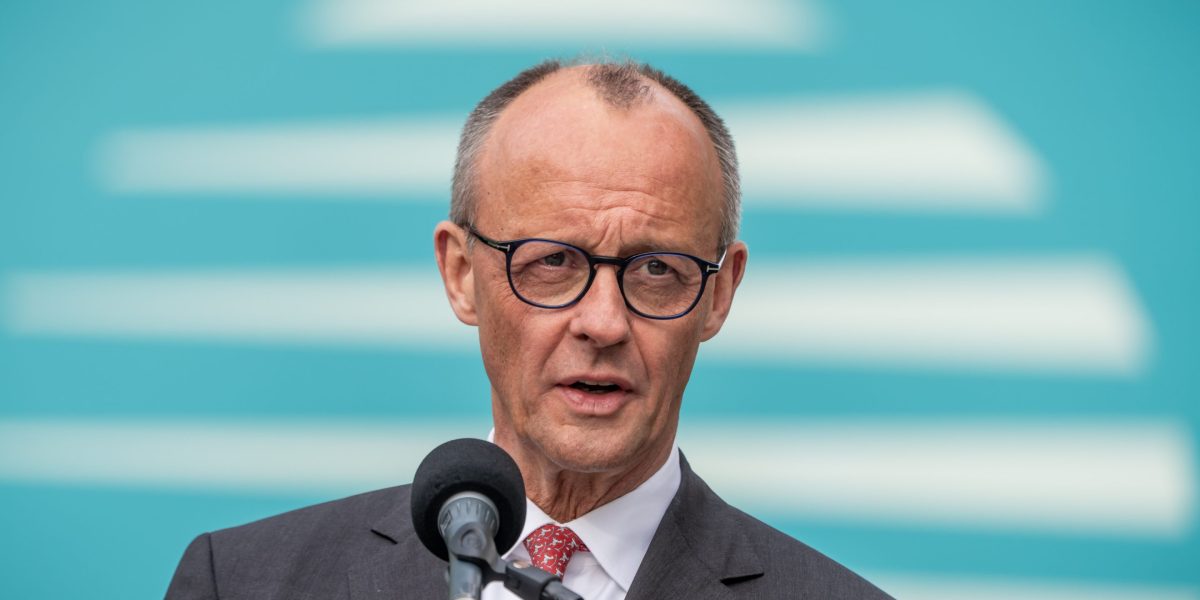
German Chancellor Friedrich Merz is one of the latest to air out his concerns. In a speech Monday, the chancellor said Iran is embarrassing the U.S. on a global stage.
“An entire nation is being humiliated by the Iranian leadership,” he said in a speech to students at an educational center in Marsberg, “especially by these so-called Revolutionary Guards. And so I hope that this ends as quickly as possible.”
As the conflict marches on and the Strait of Hormuz remains closed, countries in Europe and Asia are particularly vulnerable to the economic fallout of the strait’s closure. European Commission President Ursula von der Leyen said on Friday the European Union has spent an extra €25 billion (nearly $29.3 billion) on energy resources since the start of the war. And earlier this month, Vanguard revised their 2026 headline inflation forecast for Europe upward to 2.5% from 1.8% and warned of stagflation if the conflict persists.
“Sharply higher energy prices stemming from tensions in the Middle East risk a significant stagflationary shock to the European economy,” Vanguard senior economist Shaan Raithatha said in a note.
Where the war’s economic fallout is the worst
In Asia, the war’s economic impact has had a particularly painful bite. In an interview with The Washington Post, Thailand’s foreign minister, Sihasak Phuangketkeow said the U.S. hasn’t offered to help as the war batters the country with rising costs. That lack of help could cost the U.S. as Sihasak said Thailand—a longstanding U.S. treaty ally—is now turning to Russia and China for help.
“We don’t want to condemn the U.S. directly,” he said. “But this is something that should not have started.”
Countries across the Asian continent are some of the most reliant on the energy resources and fertilizer that passes through the strait—a crucial chokehold that normally sees the passage of a fifth of the world’s oil and natural gas reserves. The continent consumes about 80% of the oil that passes through the critical trade chokepoint, according to the International Energy Agency (IEA).
The diplomatic frustration comes as the U.S. struggles to strike a deal with Iran to reopen the Strait of Hormuz, even as a fragile ceasefire holds between the two countries. The war is stuck in a limbo as the U.S. pushes for Iran to commit to abandoning its contentious nuclear program. Trump last week scheduled and then canceled plans to hold talks with Iran.
This week, Iran offered a proposal to the U.S. that would allow the two countries to mutually drop their respective restrictions on the Strait of Hormuz, though kicking the question of the nuclear program down the line. White House Press Secretary Karoline Leavitt said the deal “is being discussed” but added “the president’s red lines with respect to Iran have been made very, very clear.”
Merz criticized the U.S.’s approach to negotiating with Iran. “The Iranians are obviously very skilled at negotiating, or rather, very skillful at not negotiating, letting the Americans travel to Islamabad and then leave again without any result,” he said.
A growing chorus of criticism
The longer the two countries take to strike a deal, the worse the energy crisis gets. IEA Executive Director Fatih Birol said the world is at an unprecedented inflection point thanks to the Iran war, one worse than other energy crises, including the dual 1970s shocks. “We are facing the biggest energy security threat in history,” he said.
Other leaders have lambasted the U.S. for its actions in the Middle East as global economies are left to wrangle with the reality of a prolonged energy shock that has no end in sight. Spanish Prime Minister Pedro Sánchez was quick to criticize the U.S. just a week after the war’s start. “We can’t play Russian roulette with the destiny of millions of people,” he said. “The powers involved in this conflict should immediately stop the hostilities.”
Though as the war extends into its eighth week, the rising tide of global discontent has crested, with statements echoing from even the U.S.’s closest allies. Earlier this month, U.K. Prime Minister Keir Starmer said he’s “fed up” with people in the country paying higher bills because of the actions from the likes of Russian President Vladimir Putin or President Trump.
For Merz, an added concern is the fact that the U.S., without proper diplomatic channels, seems poised to extend the war into the foreseeable future.
“The problem with conflicts like these is always the same,” Merz said. “It’s not just about getting in, you also have to get out. We saw that all too painfully in Afghanistan for 20 years. We saw it in Iraq.”
Disclaimer : This story is auto aggregated by a computer programme and has not been created or edited by DOWNTHENEWS. Publisher: fortune.com







