Local authorities in the German city of Bremen have ended a security-awareness campaign just ten days after it began, admitting that the image it chose cast general suspicion on Muslims.
Bremen has pulled a poster campaign showing a wolf in sheep’s clothing after complaints from the Muslim community.
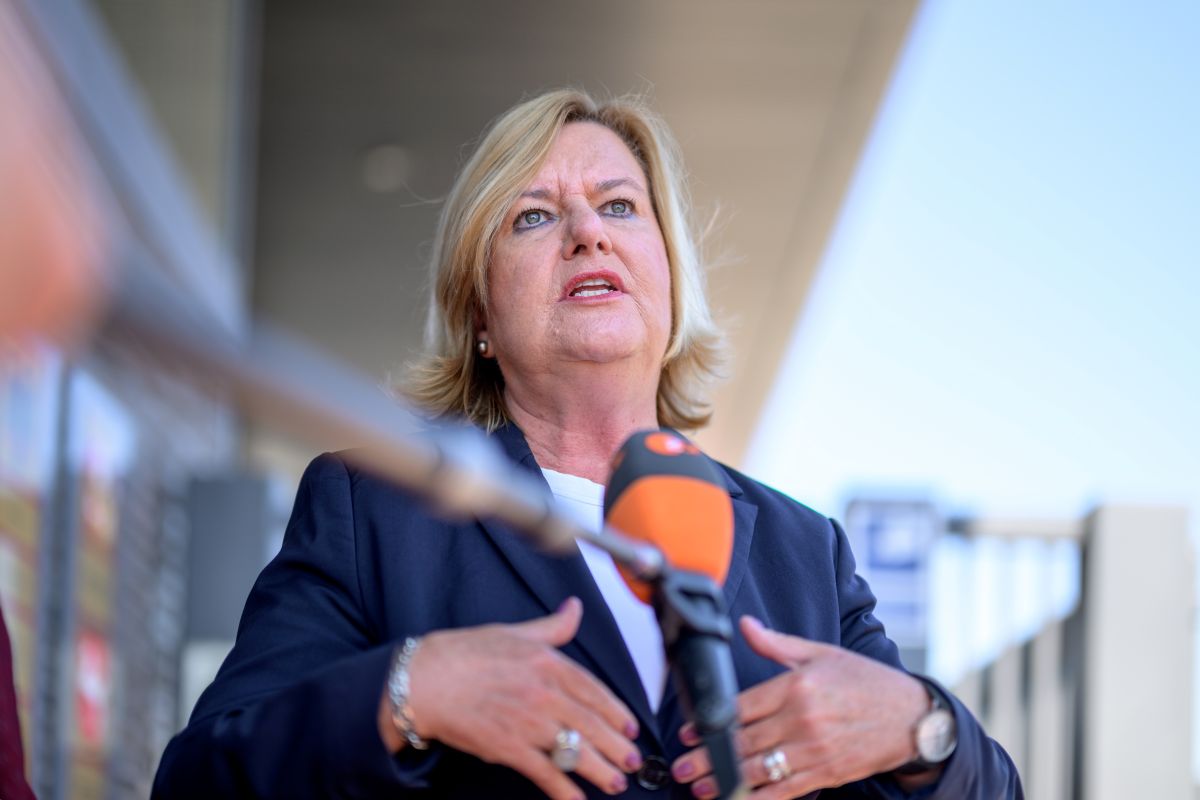
The city’s interior senator Eva Högl (SPD) admitted that it cast suspicion on many people who were never its target. “I deeply regret this,” she said.
Högl added that: “The goal was right. The implementation was not.”
But critics, including the news site Migazin, argue that the problem wasn’t only the design, but also the idea behind it.
Who is behind the screens?
Bremen’s Interior Department announced a partnership with the outdoor advertising company Ströer in April this year.
Under the agreement, the Office for the Protection of the Constitution (BfV) in Bremen was to use digital advertising spaces to warn the public about dangers.
The BfV is Germany’s domestic intelligence agency. The agreement with Ströer is reportedly the first collaboration of its kind in the country.
Bremen interior senator Eva Högl (SPD) admitted that the campaign cast suspicion on many people who were never its target. Photo: picture alliance/dpa | Izabella Mitwollen
The campaign by the state of Bremen has now been halted. Photo: Bremen Ministry of the Interior
READ ALSO: ‘Halle Without Us’ – Immigrant shopkeepers strike against far right in Saxony-Anhalt
What does the poster say?
From November 4th, digital screens in Bremen showed a wolf in sheep’s clothing against a black background. The text read: “Friendly on the surface. Anti-democratic at its core. Islamist infiltration is a danger. Look behind the facade.”
Högl said the campaign was meant to warn about Muslim Brotherhood networks, among other things.
The Interior Ministry reportedly stressed that the vast majority of Muslims are committed to democracy and the rule of law, but this statement was missing from the billboards.
Who objected, and what happened
Schura Bremen, the umbrella organisation for local Muslim communities, said in a press release that it was “stunned and dismayed”. It called the image dehumanising, said it fuelled prejudice and demanded an immediate halt, an apology and measures to repair the damage.
Högl announced on Saturday that the campaign would be stopped early.
“A campaign that casts suspicion on a friendly demeanour does not target the few it is intended for but unfortunately affects a great many who are not the intended target,” she said.
Migazin — an online magazine that focuses on topics related to migration, integration and anti-discriminaiton — links the posters to a concept known as “legalistic Islamism“.
READ ALSO: What to do in Germany if you experience workplace discrimination
The BfV uses this term to describe groups that pursue anti-democratic goals (in its assessment) but stay within the law and use no violence. At the campaign launch, Thorge Koehler, head of Bremen’s Office for the Protection of the Constitution, said legalistic Islamism is dangerous because it “uses a supposed willingness to engage in dialogue as a cover and our freedoms as a tool”.
Sabine Damir-Geilsdorf, a scholar of Islamic studies cited by Migazin, describes the trap this creates. Ask for dialogue, and you may be accused of trying to deceive people. Use your democratic rights, and you may be accused of undermining the rule of law. Insist that you are law-abiding, and that too can be read as a mask.
Migazin also points out that the wolf image has a troubling history. In 1925 and 1926, for example, the Nazi paper Der Stürmer ran articles headed “Wolves in Sheep’s Clothing” against Protestant clergy of Jewish descent and Christian clergy who advocated for Jews.
What happens next?
According to Migazin, no review of the official terminology has been announced, and there are no known personnel consequences or changes to how campaigns are approved. For now, it looks as if no further action will be taken.
Disclaimer : This story is auto aggregated by a computer programme and has not been created or edited by DOWNTHENEWS. Publisher: thelocal.de