

Government promises to act on maternity care failings which ‘shame our society’
 Image source, Getty Images
-
Published
NHS maternity services in England need a radical overhaul, the government has said, after a damning report found women and babies were being failed “on a scale that shames our society”.
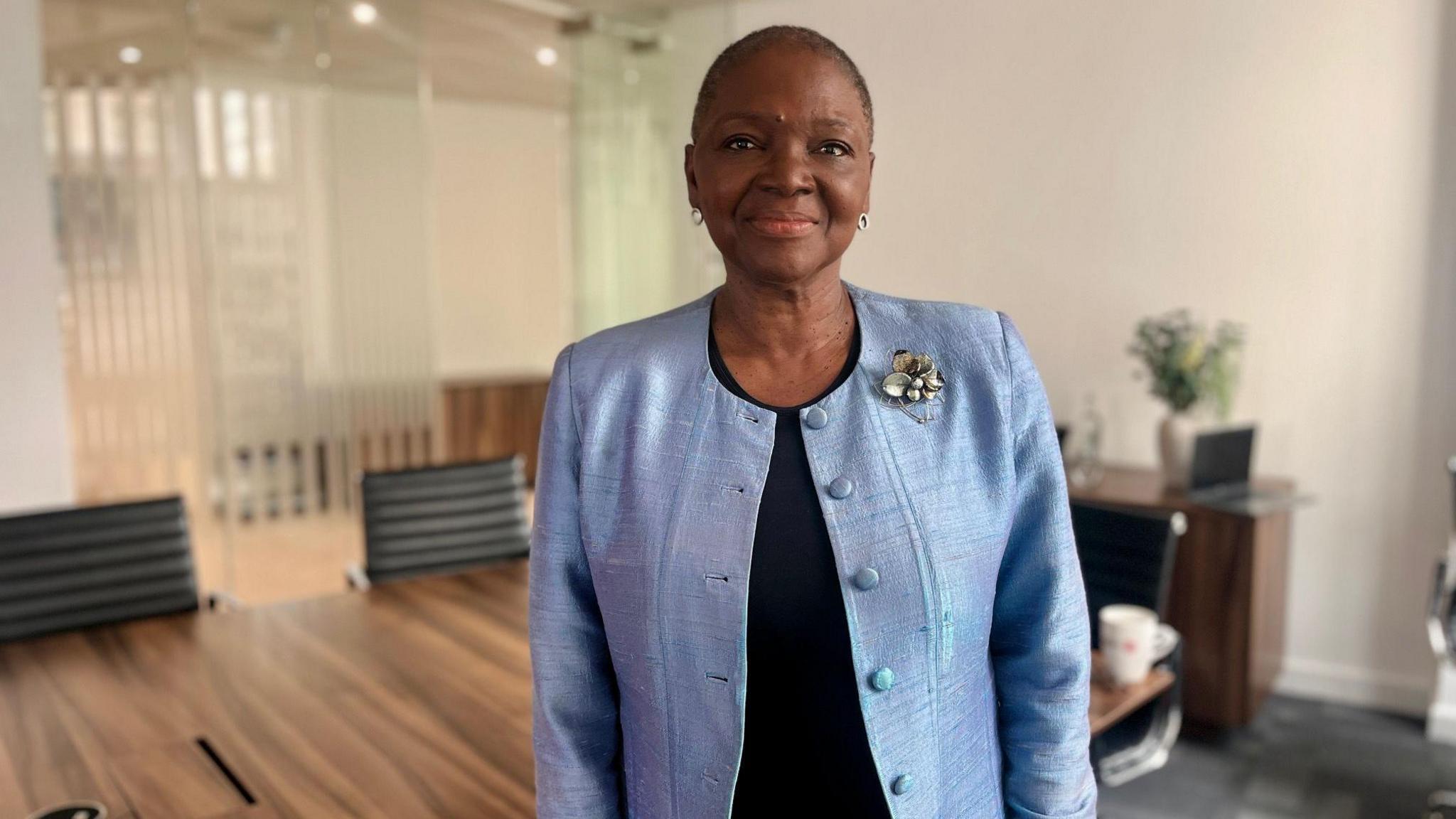
The rapid review by Baroness Valerie Amos found too many women were not being “listened to, heard or believed”, with racism and discrimination “embedded throughout the system”.
Health Secretary James Murray said new national standards for emergency maternity care would be published this week, alongside plans to create 1,000 temporary midwifery posts.
But another of the report’s key recommendations – the creation of a maternity commissioner to oversee improvements – was strongly criticised by some families.
Emily Barley, whose daughter Beatrice died at Barnsley hospital in 2022, told the BBC the idea was “fundamentally dangerous” and placed too much power in the hands of one person.
Other groups representing families reacted with disappointment to the report, which was ordered by then health secretary Wes Streeting last summer, external.
The Birth Trauma Association described it as a “huge missed opportunity” with the views of staff given too much weight compared to the experiences of patients.
“It is devastating to see that so little of what women told Baroness Amos is reflected,” said chief executive Dr Kim Thomas.
She said injuries caused by forceps deliveries and the impact of post-traumatic stress on women and their partners were not mentioned.
‘A bleak picture of failings’
Speaking in the House of Commons, James Murray said the report painted a “bleak picture” of failings across maternity services, spanning pregnancy, childbirth and postnatal care.
“Too often families have been sneered at, disbelieved, blamed and lied to,” he said.
“We know from review after review that wrongdoing is being covered up and that bullying towards staff who try to sound the alarm is rife.”
Murray said that the new temporary midwife posts would be created this year with an extra £41m also made available to upgrade “rundown” maternity and neonatal facilities.
But he was unable to confirm a timeline for appointing the new national maternity commissioner, telling BBC Breakfast his team would “move as quickly as we can” to make it happen.
Maternity investigator Donna Ockenden, who led a recent investigation into failings in Nottingham, played down suggestions that she could take on the new role given she has also been appointed to chair upcoming reviews into maternity services in Leeds and Sussex.
“I’m not really convinced that one person can take on the system. I think it needs now something bigger than that,” she told the BBC.
“I wouldn’t be prepared to take on a job and do it half-baked or badly.”
She said that she was grateful to Baroness Amos for pulling together evidence from across England but felt she had not learnt anything new after reading the report.
“I wish I could tell you I was shocked and surprised but I wasn’t,” she said.
Another safety expert, Dr Bill Kirkup, who investigated maternity services in Morecambe Bay and East Kent, resigned as one of Amos’s clinical advisers.
He is understood to have disagreed over her finding that a drive in some maternity units for normal (vaginal) birth, including denying women caesarean sections, was not prevalent nationally.
A series of scandals
Baroness Amos was asked to write her report after a series of individual maternity scandals undermined the trust of many families in the NHS.
Her team heard from more than 450 families and visited 12 NHS hospitals in England to understand what change was needed.
The key failing identified was an unwillingness to listen to women and families, leading to poor outcomes. There was a lack of a consistent standard of care, with large variations across the health service.
The system was “fragmented, overly complex and too slow to learn and improve,” the report found.
In her recommendations, Baroness Amos called for an immediate overhaul of maternity triage services, which were described as “increasingly becoming the A&E service for maternity”.
As part of that, dedicated midwives should answer calls and provide timely advice, while women should be offered face-to-face appointments if they were still concerned. If those changes were made, the report said, “lives will be saved and harm reduced”.
Racism and discrimination must be treated as a critical safety issue, the inquiry found, requiring urgent intervention, including gathering data on unequal outcomes that can be escalated to board level when patterns emerge.
Speaking to BBC Radio 4’s Today programme, Baroness Amos said the system was “not fit for the now and it’s not fit for the future”.
“We need national standards to frame maternity and neonatal care against which we can then test how trusts are doing, how care is being delivered,” she added.
She acknowledged calls by some families for a statutory public inquiry that would compel senior figures at hospital trusts to give evidence, but she said she was not supportive of the idea.
“Statutory public inquiries take a very, very long time,” she said.
“From the work that I have done and from the conversations that I have had with families, I don’t at the moment see that there is a need for a statutory public inquiry, but that’s not a decision for me to take.”
The eight recommendations made in the report are:
-
Appoint a national maternity and neonatal commissioner to drive change
-
Listen to the voices of women, birthing people and families
-
Improve how the system responds and learns when something goes wrong
-
Set out national standards to consistently achieve high-quality care
-
Tackle racism, discrimination and inequality
-
Improve governance and accountability structures and regulatory oversight
-
Improve culture and teamworking, and strengthen leadership at all levels
-
Deliver digital systems and buildings that are fit for modern care
-
Racism and ‘poor’ staff relationships factors in maternity care failings, report finds
-
Published26 February
-
-
Hungry mothers and dirty wards – maternity care ‘much worse’ than anticipated, review chief says
-
Published9 December 2025
-
Bereaved parent Rhiannon Davies, who campaigned for a review into maternity failings in Shrewsbury and Telford after the avoidable death of her daughter Kate in 2009, said she broadly welcomed the report’s findings.
“One area where I think the report is particularly strong is that it reframes listening to women as a patient safety issue rather than simply an issue of patient experience,” she said.
“The report also places considerable emphasis on maternity triage. Again, I think this has huge potential – but only if we get it right.”
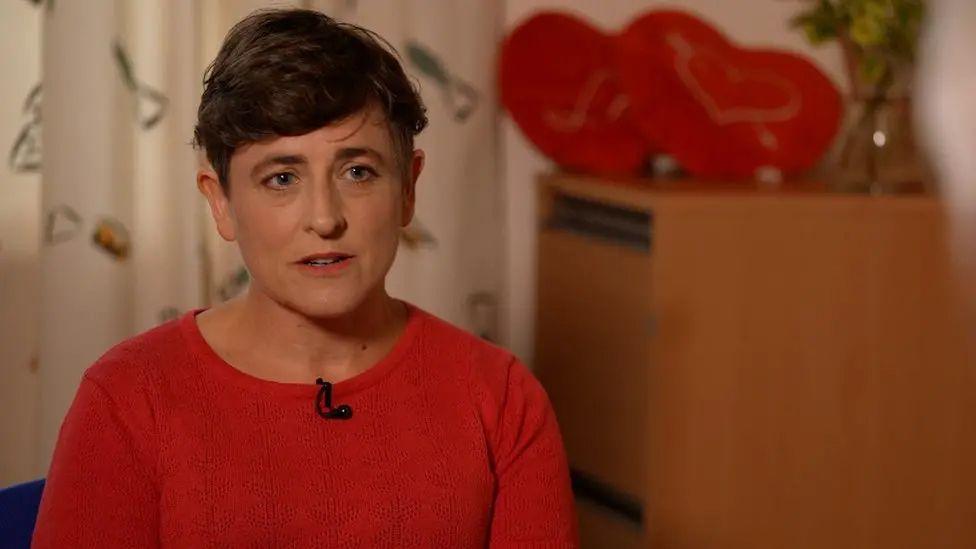
Helen Gittos, whose baby daughter Harriet lived for a week after sustaining a brain injury under the care of the East Kent NHS Trust in 2014, said she had mixed feelings about the report.
Gittos, who is chair of the family expert reference group for the National Maternity and Neonatal Taskforce, thinks many of the recommendations will make a real difference if they are implemented “fearlessly in a way that tackles the core issues and does not water them down”.
But she was “dismayed” after reading the report’s depiction of East Kent, one of the selected trusts, which she felt was “overly positive”.
“If improvement in an individual trust cannot be sustained even with intensive support from national teams, it indicates that the support they are giving is not working,” she added.
Meanwhile, the Maternity Safety Alliance (MSA), which represents families who are calling for a public inquiry, said the report “failed to address core issues at the centre of maternity failings”.
The MSA said the maternity commissioner role proposed by Baroness Amos would “not be meaningfully independent and will not be able to create real change.”
Emily Barley, the group’s co-founder, said the idea was “designed to make headlines but not actually make the change we need”.
“Concentrating all of the power and responsibility for turning around maternity services in the hands of one person is, in my view, just insane,” she told the Today programme.

Get in touch
How have you been affected by the issues raised in this story? Please share with us your experiences.
Disclaimer : This story is auto aggregated by a computer programme and has not been created or edited by DOWNTHENEWS. Publisher: BBC







