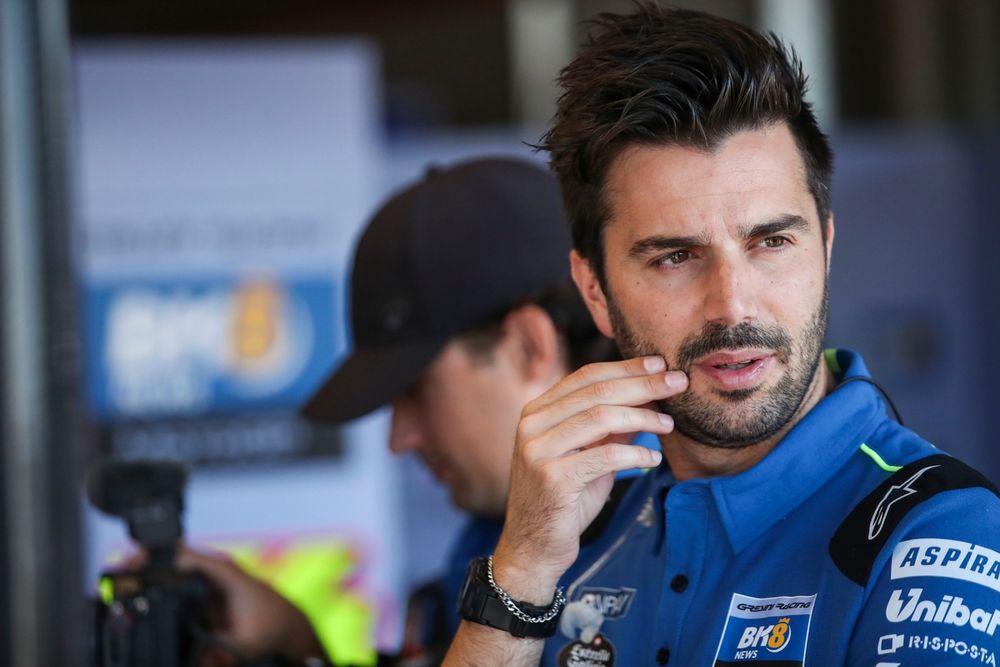
Gresini is confident that the competitive order between factory and satellite teams will remain “more or less” unchanged in 2027, when MotoGP enters its new 850cc era.
The championship is set for its biggest technical overhaul in recent history next year, with reduced engine capacity, stricter limits placed on aerodynamics and ride-height devices being outlawed. The switch from Michelin to Pirelli tyres will further add to the complexity, marking a complete generation shift in the technical package.
Given the extent of changes, any data gathered from track testing will be valuable in understanding the new bikes and extracting the maximum performance out of them. Some manufacturers began testing their 850cc bikes as early as December last year, before ramping up the development work in recent months.
While the new regulations pose a major challenge for the manufacturers themselves, their satellite teams also face a tough task in learning the new bikes and tyres as quickly as possible.
With all private testing and the official Brno test in June being restricted to manufacturers themselves, satellite teams had to wait until last month’s Spielberg test to get their hands on the new machines shod with Pirelli tyres.
But Ducati customer Gresini has dismissed concerns about new regulations potentially leaving satellite teams on the back foot, with sporting director Michele Masini saying they could even gain an early edge over the factories through their understanding of the new Pirelli tyres.
“I think that the level could be more or less the same as now,” Masini told Motorsport.com.
“In terms of performance, it will be crucial to immediately understand the Pirelli tyres. One of the most important things in a race is to manage the tyres, depending on which bike you’re riding.
“In this case, the satellite teams can also play better compared to some factory teams. If you understand immediately how it works and how to manage it, it could be a big help especially for the first couple of races.”
Michele Masini, Team Manager, Gresini Racing
Photo by: Gold and Goose Photography / LAT Images / via Getty Images
While such a major rule change could increase satellite teams’ reliance on their manufacturer partners, Gresini says it will continue to receive the same level of technical support from Ducati.
“I think the support never changes. You don’t have to change the support because at the end we work together tirelessly every day of every GP weekend,” Masini said.
“I think that I’m really confident that Ducati will put on track a very good package for the riders. But as I said, it will be the same collaboration.
“Of course, the character of the bike will change. It will also depend on the character of the tyres.”
With the new regulations effectively resetting the field, Masini sees the change as a major opportunity for Gresini, which has won a grand prix every year since its split from Aprilia five years ago.
“I’m really excited about that,” he said. “Because every time the regulation changes, you have the possibility to try to work. And if you are smart, maybe you arrive to solve some problems before the others and maybe we could play to take some advantage in the first couple of races.”
Gresini is regarded as the most independent team on the grid, at a time when MotoGP constructors are working increasingly closely with their satellite teams.
Currently, the Italian outfit runs a full factory-spec GP26 ridden by Alex Marquez, while team-mate Fermin Aldeguer races the year-old GP25.
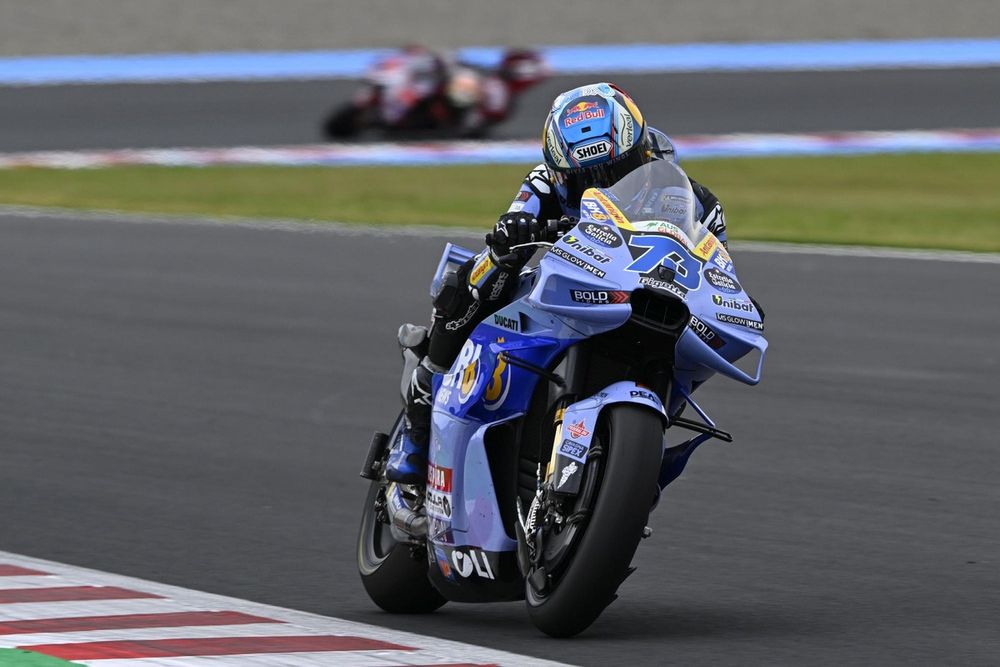
Alex Marquez, Gresini Racing
Photo by: Gold and Goose Photography / LAT Images / via Getty Images
All satellite teams have their own deals with manufacturers regarding the supply of equipment, with those contracts governing what specification of the bike they receive and how often it is upgraded. The performance difference between a current-spec machine and a year-old bike can vary between manufacturers and from season to season.
When the 2027 MotoGP season begins, all teams will start bikes built to the new rules. However, factory squads could still gain an advantage if they receive updates ahead of their satellite counterparts as development progresses.
After Gresini ran the GP27 for the first time at the Red Bull Ring last month, Masini said teams will have to wait for the first pre-season test at Sepang in February to try out the final version of Pirelli’s new MotoGP compounds.
“We tested the Ducati 850cc with our team, with Fermin Aldeguer’s side [of the garage]. Just a first contact with the bike and a first contact with the tyres,” he explained.
“It’s true that Pirelli is still developing the tyres that they will bring for next year. At the moment, they did a good job to arrive as much prepared [as they could] for the first test in Sepang. But we need to wait until Sepang.
“I hope that the Tuesday test after the Valencia GP could be useful because we have to think about the weather conditions, that we never know. But we will have the real situation when we will be at the Sepang and Buriram test next year.”
We want your opinion!
What would you like to see on Motorsport.com?
– The Motorsport.com Team
Disclaimer : This story is auto aggregated by a computer programme and has not been created or edited by DOWNTHENEWS. Publisher: motorsport.com