
- West Asia instability impacts global energy, food, economy.
- India closely monitoring regional tensions for security.
- Government coordinates response to protect energy, prices.
- US extends ceasefire with Iran for peace talks.
Defence Minister Rajnath Singh on Tuesday warned that the escalating geopolitical instability in West Asia, fuelled by tensions involving the United States, Israel and Iran, can no longer be viewed as a regional concern, citing its sweeping impact on global energy supplies, food security and economic stability.
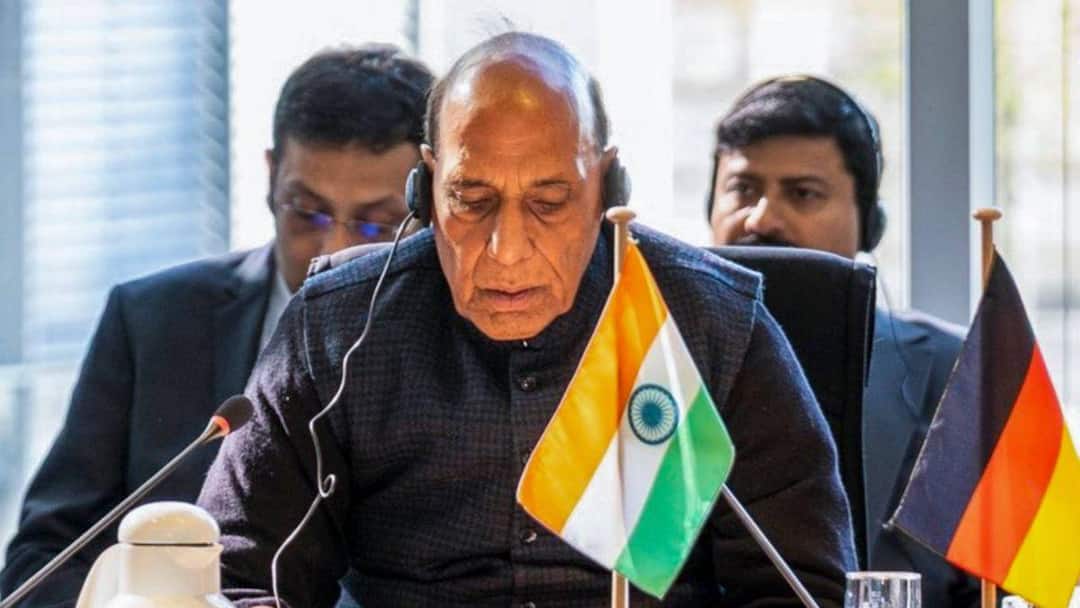
Speaking to German parliamentarians in Berlin, Singh underscored the direct consequences for India, particularly due to its reliance on energy imports from the region. “For a developing country like India… disruptions in the Strait of Hormuz are not distant events; they are stark realities with direct implications for our security and economic stability,” he said.
India Steps Up Coordinated Response
The defence minister, who is on a three-day official visit to Germany to strengthen bilateral military ties, highlighted New Delhi’s proactive approach in navigating the crisis. He noted that a dedicated Group of Ministers on West Asia has been tasked with closely monitoring the evolving situation and recommending timely interventions.
Focus on Energy, Inflation and Supply Chains
According to Singh, the government’s coordinated efforts span multiple sectors, from securing energy supplies to ensuring the steady availability of essential goods. Measures are also aimed at managing inflationary pressures and shielding both citizens and industries from external shocks.
“Bringing together key ministries, our deliberations focused on safeguarding energy supplies, maintaining availability of essential commodities, containing inflationary pressures, and protecting citizens as well as industry from external disruptions,” Singh said while addressing the German Parliamentary Standing Committee on Defence and Security. He added that the approach reflects India’s ability to respond to global crises with “calmness, foresight, and effective institutional coordination.”
US Extends Ceasefire with Iran
Meanwhile, in a significant development, US President Donald Trump announced an indefinite extension of the ceasefire with Iran, just hours before it was due to expire. The move is intended to allow continued peace talks aimed at ending a conflict that has resulted in thousands of deaths and rattled the global economy.
Earlier in the day, Trump had signalled the possibility of renewed hostilities but later said he agreed to a request from Pakistan, which has been mediating the negotiations, to delay military action against Iran.
In a statement, Trump said the ceasefire would remain in place until Iran presents a unified proposal and discussions are concluded. However, there was no immediate response from Iran’s top leadership. Tasnim News Agency, affiliated with the Revolutionary Guards, reported that Tehran had not sought an extension and reiterated warnings of forcibly breaking the US blockade. An adviser to parliamentary speaker Mohammad Baqer Qalibaf also dismissed Trump’s announcement as lacking significance.
Related Video
BREAKING: Massive fire breaks out at oil warehouse in Bhiwandi Thane, firefighting operation underway
Disclaimer : This story is auto aggregated by a computer programme and has not been created or edited by DOWNTHENEWS. Publisher: abplive.com



