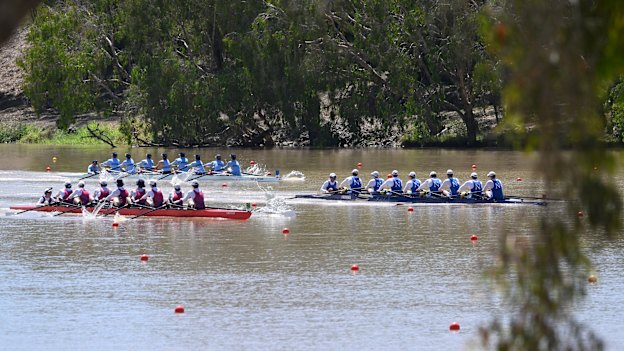
Standing on the banks of the Fitzroy River, it is easy to see why Rockhampton has a reputation for rowing. But fitting tens of thousands of Olympic fans remains a test.
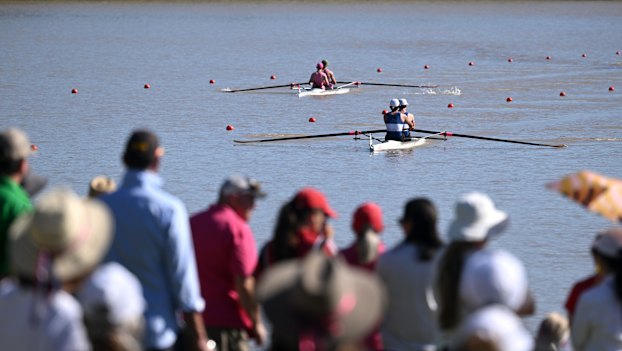
As the boats get closer to the finish line, the barracking from parents and supporters on the riverbank starts to drown out the crews’ voices being carried over the still water.
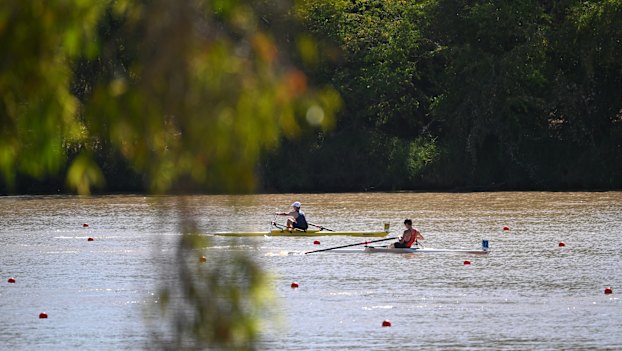
It’s an idyllic setting. Paperbarks line the river, a sea of green either side of the brown Fitzroy River.
On any other day, this would be prime real estate for a quiet picnic surrounded by the sounds of the Australian bush.
This weekend, though, Rockhampton’s Ski Gardens is a hive of activity for the Queensland Schools Championship Regatta. There are 800 kids competing, with hundreds more parents and volunteers lining the shores.
All things going well, in six years’ time, it will host the Olympic and Paralympic rowing and canoe sprint events.
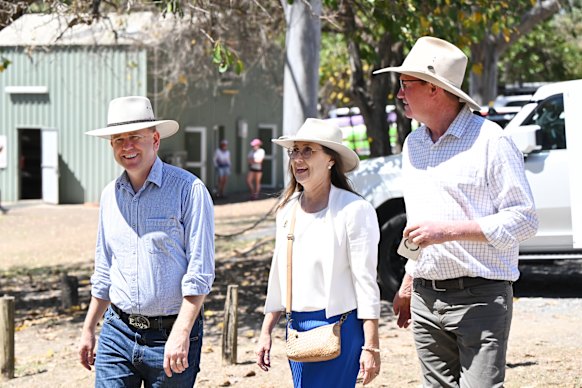
Now, the place is packed. Just imagine the tens of thousands jammed in here in 2032.
But that’s a puzzle for the Games Independent Infrastructure and Coordination Authority and the Brisbane 2032 organising committee to solve, after World Rowing and Paddle Worldwide signed off on the field-of-play technical report last week.
LNP politicians are hard to avoid. Senator Matt Canavan, Deputy Premier Jarrod Bleijie and local MPs are all spotted doing victory laps of the venue after news of the report – yet to be made public – filtered through.
This normally quiet river reach has found itself at the centre of a political storm and intense international intrigue.
This week, the BBC was forced to remove a video claiming the body of water was home to 500 crocodiles, after Canavan pointed out the footage was actually filmed in Western Australia.
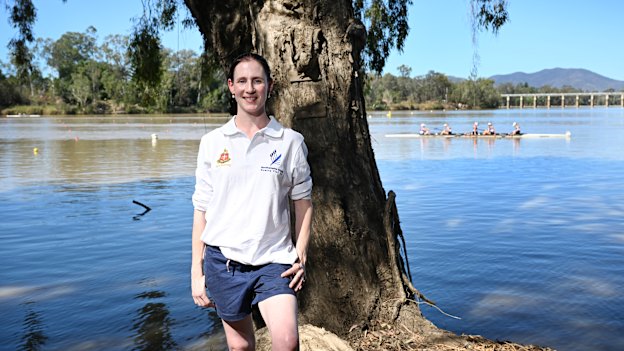
It’s all been a bit much for Sarah Black, president of the Rockhampton Fitzroy Rowing Club, who just wants to enjoy the moment.
She remembers “just being absolutely in awe” when the Olympic plans were first announced.
“The announcement came out and I was just bombarded by texts and emails – people just so excited – Rockhampton’s got the rowing!” she says.
“It was phenomenal. It was an amazing moment to be part of, and just to be present for.”
Black was even less prepared for the backlash, which she admits was hard not to take personally.
Some reporting, she says, was based on misinformation. For example, there was little mention of the Fitzroy River Barrage, a concrete structure that separates the downstream tidal saltwater section from the upstream freshwater section, where rowing is held.
“I do feel that, in time, people will understand the location better,” she says.
“A lot of people didn’t know about the Fitzroy River Barrage, and that’s out there now – that it’s not tidal. The course itself is in the fresh water.
“As a club, we were unprepared … we don’t have a lot of information on our website about the venue, so I guess the misinformation, once it gets reported once, people repeat it.”
Black wasn’t alone in getting her back up about criticism seen as emanating from down south in Brisbane.
“If you want to stir me up, start reporting half-stories like that,” Capricornia Chamber of Commerce president Jason Foss says.
“I wouldn’t be the only one either. There were a few people who had the shits with the way things were being reported.”
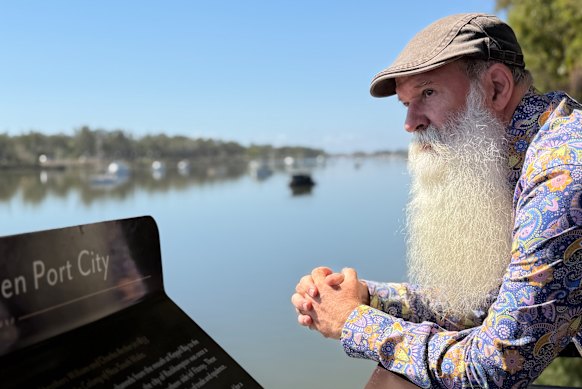
Foss says intrastate rivalry is at play, and central Queensland is justified in having a bit of a chip on its shoulder.
“Brisbane looks after Brisbane, and Brisbane doesn’t care about the rest of Queensland too much,” he says.
“It’s about time that regional communities made a stand and said, ‘Look, no, SEQ doesn’t get everything.’
“We pump a fair bit of money into the state’s coffers. How about something back from time to time?”
Foss says rowing is the perfect way to do just that.
“It’s going to put us on the map, really put us on the world stage, and everybody’s really excited about the possibilities,” he says.
“We’ve got a whole bunch of local smaller family businesses who are super keen to get involved in any way they can.”
Concerns about an accommodation shortfall are warranted, Foss says, but he’s confident the region can rise to the challenge.
“The thing I like about having that 2032 target is there’s a date for us to all be ready for,” he says.
“Every town in the country has a shopping list of things they would like to see happen, but having that hard date in 2032 where everybody’s coming, that makes a big difference.”
Foss says the financial opportunity for the businesses he represents – and Rockhampton more generally – is hard to quantify.
“How are they going to deal with the extra money? Will we see a few Ferraris driving around in town afterwards? Maybe, maybe not.”
Robin Adams is the managing owner of CocoBrew, which has three outlets in Rockhampton, including one fronting the Fitzroy River.
A sports tragic, he’s giddy at the prospect of Olympic competition being held just a couple of kilometres upstream, and he can already paint a picture in his head of Rockhampton in 2032.
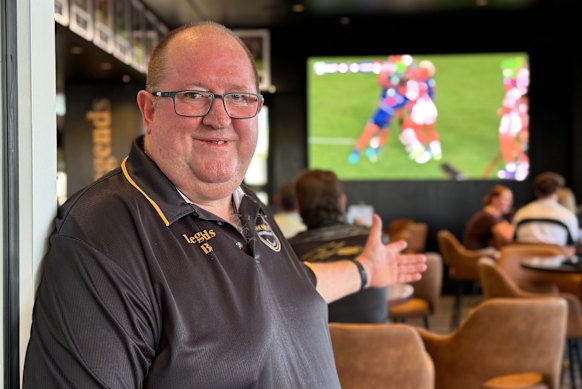
“I see people walking up and down the river. I see a buzz in cafes, hotels, motels,” he says.
“People buying things in shops and enjoying the beautiful weather – have a look at it out there, absolutely gorgeous.”
A crowd is building to watch the NRL finals on his venue’s big screen, but Adams says the buzz around town would be orders of magnitude more for the Olympics.
Premier David Crisafulli has been steadfast in his government’s captain’s call to host rowing in Rockhampton – against GIICA’s recommendations – as a show of faith in regional Queensland.
“We like to get things done, and I’m really proud of what Crisafulli has done,” Adams says.
“He stood tall, taking all the bullets, and said it’s going to be here. He’s made it happen … we’ve just got to deliver it now.”
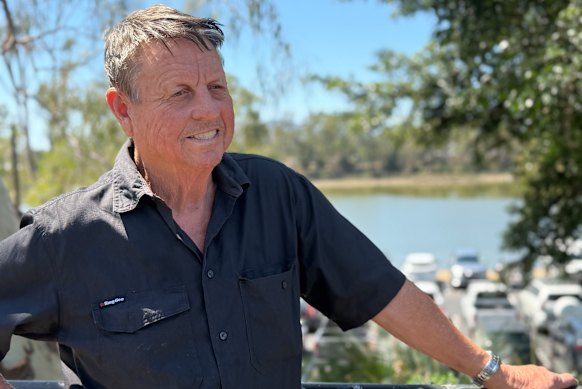
While glad to see Rockhampton score an Olympic event, former long-serving Labor MP for Robert Schwarten says enthusiasm is far from universal.
“There are probably three groups of people,” he says.
“There are those that have no interest in the Olympics whatsoever – couldn’t care less – battling day to day on the breadline, as we used to call it. The Olympics aren’t going to make much difference to them.
“Then there’s a group of people who see it as a godsend economically, the business people here, and so on. They know what the beef expo brings into the city – there’s a whole flow of income out of that.
“Then there’s another group of people, who are like me and hope we haven’t put all the eggs in one basket, and that is that we’re going to get nothing if this doesn’t go ahead.”
It’s a valid concern. While the course has passed a technical field-of-play assessment, there are still several hurdles to overcome.
The call on rowing, Schwarten says, was more about politics than anything else. He prefers a new indoor sports centre as a legacy, and supports the use of Browne Park for Olympic events.
“Bear in mind, it’s LNP front-to-back here for the first time in 100 years, so they all fell into line,” he says.
“There was no political conversation about it, which there should have been in my view. The voice of other people was lost in that process.”
The south-east Queensland rowing community, meanwhile, remains apoplectic about the Rockhampton choice. It’s been championing a purpose-built Olympic and legacy venue at Lawnton, in Brisbane’s urban outer-north.
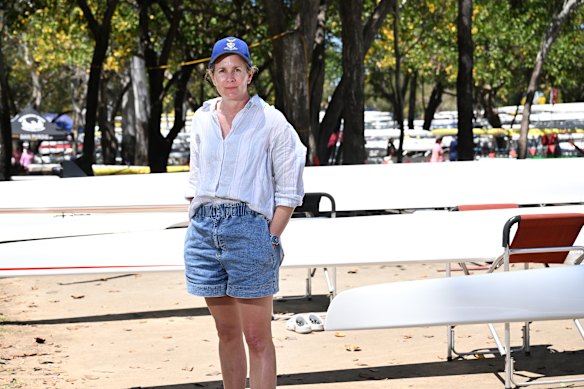
Georgie Keily is in Rockhampton to support her son, who is competing for Churchie. A rowing enthusiast, Keily does not expect to be back here in 2032.
“I live in East Brisbane, right near where some of the events are going to be, so I think I’d be absolutely prioritising going to the events where I can stay in my own house,” she says.
As it stands, rowers in south-east Queensland – the region with the overwhelming majority of participants – have to be content with Wyaralong Dam in the Scenic Rim.
“There are no facilities there – just some donga buildings,” she says.
“It would have been incredible to have a venue close to the majority of Queensland rowers.”
Looking around the Rockhampton site, Keily says she does not comprehend how anywhere between 20,000 and 30,000 spectators could fit.
“How many people do you reckon are here? Maybe 1000 – and it’s full,” she says.
“There’s no room. The car park’s full. All the boat trailers. The kids are all on top of each other down there.
“I mean, they’re happy as Larry, but there’s five or six hundred of them, and they’re not racing for an Olympic gold medal.”
And then there’s the natural beauty of the place. The cleared area around Ski Gardens is at the end of the course, looking directly up the lanes. It’s hardly conducive to spectator viewing.
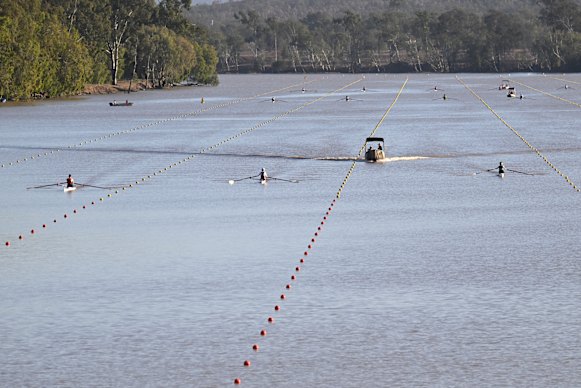
“You can’t tell who’s won because they’re rowing towards you, which is quite bizarre,” Keily says.
“To get any number of spectators in, you’re going to have to clear at least 500 metres of those trees, right? Which is a lot, and they look like they’re holding up the banks.”
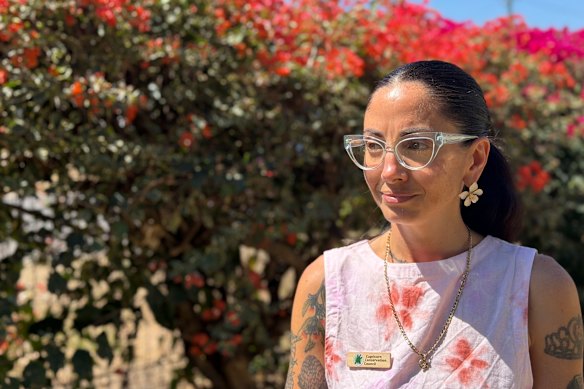
That’s exactly what they do, says Capricorn Conservation Council president Sophie George.
George says she’s hopeful the Fitzroy course’s natural beauty and value can be preserved, even if the new Olympic infrastructure gets built.
An environmental scientist and biologist by profession, George supports the Olympic rowing course – as long as it’s done right.
She worries about the “pretty ginormous” floods that Rockhampton can experience, and how Olympic infrastructure would mitigate or manage flooding when it occurs.
“The beautiful old trees – eucalyptus, melaleuca – are all very important in maintaining that ecosystem and maintaining that riverbank, and if you remove those old trees, it’s going to cause an ecosystem collapse,” she says.
“There’s no amount of concrete that can replace what those big old trees do to stabilise the ecosystem, stabilise the soil, and also draw water in.”
Consultation has been positive so far, George says, and already some good ideas have been suggested – like hosting spectators on floating pontoons.
“It is certainly a challenge, but I’m sure it’s nothing that technology and the experts putting their head together can’t resolve or find a solution to,” she says.
Despite those concerns, George remains supportive of Olympic rowing in Rocky.
“Everyone wants this, and it’s going to be great for our region,” she says.
“I’m hoping that the infrastructure that we do get, especially with accommodation, can leave a lasting legacy for our region. We need housing. We need it so badly.”
Rowing club president Black also hopes people can get over the controversy and “just enjoy the rowing”.
“Once you’re here, Rockhampton’s course is unique in that we’re in the centre of town – that’s not necessarily the case with a lot of venues around the country,” she says.
“As a spectator and a supporter, you have the benefit of being able to come and watch some amazing competition, and then just going back into town for a coffee. There’s not even a set of traffic lights between the course and the airport.
“I think people are going to be pleasantly surprised.”
Start the day with a summary of the day’s most important and interesting stories, analysis and insights. Sign up for our Morning Edition newsletter.
Disclaimer : This story is auto aggregated by a computer programme and has not been created or edited by DOWNTHENEWS. Publisher: www.smh.com.au