
From clothing markets to vintage stores, the options for buying second-hand clothes seem to be everywhere. But what happens when the abundance of pre-loved items overtakes demand?
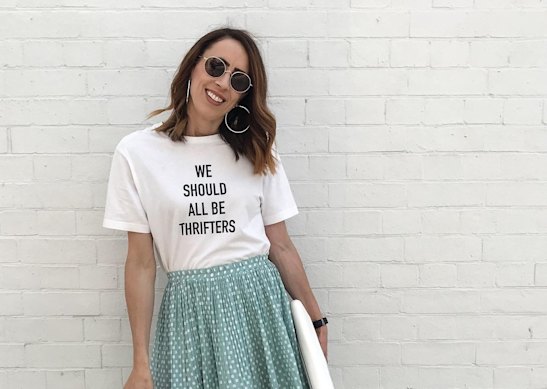
“We have a one in, one out rule,” explains Hannah Klose, who is behind the popular Instagram account @nevereverpayretail.
To avoid overconsumption, Klose and her family donate an item of clothing to local op shops for every item they purchase second-hand.
Across Australia, the Salvos are seeing an influx of donations, with some stores experiencing a five-week turnover, according to business development manager Meriel Chamberlin.
This is the same turnover as major fast fashion brands such as H&M.
“[Shoppers should] go regularly [to op shops]. That’s the only way we can handle the volume,” Chamberlin says.
But with donations often overtaking purchases, what happens to the clothes that don’t sell? Do they end up in landfill?
A new Australian-first textile recycling facility, opened by Salvos Stores at their Ipswich factory, is working to address this issue.
Chamberlin took this masthead on a tour of the Carole Park facility, where garments are assessed by world-first artificial intelligence technology and transformed into textile squares.
The automated process removes buttons and zippers and sorts the fabric based on composition or colour.
The resulting squares are then used to produce recycled yarn, insulation, sound-proofing panels and plastic products.
Anything deemed unsuitable for sale – old work uniforms, for example – is processed by the machine and repurposed.
Chamberlin says the volume of fast fashion being donated to second-hand stores has increased.
“More and more [donations] are not high quality because of fast fashion,” she says. “So how do we best optimise our resources but also get the good stuff that is sellable out?”
The mammoth operation, backed by $4.9 million from the Queensland government, was developed to ensure that landfill was never an option.
Each year, according to the state government, 200,000 tonnes of clothing are sent to Australian landfills. The Ipswich facility can process 5000 tonnes of textiles a year.
Chamberlin says the technology also reduces the risk of offshore human exploitation by processing the clothes into squares before delivery.
“If the [full garments] go offshore, the modern slavery risk is really high and hard to manage,” she says.
“We know we’ve taken out that massive first stage of human exploitation risk by serving them in this condition instead of the whole garment.”
But the recycling plant is just one south-east initiative aiming to cut down on textile waste and promote sustainability.
In Brisbane, the founders of the weekly Love Me Again markets have also noticed an increase in donations.
Co-founder Isobel Dear says they’ve seen a “100 per cent uplift on sellers over shoppers”, with the market spaces selling out a month in advance across multiple locations.
In a bid to promote higher-quality garments, the markets have strict requirements on what sellers can bring.
“We don’t allow ultra-fast fashion brands like Boohoo, Temu or Shein. We know what those brands are doing, they’re making fashion overconsumption, so ethically, we don’t allow them for that reason, but we also notice they just don’t sell [at the market],” Dear says.
Start the day with a summary of the day’s most important and interesting stories, analysis and insights. Sign up for our Morning Edition newsletter.
From our partners
Disclaimer : This story is auto aggregated by a computer programme and has not been created or edited by DOWNTHENEWS. Publisher: www.smh.com.au