
As the Rangers held exit meetings Friday before dispersing for the offseason, the locker room had a much different tone than it did just a few months ago.
And compared to the mood in there this time last year, it was unrecognizable.
Mika Zibanejad and pending restricted free agent Braden Scheider explicitly proclaimed they want to be here. Adam Fox, who caused a stir with noncommittal postgame comments in February, sure spoke like he wanted to stay, too. The rookies couldn’t be hungrier for more.
Team morale may have improved for now, but only a clear direction forward can sustain it.
The Letter 2.0 outlined an obvious approach to any retooling process, citing an intention to target young and well-rounded players while obtaining draft picks and cap space and, in turn, flexibility.
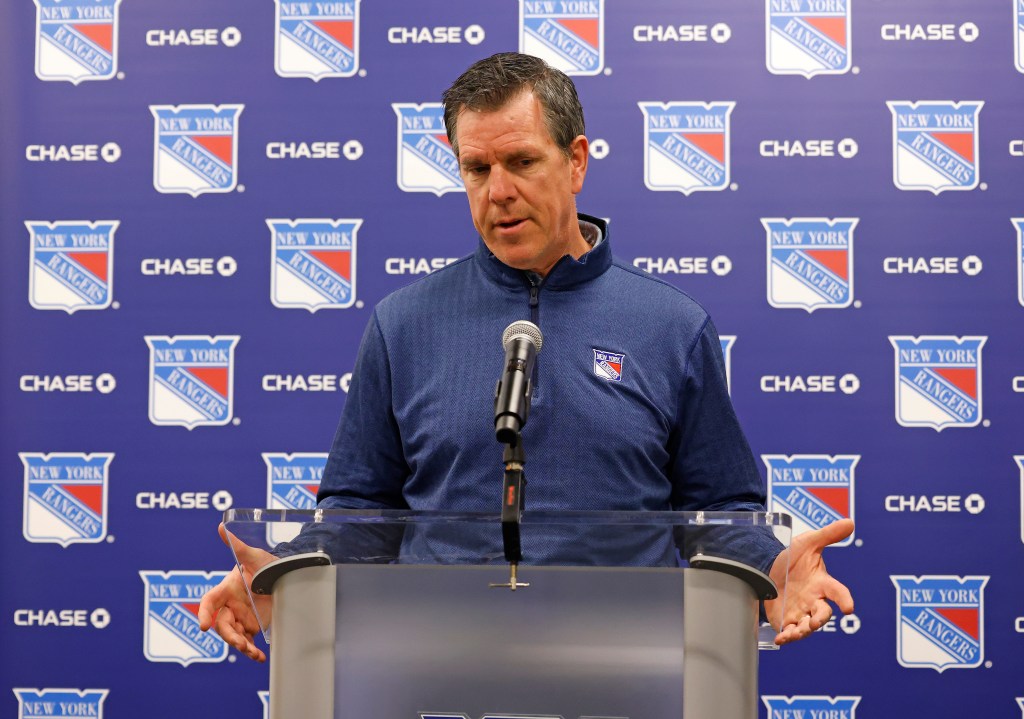
Asked what the biggest needs are for the Rangers roster, head coach Mike Sullivan pointed to two aspects.
“I think we’ll have some opportunities potentially to add some puck-moving ability on our blue line,” he said. “I think there might be some opportunities to improve our bottom six at the forward position, where players might be able to play certain roles that could allow us to take some of our core players out of situations. For example, the penalty kill, if we could take Mika and J.T. [Miller], [Vincent Trocheck] and these guys out of some of those situations. I mean, obviously, they’re very good at it, so we’re not trying to remove that element of their game completely.
“But it gives us the ability to manage their minutes, which I think gives them the ability to sustain performance game in, game out.”
Partially due to how much they were hampered by injuries, the Rangers had more lines that could be classified as bottom-six units than necessary. Rookies such as Jaroslav Chmelar and Adam Sykora are expected to join what is already shaping up to be a crowded competition for the bottom two lines.
The Blueshirts were shut out in five of their first seven home games, foreshadowing a frustrating ineptitude for generating offense for a majority of the season.
Amid the departure of perennial leading scorer Artemi Panarin via trade, the lack of play drivers up front remains a concern.
The fact that half of the Rangers’ top six players finished the season aged 32 or older paints a dire long-term picture.
Asked for the specific area of the Rangers lineup he wants to prioritize this season, president and general manager Chris Drury only referred to Sullivan’s initial answer.
“I thought those were two good comments by him and two specific areas,” he said.
Drury said the point of the Letter 2.0 was to communicate to fans the state of the organization, but the five-year GM has been cagey about just that.

Months in advance, the Rangers beat writers requested an in-person press conference with Drury as opposed to his usual 10-12 minute Zoom calls with all cameras off. Drury declined and stuck with his impersonal method Friday.
The format makes it difficult to ask follow-up questions at a time when certain topics need to be pressed, though Drury has mastered the art of diplomatic answers.
He offered no update on his intention whether to trade Trocheck, other than the change of market in the offseason.
He was noncommittal toward the notion that Dylan Garand could step into the backup role next season, saying the rookie goalie will be looked at among other options.
As for a message to the fans to whom he wrote the letter, Drury said it was all still raw and new.
“We are excited what the future holds with the players we have on our roster, the prospects that we have already drafted and recently acquired, and the 11 picks we have in the upcoming draft, including the top-five pick and two picks in the first round,” he said as part of a prepared statement. “The work for next season begins now. We are determined to take the momentum we’ve created and carry that forward for the 2026-27 season.”
Disclaimer : This story is auto aggregated by a computer programme and has not been created or edited by DOWNTHENEWS. Publisher: nypost.com



