
“How do we keep getting into this mess?”
These words, from a senior Australian cricket powerbroker, come down the line with a sense of frustration but also sadness.
The collapse of Cricket Australia’s plans to sell stakes in every Big Bash League club was technically a win for the dissenting states over the central governing body, and a reflection of public opinion that has grown increasingly sceptical of the idea. An online poll by this masthead last week, completed by more than 2500 readers, returned a resounding 83 per cent of votes against selling.
But no one spoken to by this masthead is in the mood for celebrating. Instead, they are counting the cost.
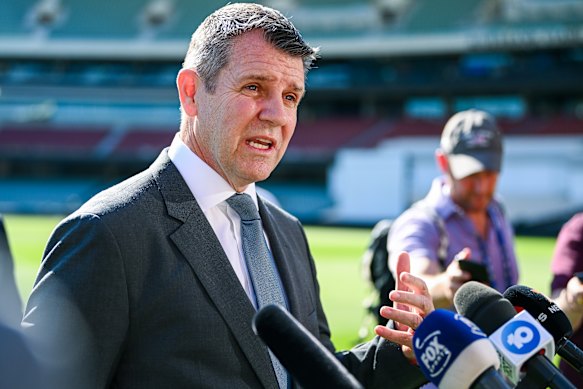
There is a shared sense within CA and the states that cricket needs something better than yet another round of internal bickering that has bruised numerous relationships within the game and achieved little, other than to leave the former New South Wales Premier Mike Baird weighing up whether he should continue as CA chair.
While Baird and Cricket NSW, which nominated him to the CA Board in 2020, ended up very much at odds over the sale of BBL clubs, there is broad agreement that the Australian cricket decision-making system needs to be reviewed. “Governance change is essential,” said another Australian cricket powerbroker.
And if Baird does continue as chair for another three years from October, there is a prospect that he will not do so as the nominee of Cricket NSW, instead taking one of the four independent director spots on the CA board.
The battle over the BBL has been an ugly one for Australian cricket, in part because much of it was contained within Sydney and NSW, where so many of the principal characters are based or came from.
CA, from Baird, chief executive Todd Greenberg and the board down, remain mystified as to why Cricket NSW and its long-serving chair John Knox, moved from enthusiastic supporters of the BBL sale project to strident critics over the course of a few months.
The answer seems to hinge on how one sees Knox’s day job as a partner with Ares, an American private equity firm with numerous sporting investments, including the Trent Rockets in the Hundred competition in the UK.
For Baird and CA, that first-hand experience of the franchise world, and a recent private investment transaction with the England Cricket Board, should have provided an excellent basis for specifying all the checks and balances required to ensure any sale was not weighted too heavily towards the investors. In particular, things like safeguarding the Australian cricket calendar where Test matches take prime position in December and early January.
But for Knox and NSW, knowledge of the Hundred’s evolution and the many questions it keeps raising tended more to strengthen the view that none of the money handed over for BBL clubs would be free of onerous obligations – certainly more loaded with risk than the money traditionally raised by broadcast and sponsorship deals.
Queensland Cricket, which conveyed its opposition to CA last week to effectively kill the project, given the opposition of NSW and the scepticism of South Australia, saw more risk than opportunity in what CA had proposed. Like NSW, Queensland’s chief executive Terry Svensson and chair Kirsten Pike see the potential for more commercial returns to be made by means other than selling clubs.
That brought the question of wagering product fees into the conversation, an area that Baird and CA are notably uncomfortable about entering any further into. Whether cricket has “fair value” from its existing agreements with betting companies is a question that both NSW and CA have explored, but there is disagreement over how much it might be worth.
No one is eager to assent to the Australian Cricketers’ Association’s ambit claim to raise its percentage of Australian cricket revenue from 27.5 per cent to 33 per cent. For CEO Paul Marsh this was a brusque welcome back to cricket after a decade with the AFL Players’ Association.
NSW, meanwhile, are adamant that they had always understood the BBL sale project would stop if there was no nationwide consensus about moving forward. Once they conveyed their opposition to Baird and Greenberg in January, it became increasingly contentious to see the sale conversation not just continue, but ramp up intensity towards a nominal April deadline.
How Baird and Knox could end up at such a distance, resulting in hard-sell attempts on both sides of the divide that left both chairs feeling they had been targeted as villains, remains an unanswered question.
What’s not in doubt is that the use of corporate consultants, with no stake of their own in Australian cricket other than the desire to get an outcome, muddied the waters.
Boston Consulting Group’s initial report on the future of the BBL was an unpopular piece of work, even with those who supported its main thrust.
Next, CNSW took advice from Adara, while CA called in Barrenjoey. This then had the unintended consequence of both states and CA thinking in terms of tactics rather than direct negotiations – second-guessing rather than collaborating. Since the CA board was reformed in 2011, corporate consultants and reviews have flooded the drawers of executives and board directors alike, at great expense but to little effect.
At the same time, the episode showed that real power in Australian cricket still resides very much at board level. Greenberg and the state CEOs worked endlessly together over many meetings without any genuine decision-making capacity. The chairs, not being full-time, could not make the same time commitment but always held the keys to any actual changes.
An enduring irony of Australian cricket is that some of the game’s very best strategic calls were made by the CA board before it was reformed into a more “independent” model. A world-first central contract system, the academy, the building of the BBL and the advancement of women’s cricket were all decisions of a board that ultimately voted itself out of existence.
People trump structures, and it was the personal disagreements that made the BBL fail so troubling.
News, results and expert analysis from the weekend of sport sent every Monday. Sign up for our Sport newsletter.
 Daniel Brettig is The Age’s chief cricket writer and the author of several books on cricket.Connect via X.
From our partners
Disclaimer : This story is auto aggregated by a computer programme and has not been created or edited by DOWNTHENEWS. Publisher: www.smh.com.au