
From the icy stretches of the Himalayas to sunburnt grasslands and dense tropical forests, India’s landscapes are as diverse as they are alive. This ecological richness isn’t just about variety; it’s about balance. And at the heart of this balance are its apex predators.
In a world where wildlife habitats are shrinking, India stands apart as the only country where all five big cats — tiger, lion, leopard, snow leopard, and cheetah – coexist.
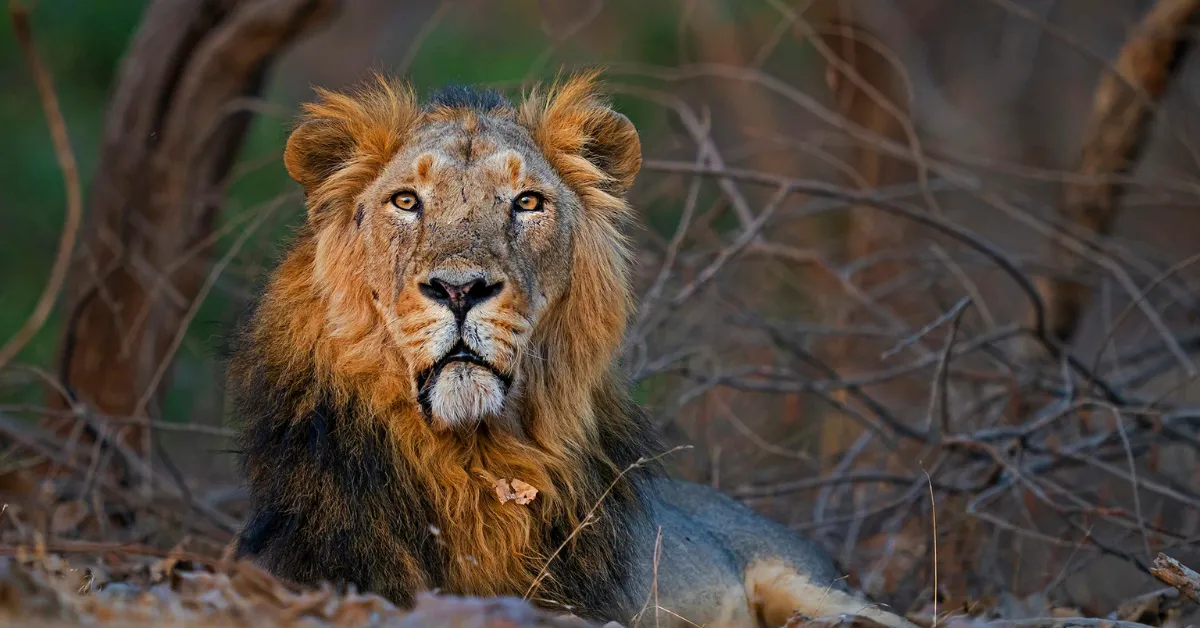
Each occupies a unique terrain: snow leopards roam high-altitude mountains, Asiatic lions rule In Gujarat’s dry forests, tigers dominate dense jungles, leopards adapt almost everywhere, and cheetahs are reclaiming grasslands.
Together, they form a rare ecological mosaic that is now placing India at the centre of global conservation conversations.
A comeback story written over decades
India’s big cat success didn’t happen overnight. It is the result of decades of sustained effort, combining science, policy, and community participation.
Take the tiger, for instance. From a low of 1,411 in 2006, India now hosts over 3,600 tigers, more than 70% of the world’s wild population. Initiatives like Project Tiger, the creation of 50+ reserves, and advanced monitoring systems have driven this revival.
Photograph: (Roundglass Sustain)
The Asiatic lion tells a different story, one that is based on survival against extinction. Once reduced to just a few dozen, their numbers have risen to over 890, expanding beyond Gir into a much wider landscape.
Even the elusive snow leopard, long hidden in the Himalayas, is now better understood, with 718 individuals recorded in India’s first scientific assessment. Meanwhile, leopards often overlooked have quietly grown to nearly 14,000, thriving even in human-dominated areas.
Lastly, there’s the cheetah. Extinct in India for over 70 years, it made a historic return in 2022. Today, with 50+ individuals, including cubs, it represents one of the world’s most ambitious rewilding experiments.
More than conservation: A new kind of coexistence
What makes India’s model unique is not just the numbers but also the philosophy.
Instead of isolating wildlife, conservation here increasingly works with people, not against them. From livestock insurance schemes in snow leopard habitats to community-led monitoring and ecotourism, local participation has become central.
/filters:format(webp)/english-betterindia/media/media_files/2026/04/28/leopard-india-2026-04-28-18-08-22.png)
Leopards, for example, survive not in protected reserves alone but in farms, outskirts, and even near cities. Lions also share space with pastoral communities in Gujarat. These stories highlight a shift — from protection to coexistence.
At the same time, challenges remain real: habitat fragmentation, human-wildlife conflict, and climate pressures continue to test these gains.
Conservation is no longer just about saving species but about managing entire landscapes.
A global stage: Big cat summit 2026
This is precisely why the upcoming Global Big Cat Summit 2026, to be hosted in India, matters so much.
More than a conference, it will bring together countries, conservationists, and policymakers to collaborate on protecting not just India’s big cats, but global species like pumas and jaguars as well, completing what experts call the ‘Big Seven.’
/filters:format(webp)/english-betterindia/media/media_files/2026/04/28/cheetah-india-2026-04-28-18-10-37.png)
India’s role here is significant. It is not just showcasing its success but offering a working model where governance, grassroots action, and science come together. The summit is expected to shape future conservation strategies and strengthen international partnerships.
In many ways, it positions India as a global leader in wildlife diplomacy, where saving animals becomes a shared responsibility that transcends borders.
Protecting what protects us
Big cats are more than charismatic animals; they are indicators of ecosystem health. When they thrive, forests, rivers, and grasslands thrive with them.
India’s journey shows that recovery is possible, even in densely populated landscapes, when intent meets action. But it also serves as a reminder: these gains are fragile.
/filters:format(webp)/english-betterindia/media/media_files/2026/04/28/snow-leopard-2026-04-28-18-11-33.png)
The future of conservation lies in collective efforts of governments, communities, and individuals working together to protect habitats, reduce conflict, and rethink our relationship with nature.
Because in the end, saving big cats isn’t just about wildlife, it’s about safeguarding the ecosystems that sustain us all.
Sources:
‘India Becomes Global Big Cat Hub: Only Nation Hosting Tiger, Lion, Leopard, Snow Leopard, & Cheetah in a Historic Surge’ by Vivek Kumar for Organizer, Published on 23 April 2026.
‘Five Faces of India’s Big Cats: A Charter of Wildlife Diplomacy’ by Hemant Kumar IFS for LInkedIn, Published on 22 April 2026.
‘In the Land of Tigers and Leopards: Why India is the World’s Ultimate Big Cat Destination’ by Rohit Telgote for BIg Cats India.
Disclaimer : This story is auto aggregated by a computer programme and has not been created or edited by DOWNTHENEWS. Publisher: thebetterindia.com



