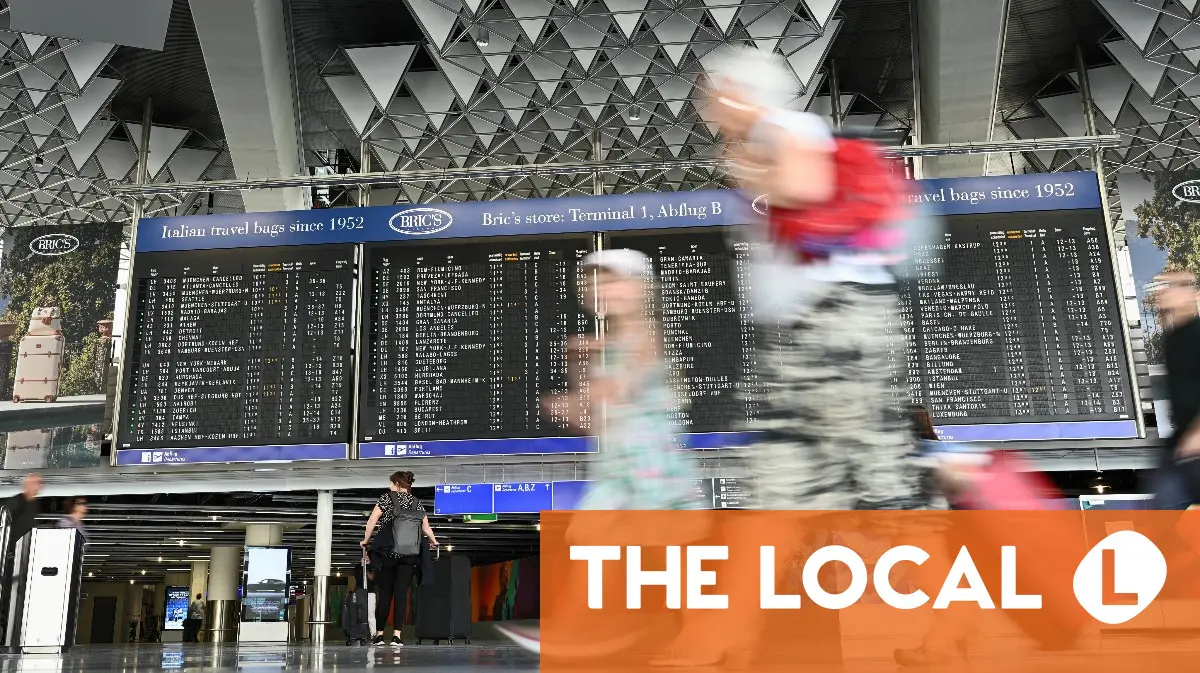
With the autumn break coming up, many people may be wondering what kind of delays to expect at German airports due to the Entry and Exit System (EES) checks.
October is prime time for travel in and out of Germany, with schools in many states off for the Herbstferien – and residents looking for an extra dose of sunshine before winter sets in.
However, travellers passing through Germany’s airports may face longer waits at border control following the introduction of the EU’s Entry/Exit System (EES).
A reader recently got in touch with The Local to flag up increased waiting times at Frankfurt and Munich airports.
So what is the situation currently – and what can we expect in the coming weeks?
What’s happening at Frankfurt Airport?
Germany’s largest airport – Frankfurt – hit the headlines recently after travellers reported long waiting times at the border.
According to German media, the delays were due to “technical problems” with the entry and exit computer system.
The new biometric border check scheme involves logging more information from travellers, including fingerprints and facial scans. The EES has been recording each entry and exit to the Schengen area of non-EU short-term visitors since it was gradually introduced in October 2025.
READ ALSO: How EES border checks affect EasyPASS users travelling to and from Germany
Once a traveller’s biometric data has been registered, it is stored in the system for three years, meaning that they should not have to repeat the full registration process each time they cross the external Schengen border during that period.
The situation at Frankfurt has since eased but airport operators Fraport have urged travellers to factor in long queues due to the busy season.
Between October 2nd and 18th, Frankfurt airport is expecting around 3.5 million passengers. In the first autumn break weekend (October 2nd-4th) alone, an estimated 650,000 people will fly through Frankfurt.
In a press statement, the airport said that due to the increased passenger numbers, travellers from non-EU countries in particular could see even longer waits.
“The EES improves European security as well as border protection and Fraport supports its implementation, including providing additional personnel,” said a Fraport spokesperson.
“Nevertheless, the EES requirements for entering and leaving the EU are resulting in longer wait times at border checks, especially for non-EU citizens.
“This is why we are advising passengers from non-EU countries, in particular, to allow adequate time for the necessary procedures and to arrive at the airport at least three hours before their departure time.”
What about German residents?
People who live in Germany on a valid residence permit – including non-EU residents – as well as EU and Schengen citizens, should not face the same EES registration process as non-EU short-term visitors.
However, Frankfurt airport warned that these groups “could also experience longer wait times” at the border “as a result of these new regulations and, if they are traveling to countries outside of the Schengen Area, should arrive at the airport three hours prior to departure”.
The airport added that these passengers are allowed to use the EasyPASS automated border control system, which reduces wait times at the borders.
Passengers who do not have to pass through border control are advised to arrive at the airport around two and a half hours before their departure time.
For those travelling only with hand luggage, they should arrive about two hours before their flight is due to leave.
What’s happening at other airports?
In general, airports across Europe say that EES has increased waiting times.
According to a report from travel analytics group Qsensor which was reported on by the Financial Times, the average ‘maximum queue time’ at Munich airport rose from 31 minutes in 2025 to 60 minutes in July 2026.
At Frankfurt, average maximum wait times reached 120 minutes, double the 60 minutes recorded in July 2025.
READ ALSO: EES delays cause waiting times to double at German airports
According to an EES queue tracker, the entry wait for Berlin on Tuesday afternoon was 63 minutes – however it heavily depends on the arriving flights. The ‘exit’ wait at the same time was around two minutes long.
A notice on the BER website states: “Due to the introduction of the European Entry/Exit System (EES), there may be longer waiting times when entering or leaving the Schengen Area.”
The Local reached out to BER airport press office to ask about waiting times.
A spokesperson signposted us to its information page and added: “Under the EES, border authorities collect travellers’ identity and travel document details, entry and exit records, as well as biometric data such as fingerprints and a facial image.
“This registration process is time-consuming and adds complexity to border checks. Without the option of digital pre-registration, longer waiting times at airports across Europe may occur during peak travel periods.
“While occasional bottlenecks and longer waiting times cannot be ruled out, the impact of the EES at BER is manageable, although it does not meet our quality ambitions.”
Disclaimer : This story is auto aggregated by a computer programme and has not been created or edited by DOWNTHENEWS. Publisher: thelocal.de