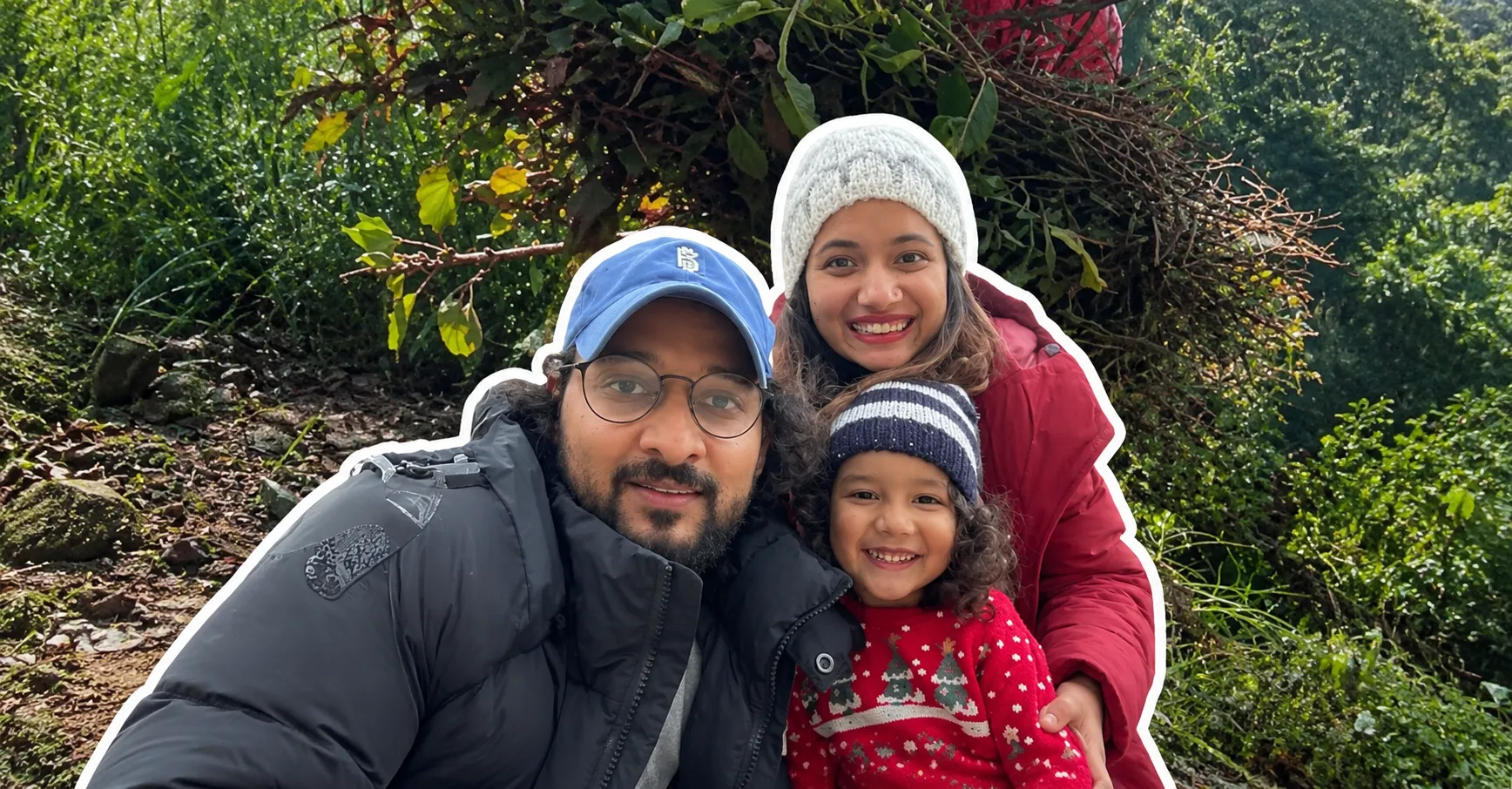
Whenever Aditya and Garima flew from Singapore to India, they packed empty suitcases. They flew back with them full of millets, pulses, Ayurvedic herbs, and cold-pressed oils.
“Our pantry in Singapore was more indigenous than most homes in India,” says Garima, a designer.
Aditya, born in Shimla, had been missing his roots for a while. He had left medical school for fashion management and gone on to work with brands like Nike across Southeast Asia. The pay was good, and the future looked secure. But the hustle culture was wearing the couple down.
“It started small; we began wondering — what are we eating? What are we buying? And what are we going to teach our child just by the way we live?” says Aditya.
When they were expecting their first child, the couple began questioning what they wanted family life to look like. Rather than settle deeper into the life they had built in Singapore, they chose a different path. They quit their jobs, packed their bags and moved to Dasgaon, Uttarakhand, where they began raising their son, Vedas, without formal schooling.
Their decision was not just about moving to the mountains. It was about rethinking how children learn and what parents need to unlearn along the way.
Learning beyond the classroom
For Vedas, learning happens through the world around him. Road signs help him recognise words, train numbers introduce him to counting, and time spent outdoors gives him room to explore at his own pace.
His parents also introduce him to traditional practices, including using Ayurvedic herbs when he is unwell. In his everyday world, curiosity takes precedence over a fixed syllabus, and learning is woven into ordinary experiences.
The family even spent a year in Jaipur, living among other unschooling families and exploring a way of life that challenges conventional ideas about education.
For the couple, unschooling began with a change in their own outlook. As they explain, “Unschooling started with us, the parents first, because a child is naturally bred to learn, explore and play-do all at the same time.”
The parents had to unlearn, too
Moving away from conventional education came with its share of doubts, particularly from people close to them. Letting go of years of planning and the familiar markers of success meant learning to trust a path that offered no guarantees.
Garima and Aditya also had to rethink their ideas about discipline, learning and their son’s future. They were not opposed to books or exams; they simply did not want to force them before Vedas was ready.
Their decision was made possible, in part, by years of financial planning. By cutting down on expenses associated with city living, they believed they could sustain themselves for four to five years without working. They now earn modestly through content, workshops and collaborations.
/filters:format(webp)/english-betterindia/media/media_files/2026/10/13/unschooling-india-2026-10-13-13-54-02.png)
Looking back, they see the biggest change in themselves. As they put it, “Once we got over our own insecurities and fears, we realized this is the most amazing gift that we have given to our kids.”
For the family, that gift is the freedom to learn from everyday life, follow curiosity and grow without having every step mapped out in advance.
Disclaimer : This story is auto aggregated by a computer programme and has not been created or edited by DOWNTHENEWS. Publisher: thebetterindia.com