
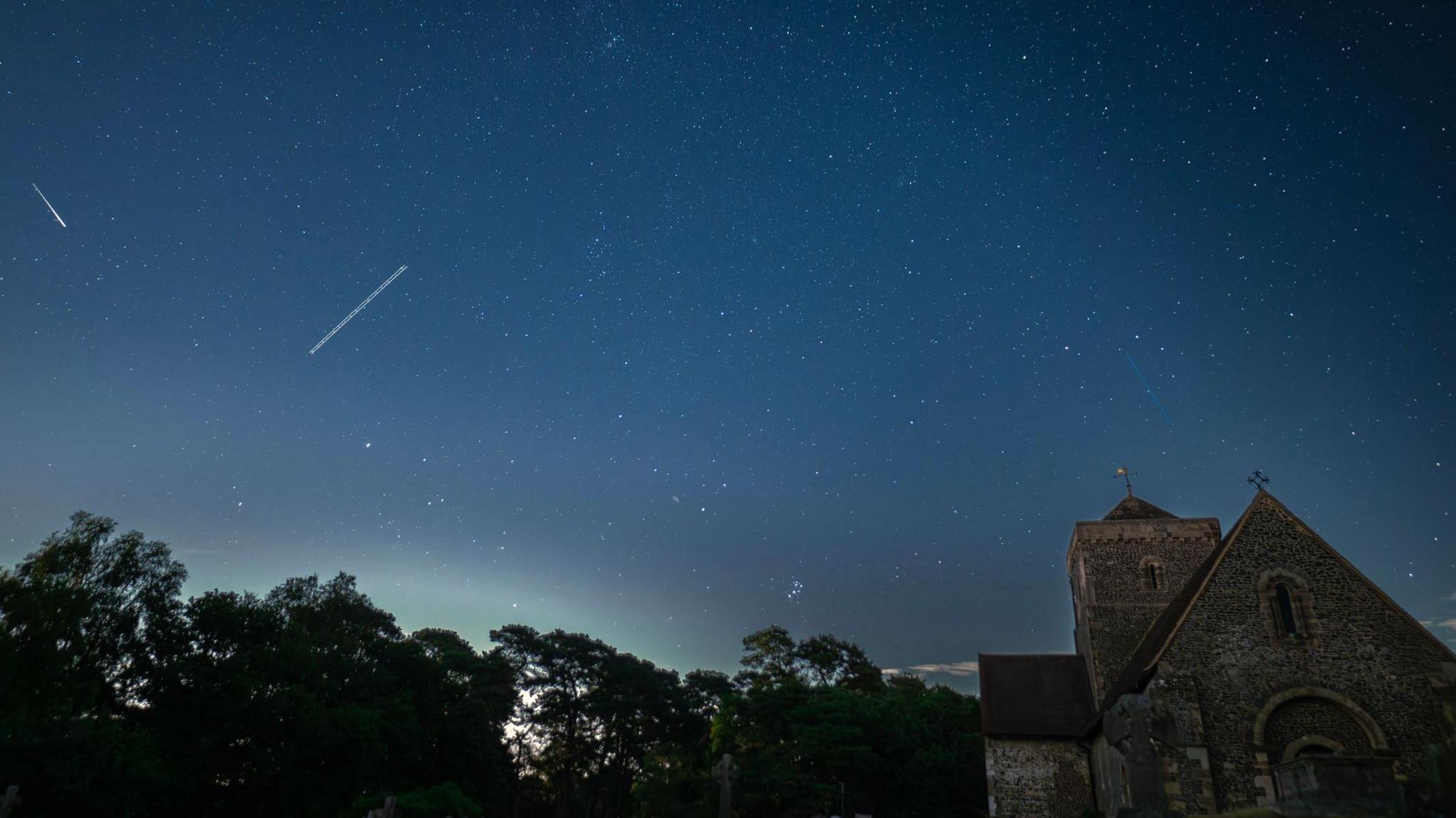
With lots of clear skies over the coming nights there is a good chance of seeing the Lyrid meteor shower.
While it has been ongoing since the 15 April, the peak is expected on Wednesday night.
Expect to see around 10 to 15 meteors an hour with surges of activity that could bring up to 100 an hour.
The Lyrid meteor shower is an annual event as a result of the Earth passing through dust left behind Comet Thatcher.
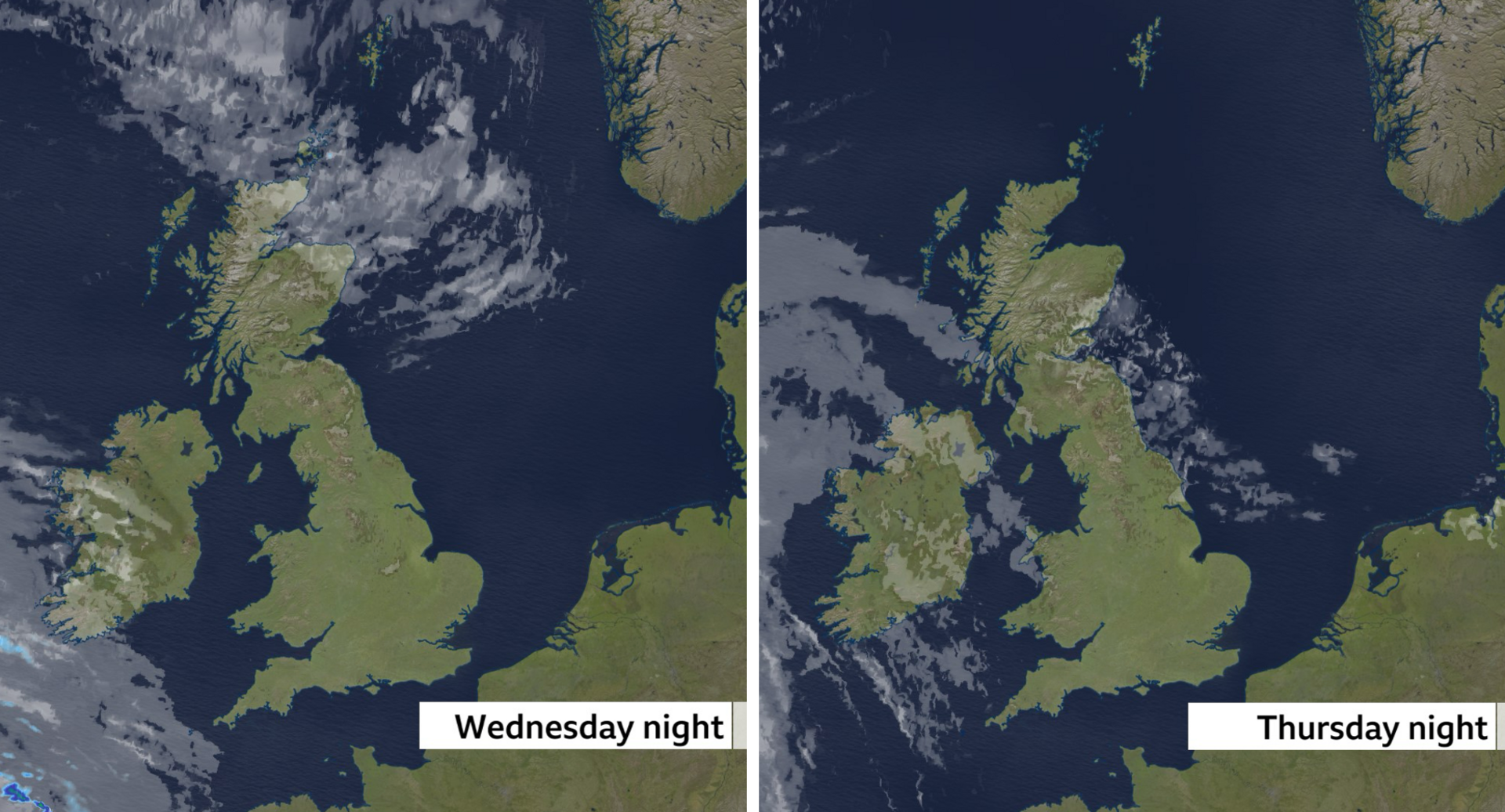
With high pressure dominating the weather over the coming days there is little cloud in the forecast.
According to the Royal Museums Grenwich the Lyrid meteor shower reaches maximum on 22 April and being two days before the First Quarter Moon, the Moon won’t cause too much light pollution.
Wednesday night will start off with virtually clear skies across most parts of the UK. Though there will a bit more cloud in Northern Ireland which will clear.
With the clear skies however, temperatures will drop off quickly making it turn chilly.
Perhaps the best time to see the meteors will be after 22:00 BST once it gets dark enough for most of us.
The good viewing condtions will continue on Thursday night too with lots of clear skies across the UK.
During the early hours of Friday morning however, there will be a bit more cloud moving in across eastern Scotland and the eastern side of England.
 Getty
GettyThe Lyrid meteor shower was first recorded almost 3,000 years ago by Chinese astronomers.
And they were named after the constellation of Lyra from where the meteors appear to originate and occurs every year from 16 to 25 April, but often peaking around 22 April.
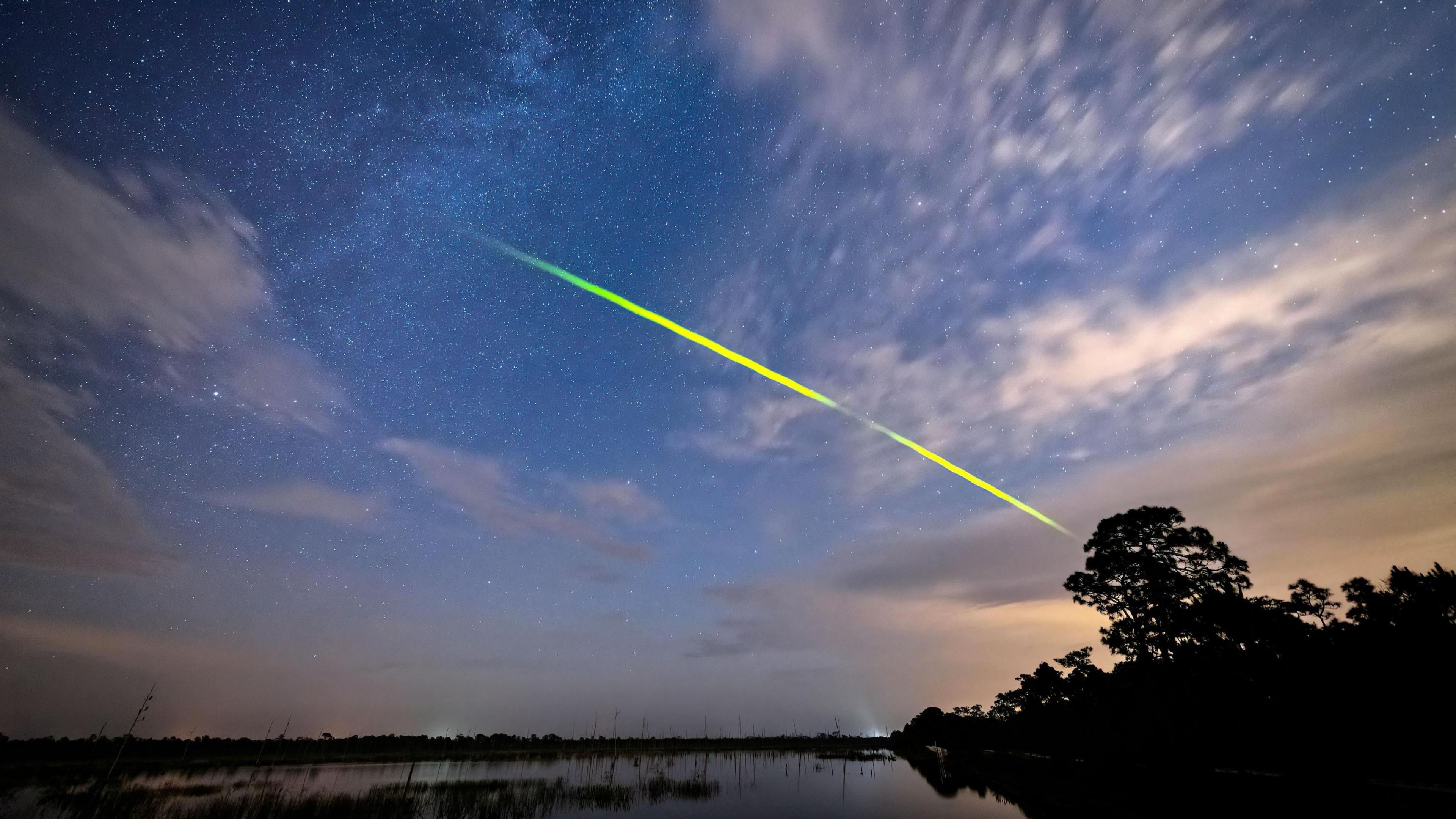
Distinctive features of the Lyrids are their colours and brightness – along with exceptionally bright fireballs from time to time, outshining the planet Venus.
The colours are created by very small dust particles – no bigger than a grain of sand – interacting with the particles and ions in Earth’s atmosphere.
As the grains heat up and ionise, they produce the light we can see with the trail produced as the meteor cools and fades.
Fireballs are made when larger pieces of debris – more like the size of a grape or an acorn – pass though the atmosphere. As they are so much bigger when they heat up they create a flash and a line, often called a train, behind them.
While the Lyrid meteor shower is visible every year, Comet Thatcher takes 415 years to complete its orbit of the Sun and won’t be visible again until 2283.
-
-
29 December 2025
-
Disclaimer : This story is auto aggregated by a computer programme and has not been created or edited by DOWNTHENEWS. Publisher: BBC



