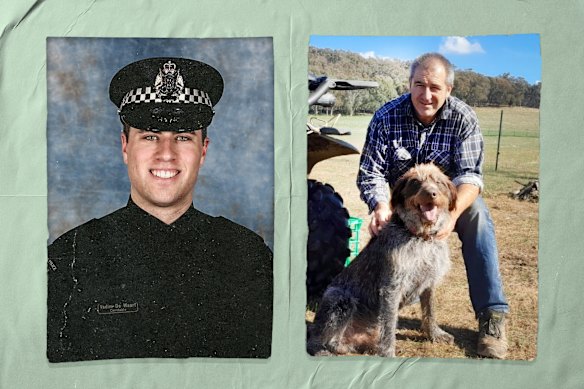

Inquests into the deaths of double murderer Dezi Freeman and slain police officers Neal Thompson and Vadim de Waart-Hottart will officially begin before the state coroner next week.
The coronial investigations are likely to probe previously undisclosed details about the day Freeman shot the two Victoria Police officers on August 26, and the manhunt for Australia’s most wanted man that followed.
From Monday, state Coroner Liberty Sanger will preside over the proceedings into the three deaths, holding a morning hearing for Senior Constable de Waart-Hottart and Detective Leading Senior Constable Thompson, and an afternoon hearing for Freeman.
The cases are currently listed for a directions hearing on Monday, which will lock in the scope of the inquiry, dictate timelines for evidence, and finalise hearing dates.
Freeman, 56, fled into the dense alpine bushland of Mount Buffalo after murdering de Waart-Hottart, 35, and Thompson, 59, last year. The slain officers were part of a 10-person team that had arrived at a remote Porepunkah property Freeman was living on at the time to serve him with a warrant for historical sexual offences.
The inquests into de Waart-Hottart and Thompson were postponed while Freeman remained at large and the murder investigations continued.
In March, after seven months on the run, Freeman was shot dead by heavily armed police who had tracked him to a remote hideout in Thologolong, near the NSW border.
Police Chief Mike Bush confirmed on the day of the operation that Freeman’s death would be investigated; it is standard process for all police shootings to be probed by the coroner and police professional standards unit.
“Everything I know at this moment tells me the shooting was justified,” Bush said at the time.
Bush said a negotiator had spoken with Freeman when they attended the Thologolong property in the early hours of March 30 and, he believed, the fugitive had fired on police.
Police sources confirmed Freeman was found after a tip-off from someone close to the father of three.
A source with direct knowledge of the operation said a couple believed to have been helping Freeman became increasingly concerned about his erratic behaviour.
When they reached out to another Freeman associate with their concerns, those conversations gave police their first tangible intel on the man they had hunted for seven months.
Although police intelligence indicated Freeman was assisted by a network of associates during his time on the run, no charges have been laid since the self-described sovereign citizen was found.
Start the day with a summary of the day’s most important and interesting stories, analysis and insights. Sign up for our Morning Edition newsletter.
 Carla Jaeger is a journalist for The Age. Got a tip? Email carla.jaeger@theage.com.au or message carlajaeger.62 on Signal.Connect via X or email.
From our partners
Disclaimer : This story is auto aggregated by a computer programme and has not been created or edited by DOWNTHENEWS. Publisher: www.smh.com.au