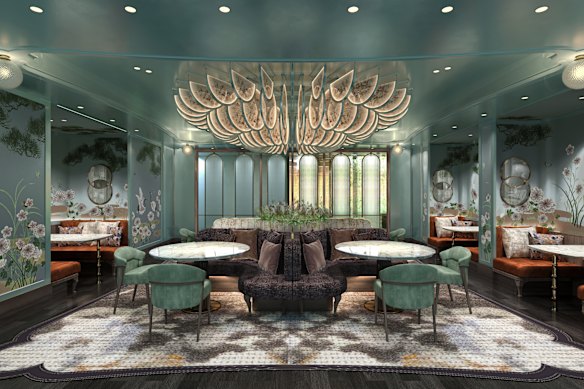

When Capella Kyoto opened in Japan in March, the message was clear: Kyoto’s architecture and cultural traditions would be celebrated in every detail – this would be a hotel of immersion in place.
More luxury hotels are scheduled to open this year and next, and follow the same playbook.
While spectacle is often the aim of luxury hotel developers no matter the location, Kyoto’s newest arrivals look to the city’s past for inspiration. It’s a restrained approach, but one that suits a destination that welcomed a record 62.79 million visitors in 2025, many drawn by the city’s remarkably preserved history and culture.
Among the most significant arrivals is Songtei Kyoto, Shangri-La’s ultra-luxury addition opposite UNESCO World Heritage-listed Nijo Castle. The 77-room hotel occupies a site once home to the Kyoto Shoshidai, the Tokugawa shogunate’s representative in the city.
During the Edo period, Kyoto remained home to the imperial court while political power rested with the shogunate in Edo, now Tokyo. The Kyoto Shoshidai represented that authority in the ancient capital. Songtei’s design draws on the ceremonial grandeur of an Edo-period residence, with views towards the castle’s North Gate and gardens.
Sign up for the Traveller newsletter
The latest travel news, tips and inspiration delivered to your inbox. Sign up now.
Only the second property in Shangri-La’s Signatures collection, Songtei will open later this year, with the full hotel scheduled for 2027.
On the banks of the Kamo River, the six-room Hanamiya Hotel takes a more intimate approach. Opening later in 2026, it draws on Kyoto’s craft industries that have flourished in the city for centuries and incorporates textiles, lacquerware, ceramics and decorative paper.
From May to October, a seasonal riverside dining experience is also planned, drawing on Kyoto’s summer tradition of noryo yuka. As early as the 17th century, dining platforms would appear beside the Kamo River to take advantage of cooling breezes.
Further afield, The Thousand Hiei – Mui Okuyama will open in spring 2027 on Mount Hiei, north-east of Kyoto and a centre of Buddhist spiritual practice for more than 1200 years.
Home to Enryakuji temple, founded in 788, the mountain has long been associated with contemplation, discipline and retreat. The new 33-room hotel draws on that history with wellbeing experiences incorporating acupuncture, bathing and the mountain’s sacred spring water. A terrace will overlook Lake Biwa.
Imperial Hotel Kyoto opened in March within the restored Yasaka Kaikan in Gion, preserving a building associated with Kyoto’s performing arts traditions.
And nearby, Capella Kyoto offers its own interpretation of the city’s traditional machiya townhouses. These narrow fronted wooden buildings often conceal deep interiors and small courtyard gardens, which bring light and nature into densely built neighbourhoods.
At Capella, guests pass through a narrow passageway lined with shoji screens, accompanied by the sound of a hidden waterfall, before emerging into a tranquil courtyard garden.
Designed by Kengo Kuma & Associates, with interiors by Brewin Design Office, the 89-room hotel also incorporates reclaimed timber and artefacts from an elementary school that once stood on its grounds.
See kyoto.travel
 Julietta Jameson is a freelance travel writer who would rather be in Rome, but her hometown Melbourne is a happy compromise.Connect via email.
From our partners
Disclaimer : This story is auto aggregated by a computer programme and has not been created or edited by DOWNTHENEWS. Publisher: www.smh.com.au