
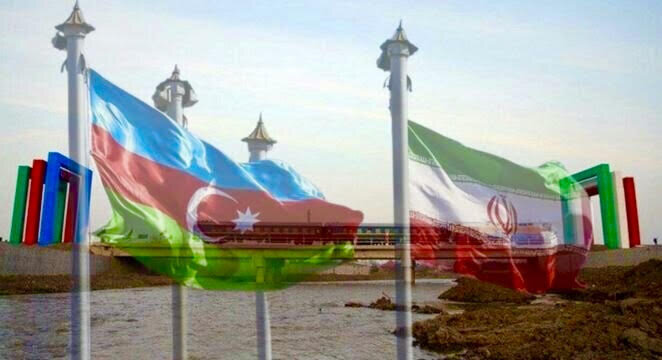
TEHRAN- In a decisive move that signals a new phase in regional economic integration, Iran and the Republic of Azerbaijan are rapidly expanding their bilateral trade and transit cooperation through a series of high-level agreements, infrastructure projects, and customs facilitation measures. The momentum, driven by political will at the highest levels and supported by tangible results at border crossings, positions the two neighbors as strategic partners in connecting the Caucasus, Central Asia, and the Persian Gulf.
At the heart of this economic rapprochement lies the Bileh Savar border crossing in Iran’s northwestern Ardabil Province—a 24/7 customs post that has emerged as a vital artery for trade. Over the past year alone, the crossing recorded $268 million in exports, demonstrating its growing capacity to handle increased commercial volumes. This figure is particularly noteworthy given that the period coincided with external pressures and regional instability, underscoring the resilience of Iran’s border economy and its ability to maintain trade flows even under challenging circumstances.
Customs agreement paves the way for streamlined trade
The most recent milestone in this partnership came with the signing of a customs cooperation memorandum of understanding at the Bileh Savar zero point, bringing together Foroud Asgari, Deputy Minister of Economy and Head of Iran’s Customs Administration, and Shahin Baghirov, Head of Azerbaijan’s State Customs Committee. The agreement formalizes a shared commitment to accelerating customs clearance processes for commercial and transit goods, creating a framework for ongoing cooperation that extends well beyond the current accord.
Asgari identified border congestion as the primary challenge facing bilateral trade, emphasizing that procedural and physical bottlenecks continue to hamper the smooth flow of trucks. However, he expressed optimism that recent agreements would yield measurable improvements, particularly as both sides move to complete critical infrastructure projects. Bridges under construction at the Astara and Nakhchivan border crossings were highlighted as game-changers that would significantly strengthen connectivity and facilitate the movement of commercial vehicles.
“The completion of these bridges by the Republic of Azerbaijan will bring prosperity to trade and ease the movement of commercial vehicles,” Asgari stated, underscoring the tangible benefits that improved infrastructure would deliver to both economies.
Baghirov reciprocated Iran’s positive sentiments, describing bilateral trade as “important” and welcoming the establishment of 24-hour online communication with Iran’s customs chief—a mechanism designed to facilitate the immediate resolution of emerging issues and prevent costly delays in customs procedures. “Holding these meetings is very important and significant,” Baghirov noted, emphasizing that such engagements have a tangible impact on resolving problems and removing obstacles to trade.
Ardabil province: A border trade powerhouse
Ardabil Province, with its 382 kilometers of shared border with Azerbaijan, has emerged as a central actor in this expanding economic relationship. The province accounts for 4% of Iran’s agricultural output, producing 4.5 million tons of crops annually, while also contributing 25% of the nation’s tires and 30% of its mineral water—figures that underscore its industrial and agricultural significance.
Masoud Emami Yeganeh, Governor-General of Ardabil, has made the development of border trade a cornerstone of his administration, undertaking three separate visits to Azerbaijan to advance economic diplomacy. During his latest mission, accompanied by a delegation of experts and economic decision-makers, he emphasized the strategic importance of leveraging the 14th government’s delegation of authority to 16 border provinces—a policy designed to empower regional administrations to maximize the benefits of their geographic positions.
“We are interested in having joint investments and joint projects, and for our peoples to become closer to each other,” Emami Yeganeh stated during a meeting with Muhammad Musayev, head of Azerbaijan’s Entrepreneurs Center. He noted that joint investments would lead to the creation of a common market, bringing prosperity and economic development to both sides.
The governor also announced plans to establish a permanent exhibition of Iranian products in Azerbaijan and a reciprocal exhibition of Azerbaijani goods in Iran—an initiative he described as a pathway to “sustainable and balanced cooperation” between the two countries.
Comprehensive economic framework: Ten sectors of cooperation
Beyond border-specific initiatives, the broader bilateral relationship has been formalized through an ambitious cooperation document signed at the 17th session of the Iran–Azerbaijan Joint Economic Committee. The memorandum, signed by Iran’s Minister of Transport and Urban Development Farzaneh Sadegh and Azerbaijan’s Deputy Prime Minister Shahin Mustafayev, outlines joint initiatives across ten sectors, providing a comprehensive framework for economic integration.
In transport, the two sides agreed to expand cooperation in road transport, border management, and railway development. Key infrastructure projects include the Kalaleh–Aghband bridge, the Astara bridge, the widening of the Kalaleh–Jolfa road, the Kalaleh–Siahroud rail link, and the launch of the Astara rail terminal at the shared border. Many of these projects are already in advanced stages, with the Kalaleh–Aghband bridge nearing completion and expected to play a significant role in facilitating transit flows once operational.
The energy sector also features prominently in the agreement, with cooperation approved in oil blocks one and two and the establishment of a joint working group to follow up on related memoranda of understanding. Electricity cooperation covers plans to connect the power grids of Iran, Azerbaijan, and Russia, as well as electricity exports from Azerbaijan to Iran. Water cooperation focuses on joint projects related to the Khoda Afarin and Qiz Qalesi dams and power plants, along with the Marazad–Orduabad hydropower project.
Additional understandings cover tourism, agriculture, customs, industry, investment, and sports and youth affairs—creating a truly multidimensional partnership that extends beyond mere trade facilitation.
Speaking at the Joint Economic Committee meeting, Minister Sadegh highlighted Iran’s ambitious target to increase transit volumes on the western branch of the International North–South Transit Corridor (INSTC) to 15 million tons by 2030—a significant expansion of current transit volumes that would require more than tripling current fleet movements.
The figures already reflect substantial cross-border freight activity: approximately 120,000 Iranian trucks transited through Azerbaijani territory over the past year, while more than 50,000 Azerbaijani trucks entered Iran. Trade between the two countries has reached approximately $650 million over the past two years, with exchanges following an upward trend.
Sadegh emphasized that achieving the ambitious transit target would require continued investment in border infrastructure and streamlined procedures, underscoring the importance of the comprehensive agreements now in place.
The momentum for bilateral economic cooperation extends to investment and project development. In a meeting on the sidelines of the 51st Annual Meeting of the Islamic Development Bank’s Board of Executive Directors in Baku, Mehdi Heydari, Deputy Minister of Economic Affairs and Finance and Head of Iran’s Organization for Investment, Economic and Technical Assistance, met with Yusuf Abdullayev, head of Azerbaijan’s Export and Investment Agency.
Heydari referred to the signing of the memorandum of understanding for a Joint Investment Committee during President Pezeshkian’s visit to Azerbaijan, noting that the committee could be convened at the earliest opportunity. He presented a list of projects prepared for foreign investment in Iran, highlighting the significant capabilities of Iranian companies across various sectors.
Abdullayev declared Azerbaijan’s readiness to hold the first meeting of the Joint Committee and extended an invitation for Iranian economic activists, investors, and capable companies to participate in the Azerbaijan International Investment Summit scheduled for September 2026. “The history of Iranians’ activities in Azerbaijan’s economy demonstrates the potential for increased cooperation,” Abdullayev noted, describing the Joint Investment Committee as a valuable advantage for structuring collaboration.
The economic momentum has been reinforced by direct engagement at the highest political levels. During her visit to Baku for the Joint Economic Committee meeting, Minister Sadegh met with President Ilham Aliyev, conveying greetings from President Masoud Pezeshkian and emphasizing Iran’s special interest in relations with Azerbaijan.
President Aliyev expressed satisfaction with the expansion of bilateral relations and emphasized that jointly implemented projects would provide extensive opportunities for both countries and the region. The discussions covered new railway infrastructures, joint oil fields, transportation cooperation, utilization of new border infrastructures, and energy sector collaboration.
The series of agreements, infrastructure projects, and diplomatic initiatives between Iran and Azerbaijan reflects a shared vision for regional integration and economic development. Both countries recognize the strategic importance of their geographic position—linking Central Asia, the Caucasus, and the Middle East—and the potential for their partnership to facilitate trade flows across the broader region.
Political and economic experts have acknowledged that Iran, with its 15 neighboring countries and extensive land, sea, and rail borders, is effectively economically uncontainable. The expanding partnership with Azerbaijan, formalized through customs agreements, investment cooperation, and a comprehensive ten-sector economic framework, demonstrates how neighboring states can leverage geographic proximity, cultural commonalities, and mutual economic interests to build a more prosperous and integrated region.
As both countries work toward their ambitious transit and trade targets, the Iran-Azerbaijan relationship stands as a compelling example of how strategic economic diplomacy can transform border regions into dynamic hubs of commerce, investment, and shared prosperity.
Disclaimer : This story is auto aggregated by a computer programme and has not been created or edited by DOWNTHENEWS. Publisher: tehrantimes.com




