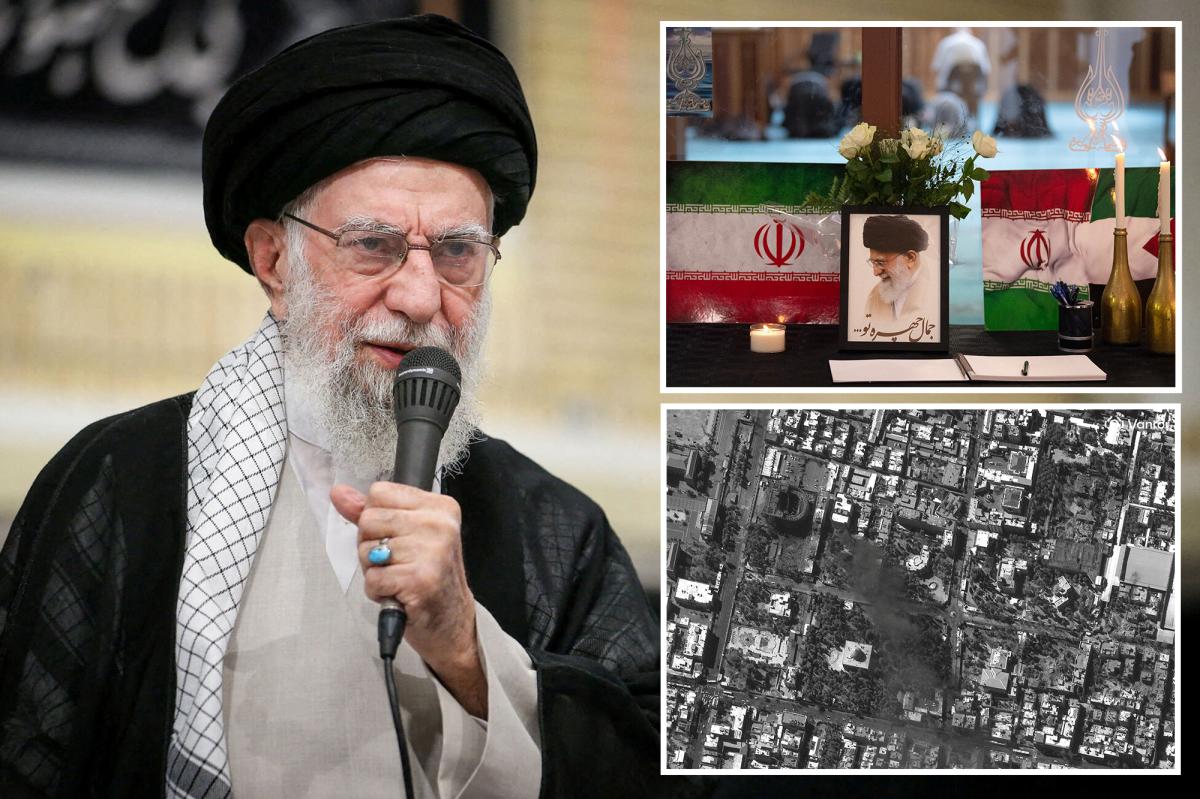
The burial site of slain Supreme Leader Ali Khamenei has yet to be determined as Iranian officials weigh safety concerns for such a massive funeral turnout, while one security expert claims the delay is due to Tehran being too chicken.
Khamenei, 86, was assassinated in a joint US-Israeli airstrike on Feb. 28 that launched the Iran war with the remains of the terror-supporting cleric still unburied, breaking with established tradition.
The last days-long state funeral for his predecessor, Ayatollah Ruhollah Khomeini, in 1989 saw millions of Iranians flooding the streets of Tehran in mourning — but similar displays for Khamenei were largely absent during weeks of crippling airstrikes across Iran that took many of the regime’s top leaders.
Tehran is in no position to hold such an elaborate memorial service as the war sits in an uneasy truce, Behnam Taleblu from the Foundation for Defense of Democracies, told The Post.
“Simply put, the regime is too afraid and too weak to roll the dice,” he said.
The cocktail of reasons to avoid a ceremony include the risk of potential Israeli airstrikes, nationalist counter-rallies similar to the nationwide uprisings earlier this year, and the regime’s need to explain the absence of Mojtaba Khamenei, Khamenei’s son and the new supreme leader who has not been seen in public since his appointment.
“It speaks volumes that the turnout for the funeral of the regime’s founding father in 1989 was such a massive affair, and yet one generation later his successor is still not able to have a funeral well over a month after his passing,” Taleblu continued.
“The Islamic Republic likes to talk a big game about owning the streets, but a 50-day internet blackout tells you all you need to know. The regime fears the consequences of the truth getting out.”
Now, Iranian officials are considering the remote, northeastern city of Mashhad as a potential burial site, according to state media Fars, The Australian reported.
Mashhad — on the border of Turkmenistan and far removed from Israel — is Khamenei’s hometown and serves both practical and symbolic purposes.
A city of 5 million people, it’s home to one of the holiest sites in Shi’ite Islam — the shrine of Imam Reza which was built in the 9th century and attracts millions for religious pilgrimages each year.
One of the ideas floated would see Khamenei buried near the shrine which has a heavy security presence that would allow protection of the longtime leader’s grave.
The Islamic Republic initially planned a three-day state funeral beginning on March 4, but it never materialized once the country was rocked by large-scale Israeli and US bombing campaigns, according to state news agency Irna.
Those ceremonial plans were then scrapped as the war raged with the theocratic regime claiming the saying the delay was in anticipation of an “unprecedented turnout,” Gulf News reported citing Iran state media.
There are no dates set for Khamenei’s burial ceremony.
The US and Iran signed a temporary truce on April 8, which is set to expire on Wednesday.
Disclaimer : This story is auto aggregated by a computer programme and has not been created or edited by DOWNTHENEWS. Publisher: nypost.com