TEHRAN – Iranian researchers have developed a technology for removing sulfur from heavy fuel oil using an ultrasonic reactor and a process known as AQP, marking a reported breakthrough in the country’s efforts to move beyond technological localization toward developing and exporting its own industrial technologies.
The technology, developed under the leadership of Reza Mokhtar, a researcher, inventor, and senior energy expert, is designed to address two major challenges facing Iran’s oil refining industry: the high sulfur content of fuel oil and the country’s reliance on foreign technology in advanced refining processes.
For years, Iran’s oil and gas industry has focused on localizing technologies developed elsewhere, often through reverse engineering and the adaptation of foreign designs. While this approach has helped domestic industries reduce their dependence on imported equipment and expertise, it has not necessarily enabled them to compete as original technology developers.
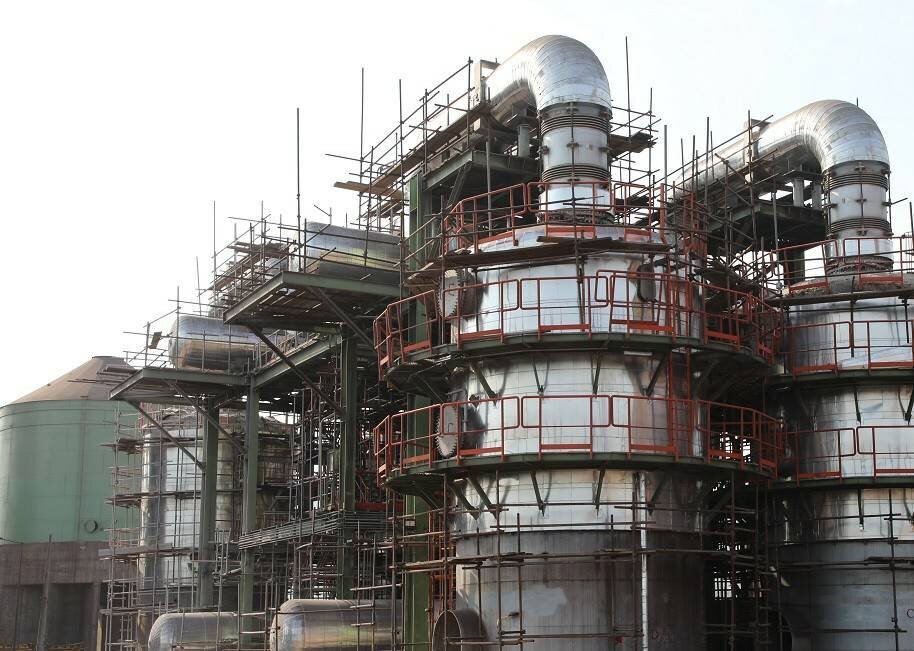
The AQP process, according to its developers, represents a shift in that approach. They say the technology was developed domestically, from the initial research and laboratory stages through reactor design and construction, and ultimately to a semi-industrial pilot unit intended to demonstrate its potential for commercial application.
Addressing two major refining challenges
One of the main problems facing Iran’s refining and power generation sectors is the sulfur content of heavy fuel oil, commonly known as mazut. Burning high-sulfur fuel releases pollutants that contribute to serious environmental problems, making desulfurization increasingly important as environmental standards become more stringent.
Conventional hydrodesulfurization technologies used to treat heavy oil streams generally require high temperatures and pressures, substantial hydrogen consumption, and considerable capital investment. These requirements can make their application economically challenging, particularly in facilities where large-scale investment is not feasible.
A second challenge is technological dependence. The market for advanced desulfurization processes has traditionally been dominated by a limited number of international technology providers, leaving countries such as Iran heavily reliant on purchasing foreign technologies.
The AQP process is intended to offer an alternative. Rather than relying on large reactors operating under severe temperature and pressure conditions, the technology uses ultrasonic waves to generate microscopic bubbles inside a reactor. Their rapid and violent collapse, known as acoustic cavitation, creates localized conditions that facilitate oxidation reactions at temperatures close to ambient levels.
Through this process, sulfur compounds are converted into substances that can subsequently be separated from the fuel oil in a separate processing stage. The recovered material can then be treated as a recyclable byproduct.
According to the developers, the process can produce cleaner fuel while reducing capital expenditure and energy consumption compared with conventional treatment methods. They also say it could help refineries meet increasingly stringent environmental requirements.
From laboratory research to industrial application
The development of the technology involved several stages, beginning with laboratory-scale experiments and progressing to the design, construction, and optimization of ultrasonic reactors by Iranian researchers.
The project eventually reached the stage of a semi-industrial pilot unit, which its developers describe as evidence that the process has progressed beyond theoretical and laboratory research and has the potential for industrial-scale application.
They emphasize that the technology was developed without copying an existing foreign design, obtaining a foreign license, or receiving a technology transfer from an international company.
The developers also say the process has undergone technical evaluation and formal registration through recognized authorities. Such procedures, they argue, provide documented support for the technology’s scientific and technical credentials and distinguish the achievement from claims based solely on research announcements.
From technology localization to technology exports
The project is being presented as an example of a broader shift in Iran’s approach to industrial development: moving from adapting and localizing foreign technologies to developing proprietary processes with the potential for international commercialization.
If successfully commercialized and adopted by industrial users, the AQP process could provide Iran with an opportunity to enter the global market not only as a producer of oil and petroleum products, but also as a supplier of specialized refining technologies.
Its developers believe the experience could serve as a model for other sectors of Iran’s oil industry, demonstrating how domestic research and engineering capabilities can be developed into commercially viable industrial solutions.
The achievement, therefore, is being viewed as more than the development of a new desulfurization process. It represents an effort to change Iran’s position in the global technological value chain—from a country that primarily purchases and localizes advanced technologies to one seeking to develop, commercialize, and export its own technological expertise.
Disclaimer : This story is auto aggregated by a computer programme and has not been created or edited by DOWNTHENEWS. Publisher: tehrantimes.com