
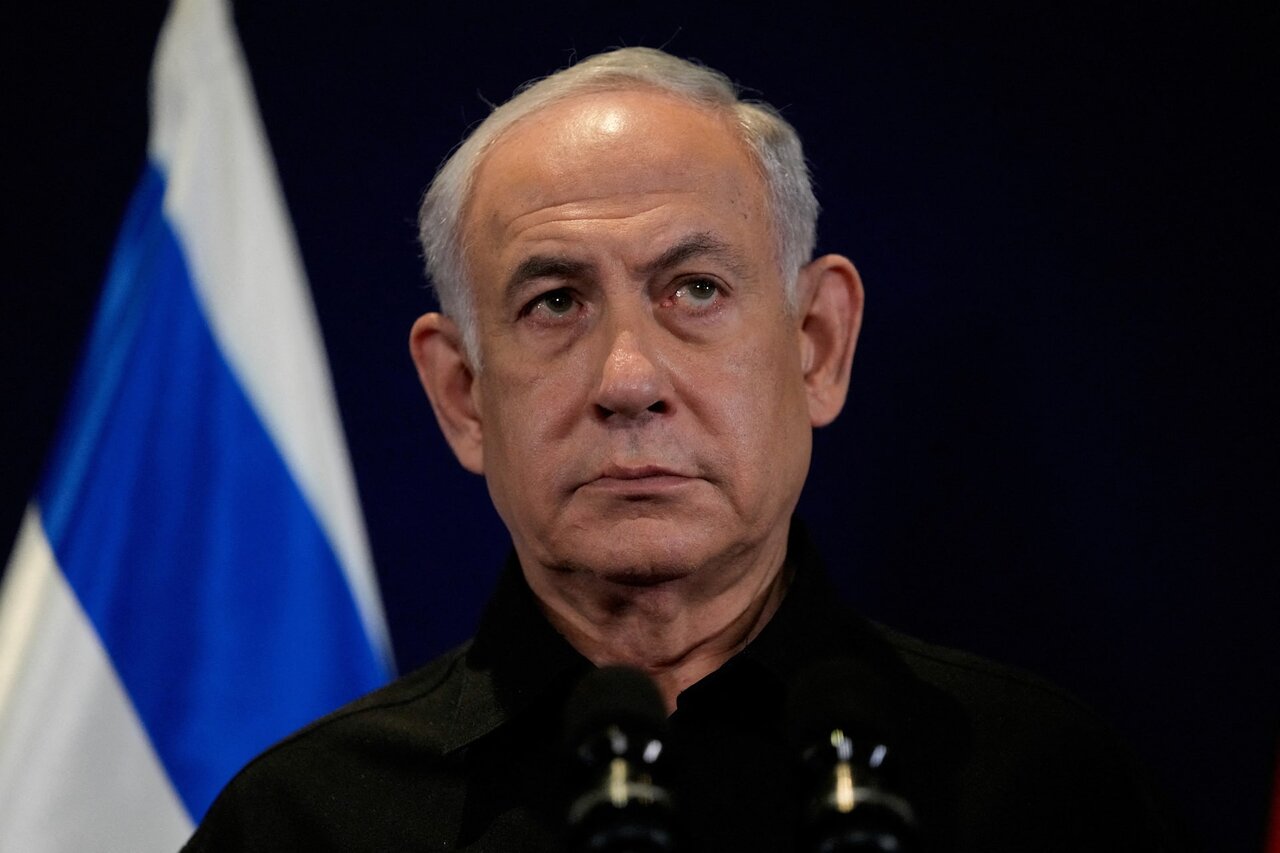
TEHRAN – With Israel’s elections approaching, will Netanyahu’s government attempt to escape its strategic predicament by pushing forward and returning to an intense war? Or will it return to politics, seek compromises, and cooperate with more realistic initiatives?
Across all levels within the Israeli regime, there is consensus that the war ignited more than a thousand days ago remains unresolved on every front, Gaza, Lebanon, and Iran. Despite the overwhelming military might the regime has wielded, with full American backing and partnership, it has failed to secure victory or subdue the resistance to its aggression.
The regime has also been drawn into a protracted and exhausting war of attrition, which has eroded its social and political cohesion. The governing coalition’s prospects in the upcoming elections have dimmed, Israel’s international standing has substantially declined, and even its influence and relationships within official U.S. institutions, along with its popular support base in America, are steadily waning.
Moreover, the trust between Trump and Netanyahu has reportedly not remained what it was since the latter lured the U.S. into an illegal war with Iran that has exhausted the American public and achieved zero objectives.
After more than a thousand days of regional aggression, Netanyahu’s government has no strategic gains. It has not translated its supposed military superiority or its very close alliance with the United States into political achievements or a decisive battlefield triumph.
All fronts remain open, and Israel faces an extraordinarily complex political and security landscape. So, will Netanyahu’s government flee its strategic dead end by charging forward into intensified aggression? Or will it return to statecraft, seek more illegal settlements, and cooperate with more realistic plans for the post-war era?
In the Gaza Strip, the occupying regime’s objectives seem unlikely to be realized at the negotiating table, having already been thwarted on the battlefield. A political horizon for resolving the Gaza dilemma appears distant. In Lebanon, the military aggression has not concluded, and the door remains wide open for its resurgence. Meanwhile, the unprovoked Israeli-American war on Iran has not subsided with a ceasefire agreement, and its political repercussions remain unclear.
On the domestic front, the Israeli Occupation Forces are exhausted, and society is strained and divided over nearly everything. From the dispute over forming a commission of inquiry into the failure to predict Operation al-Aqsa Flood, to disagreements over the conscription law. As elections approach, the crisis has translated into a sharp erosion of public confidence in all state institutions, from the prime minister’s office to the army, police, judiciary, and others.
This crisis of confidence has surpassed even the acute polarization over the regime’s identity and judiciary that preceded October 7, 2023. In stark contrast to all this, the rhetoric of the governing coalition and its leader, Netanyahu, continues to tout achievements, though they insist these require further completion.
Netanyahu still banks on returning to war under the pretext of finishing the job, achieving his delusional mindset of “absolute victory”, and subduing the Zionist regime’s enemies. Such a move, he calculates, would help him reclaim the seats he lost due to the lack of decisiveness and the absence of a clear victory on the battlefronts.
Notably, Meir Ben-Shabbat, former head of the National Security Council and a Netanyahu confidant, has spoken of the need to resume full-scale genocidal war in Gaza, arguing that the occupying regime remains far from victory in the tiny coastal enclave.
He hinted at the necessity of persuading the United States not to shift to reconstruction in Gaza before returning to high-intensity combat, because without military control over all of the Strip’s territory and population, the primary war goal, dismantling Palestinian resistance forces and neutralizing the arena where it all began, cannot be achieved.
Netanyahu and his chorus speak of endless war under the banners of decisiveness and “absolute victory,” aiming to win the upcoming election. This is regardless of the regime’s internal and external strategic dilemmas caused by closing the door on diplomacy and rejecting compromise tracks. However, within various Israeli research centers and circles, alternative thinking is emerging.
Many now view the current political and battlefield impasse as a strategic dead end from which Israel must exit through the gateway of politics, not the beating of war drums.
A number of Israeli researchers and analysts argue that the current crisis management is dictated by Netanyahu’s short-term tactical policies, tied primarily to his electoral prospects.
They highlight that he shows little interest in building regional pathways that would afford the regime political and economic advantages, even through the expansion of the so-called “Abraham Accords”. This is provided the government agrees to end the war on all fronts, withdraw from occupied territories, and initiate comprehensive regional political processes.
Such tracks, they contend, would serve the Zionist regime and deliver more than it has achieved through years of initiating wars.
At this stage, Netanyahu will not listen to anyone discussing ways out of the current crisis or a transition from military and political stagnation to a phase of overcoming the crisis facing the regime and creating long-term strategic courses of action.
Diplomatic options hold no appeal for him, and he will not waste time or effort examining them, because they would simply cost him the upcoming election, owing to their unpopularity with his far-right electoral base.
Netanyahu’s options until the elections in October will likely remain limited to efforts to escalate the military situation on various fronts. He will deploy all his tools, skills, and intelligence assets to convince Trump during their upcoming White House meeting to abandon any form of negotiations with Iran, by leveling false accusations of non-compliance by Tehran.
He will also seek Trump’s approval to expand the scope of aggression on Lebanon, including the southern suburbs of Beirut. If Trump maintains any diplomatic track with Iran alongside controlled military aggression, Netanyahu will intensify his efforts to pressure Trump into giving him cover to resume a large-scale war in Gaza, under the pretext of disarming Palestinian resistance forces. This will essentially take the regime back to square one.
Disclaimer : This story is auto aggregated by a computer programme and has not been created or edited by DOWNTHENEWS. Publisher: tehrantimes.com







