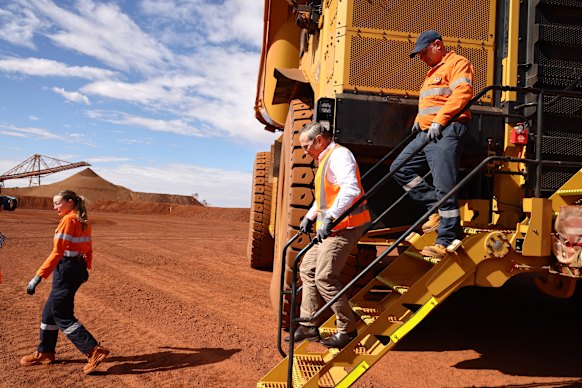
Never mind the “green agenda” (“Labor leaders temper green agenda push”, July 24). The main question is whether the miners are paying their fair share in tax. If you believe the miners, then they are. They proudly advertise that they pay more tax than everybody else, supporting the schools, hospitals and infrastructure that we need. But that really tells us nothing. That’s simply because they are the biggest sector in the Australian economy. What really matters is the rate of tax that they pay. In fact, being so large, they might pay a lower rate of tax than the rest of us and still end up paying a whopping amount. That’s where the fuel tax credits come in. Do the miners really need the credit to stay in business? They say higher costs would threaten their survival. Rubbish. By their own admission, they already pay a huge amount in tax. To do so, they must make huge profits before tax. Paying a bit more in tax won’t change that. It will just mean that they pay the same tax that you and I do. Similarly, appropriately taxing gas exporters won’t change the amount of gas that is exported. Those countries that rely on our gas will still get it. And we will still get petrol imports in return. It’s just that the gas exporters will pay more in tax than they currently do. Sending the right signals about decarbonisation is important. But so is being fair. David Rush, Lawson
Slavish adherence to the party line might be good for Anthony Albanese’s job security, but it is bad for democracy. Labor already expects unity in caucus and on the floor of parliament and now is extending that central control to its only opportunity for rank and file participation in policy setting. Thank goodness for Ed Husic. This is another reason why independents and minor parties are essential to a functioning, democratic parliament. The major parties largely consist of seat warmers making up the numbers. We need true debate and a contest of ideas to deal with massive national and global challenges. Tom McGinness, Randwick
The Labor Party platform “demands a ‘fair share’ from resources companies”. The PM needs to explain how that is consistent with the current situation where in recent years Qatar and Australia exported similar amounts of LNG, but Qatar’s annual royalty receipts were about $38 billion and Australia’s $11 billion. Today Japan raises an average $1.8 billion a year taxing gas imports. Our Petroleum Resource Rent Tax – applied to “profits” of companies taking and exporting vast quantities of offshore-extracted gas – raises just $1.4 billion per year, famously less than beer excise raises. Australian taxpayers know we are not being treated “fairly” by the current tax arrangements. Pauline Hanson will use this. And, on this matter, she will be right. Lesley Walker, Northcote (Vic)
Too many AI unknowns
Yes, AI is reducing jobs, and various big organisations have already put a big number on redundancies (“Master AI, or will it wipe our floor?” , July 24). But let’s not always think in terms of doom and gloom. When the Industrial Revolution was occurring and the same questions and concerns were raised. The same goes for digital technology. Humans’ biggest gift is ingenuity. We always find ways to overcome any difficult issue. About 70 years ago, there were no showers and proper toilets, and now it is taken for granted. Our standards of living have improved, including in healthcare. The federal government is on the right track to address concerns and is starting a new framework. It will eventually be adopted by many countries, and we will move on to new problems. Life goes on. Mukul Desai, Hunters Hill
Waleed Ally provides a useful insight into a government now trying to catch up to the train that is technology. There is an inflection point that was missed as the advanced economies transitioned to services. The capabilities and economic benefit required for material requirements were relegated to lower economic players. Human capital, population growth not withstanding, is losing its value. Technology increasingly delivers material goods without human involvement, leaving an undefined end game of services to be delivered into the future. We are near becoming irrelevant and useful only for consumption. Environmental resources such as water, energy, minerals and forests are threatened. We need to pay attention. Left and right are better defined as top and bottom. The race to the bottom may be in the lead. Robert Caraian, Crows Nest

In the 1850s, Karl Marx predicted that machinery and technology would replace workers and cause technological unemployment. Professor Geoffrey Hinton, a cognitive psychologist who won the 2024 Nobel Prize in Physics for his foundational work on artificial neural networks, argues that AI will replace labour in many fields. Let’s hope that a solution can be found to ensure AI “remains a mere tool” and would not instead lead to mass unemployment that would greatly erode or eliminate customer base. Mustafa Erem, Terrigal
As Waleed Aly correctly points out with the social media ban, getting the legal issues sorted out after the event is so very complex and probably already “too far gone”. So one would think that forewarned is forearmed for legislation over AI, but it is not the lack of legal rules and regulations only that is worrying, but the absence of any dialogue on “the social, moral and even spiritual issues”. There seems to be too many unknowns with AI for us to rely on just keeping our fingers and toes crossed and hoping for the best. Let’s be proactive over our futures not reactive to harms we should have seen coming aside from the wealth. Helen Lewin, Tumbi Umbi
A nation divided
Pauline Hanson has claimed that too much time and effort by police have been spent on investigating domestic violence and not enough on “real crime” (“Hanson’s words come back to bite her”, July 24). Apparently, real crime does not include murder or assault. Nor does real crime include harassment, abuse and intimidation. Threats of violence are not real crimes in the world of PHON, where victims of domestic violence are to blame for provoking their violent treatment. Rather than unite, One Nation seeks to divide. A nation of us versus them, of deserving citizens versus burdens on society. White, pale and stale versus victims of crime, migrants, Indigenous Australians and anyone else who is considered as “other”. John Bailey, Canterbury

I had never seen the results of domestic violence until I worked at an inner-city social security office in the 1980s interviewing fleeing mothers who had clearly been bashed. I came away knowing that domestic violence exists in all cultures and backgrounds and far too many of us men still think it’s OK to give not only vile verbal abuse but a backhander or a punch in the face to women who are, or were, in relationships with for no real reason apart from feeling good about it. I wonder if Hanson with her comments on DV is trying to appeal to those men who feel aggrieved that women overall have more power over their lives than they were once used to? Con Vaitsas, Ashbury
Vikki barking up the wrong tree
Who to believe, Vikki Campion or Barnaby Joyce (“CBD”, July 24)? Campion lambasted the ABC and wrote: “Barnaby yelling at a barking dog in a paddock, about 50m away, meant the ABC first refused her existence because the host was too sheltered by her own audio team to hear it …” Joyce says: “She [his poor inoffensive dog] was right underneath my feet beneath the deck … and just barking.” The conflict between them needs no comment except that it is another example of what One Nation has been serving up for many weeks since Hanson’s appearance at the Press Club. Despite this, that train wreck of a party is still polling well against a Liberal National party led by Angus Taylor and Tony Abbott. Paul Fergus, Croydon
The great city/country doggy divide that Barnaby cites as rationale for his rabid behaviour towards loyal hound Stella is not his first rodeo. When it comes to picking a fight with pampered pooches, he has form, lest we forget Barnaby’s threatening to euthanise poor Pistol and Boo. I fear it doesn’t take much to land in Barnaby’s dog house. Janet Argall, Hurlstone Park
” loading=”eager” src=”https://static.ffx.io/images/$zoom_0.284%2C$multiply_0.7725%2C$ratio_1.5%2C$width_756%2C$x_92%2C$y_0/t_crop_custom/q_86%2Cf_auto/6ba0a23dfcd3df4b4b848de7eef3b4a0faffef24″ srcset=”https://static.ffx.io/images/$zoom_0.284%2C$multiply_0.7725%2C$ratio_1.5%2C$width_756%2C$x_92%2C$y_0/t_crop_custom/q_86%2Cf_auto/6ba0a23dfcd3df4b4b848de7eef3b4a0faffef24, https://static.ffx.io/images/$zoom_0.284%2C$multiply_1.545%2C$ratio_1.5%2C$width_756%2C$x_92%2C$y_0/t_crop_custom/q_62%2Cf_auto/6ba0a23dfcd3df4b4b848de7eef3b4a0faffef24 2x” class=”sc-d34e428-1 ldCIuB”>
Our dog is bilingual and only a permanent resident. If One Nation ever got into power, would he be forced to sell his kennel? Would he be deported? The poor bloke is already traumatised. He barks hysterically every time Pauline Hanson or Barnaby Joyce appears on TV. Mokhles Sidden, South Strathfield
Poor Barnaby. Not only has his latest gaffe gone viral but he has also, once again, given Cathy Wilcox (Letters, July 24), a hilarious cartoon topic to depict, and Megan Herbert another one for today. However, we all know Barnaby’s bark is worse than his bite. The question is how much longer will Pauline cope with him before sending him packing. Denis Suttling, Newport Beach
That Barnaby allowed his staffy dog to derail his TV interview says his lack of organisational skills is far from a good thing for his political leadership ambitions. Steve Ngeow, Chatswood
Vikki Campion says that Barnaby Joyce was yelling at a dog in a paddock 50m away but in the video he is clearly addressing a dog within metres of where he is standing. Maybe she wasn’t there either? Greg Tozer, Kambah (ACT)
Perhaps Stella should be interviewed to see what she thinks. Tim Schroder, Gordon
The Newington paradox
The $173.5 million budgeted to transform Newington College and build facilities is breathtaking (“Top private school has $173.5 million expansion plans”, July 24). The extension has better facilities – theatres, sports areas, lecture halls and a fitness centre – than most Australian towns, and towers over amounts offered public schools to maintain facilities, even as future buildings are rarely contemplated. And most of it will stand idle and unused out of school hours and during school holidays. Janice Creenaune, Austinmer
I have no objections to Newington becoming co-ed. In fact, I welcome it, but the cost of the expansion is obscene. A large chunk of the budget has been funded by taxpayers, and before all the private school parents get on their high horses and claim that they pay their taxes and are entitled to government funding, let’s just remember we don’t get to determine where our tax dollar is spent. Should those who have no children get a reduction in tax or those who don’t get sick get part of their Medicare contribution back? The answer is obviously no. I have no problem if the parents of the children attending Newington want to fund this out of their own pockets. Newington already has state-of-the-art facilities, beautiful grounds, a fleet of buses and, I imagine, a very healthy bank balance. The figure of $173m is just obscene, and I curse the day that Robert Menzies started funding private schools and curse John Howard, who further increased it. Sadly, the gap between the haves and the have-nots just continues to widen. Peter Miniutti, Ashbury

Newington College has clearly employed a surrealist architect if the images are anything to go by. Basketballers shooting at a non-existent net? But the truly surreal element is yet another salvo in the war between obscenely wealthy private schools spending on ever more luxurious facilities. Why is even one cent of public money bestowed on these schools while schools open to all remain underfunded? Michael Berg, Randwick
Rinehart effect revisited
I hope Gina Rinehart acts on the wonderful suggestion from your correspondent (Letters, July 24) to use a little of her wealth to establish a national network of women’s refuges. They are desperately needed. Gina seems to have many billions.
Another worthy group needing a hand are the homeless. Shelters for them could be built for them, also nationally. I had a day in Sydney and was saddened by the number of people of all ages living rough. This could also be a legacy for Gina or others with extreme wealth to consider. The gloomy story behind each person resonates with passersby. Bea Hodgson, Gerringong
The suggestion that Gina could donate to a much more worthy cause than giving cash to Pauline, such as that of giving to women’s refuges, makes sense for a “Great Aussie Benefactor” and would indeed be a lasting legacy. But this transaction would be totally trashed by her politically close friend Pauline with her well-known misogynistic views on women fleeing domestic violence. Good idea, though. Judy Finch, Taree
I have long thought that the wealth that Gina Reinhart has accumulated should belong to all Australians. Those minerals should be national wealth not just one family’s windfall. That apart, I was amused by Gina rewarding the swimmers (just the swimmers) at the Commonwealth Games. She will top up the $5000 the government gives them and her largesse is overwhelming. Individual swimmers will pocket $20,000 for a gold medal, $15,000 for a silver medal and $10,000 for a bronze (“The Rinehart effect, world record watch and a bid for history”, July 24), and $30,000 for a world record. But relay team members will be rewarded with $7500 each for a world record, $5000 for a gold, $3750 for a silver and $2500 for a bronze. For a billionaire, this is lunch money but, obviously, it was all she could spare. Moya Gibb Smith, Paddington
In the UK, a group of just over 100 millionaires called the “Patriotic Millionaires” has written to the Prime Minister Andy Burnham requesting to be taxed more, as they can afford it more than ordinary citizens. So here is an opportunity for the Rineharts, Pratts and their ilk to band together and do the noble thing, writing to our PM and making a similar offer. Did I just see a flock of pigs fly by? Ross Hudson, Mount Martha (Vic)
What Glebe could be
Wonderful news (“The surprise deal to raze Wentworth Park this year”, July 23). The redevelopment of Wentworth Park is both welcomed and timely. As is typical for such claims, the devil lies in the detail. Density minus towers, imaginative design and high-quality public space are all determinants in steering its success. So, what will be the overall percentage of social and affordable housing within this massive influx of housing? That answer will help to determine whether this is an exemplar of inner urban redevelopment as it should be, given its location history and social mix. Cleveland Rose, Dee Why
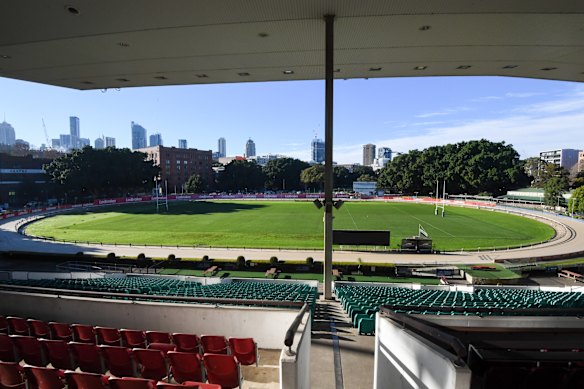
Soon after we moved to Glebe in 1986, I became convenor of the Wentworth Park committee for the Glebe Society and discovered that Wentworth Park had once been a very attractive park with lakes, second only in beauty to the Botanic Gardens.
For 12 years, we lobbied the government to have it returned to the beautiful park it had once been. The government would never talk to us and would only listen to the greyhound industry and instead of spending money on the park they spent millions on new buildings there – twice. It is ironic that they are now planning to pull down those expensive buildings to do exactly what the Glebe Society was asking them to do 40 years ago. Christine Stewart, Willoughby
Or else
OK, Coles, Woolies and every other importer of products and produce from the US (“Australian exporters clamour for carve-outs”, July 24), please stop buying stuff from there because I’m not going to buy it and I hope no one else will either. Merilyn McClung, Forestville
Dwell on this
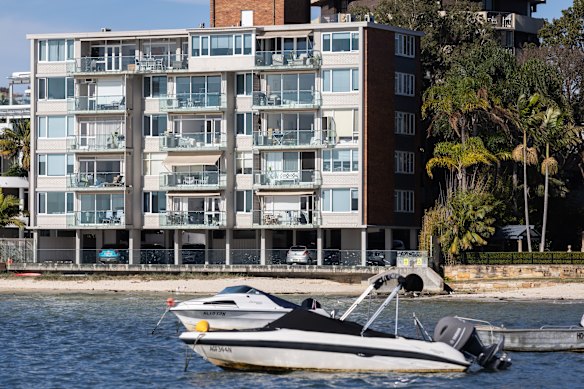
Your correspondent (Letters, July 24) says that “Australia has the largest houses in the world”. Let’s use a little common sense and realise that everything is not needed at the start. We could reduce the affordable and housing storage by designing cheaper housing, constructed in factories with only two bedrooms, designed for additional rooms, at a later stage, when needed. In addition, return to a previous time of shortage of accommodation (in the 1950s) by allowing (under a five-year licence) living in a habitable garage or caravan, on site (connected to the sewer), while young couples build their future dwelling. Brian McDonald, Willoughby
- To submit a letter to the Sydney Morning Herald, email letters@smh.com.au. Click here for tips on how to submit letters.
- The Opinion newsletter is a weekly wrap of views that will challenge, champion and inform. Sign up here.
Disclaimer : This story is auto aggregated by a computer programme and has not been created or edited by DOWNTHENEWS. Publisher: www.smh.com.au